
A metal casting starts with tooling suited to the alloy and casting process. For die die casting moulds from China, TOS coordinates product design, toolmaking, trial casting and the final delivery condition. Your drawing, application and expected volumes are the starting point.
We assess tooling investment together with production of the castings, including any CNC machining, finishing and inspection. You retain one Dutch point of contact for technical decisions, progress and supplier agreements.
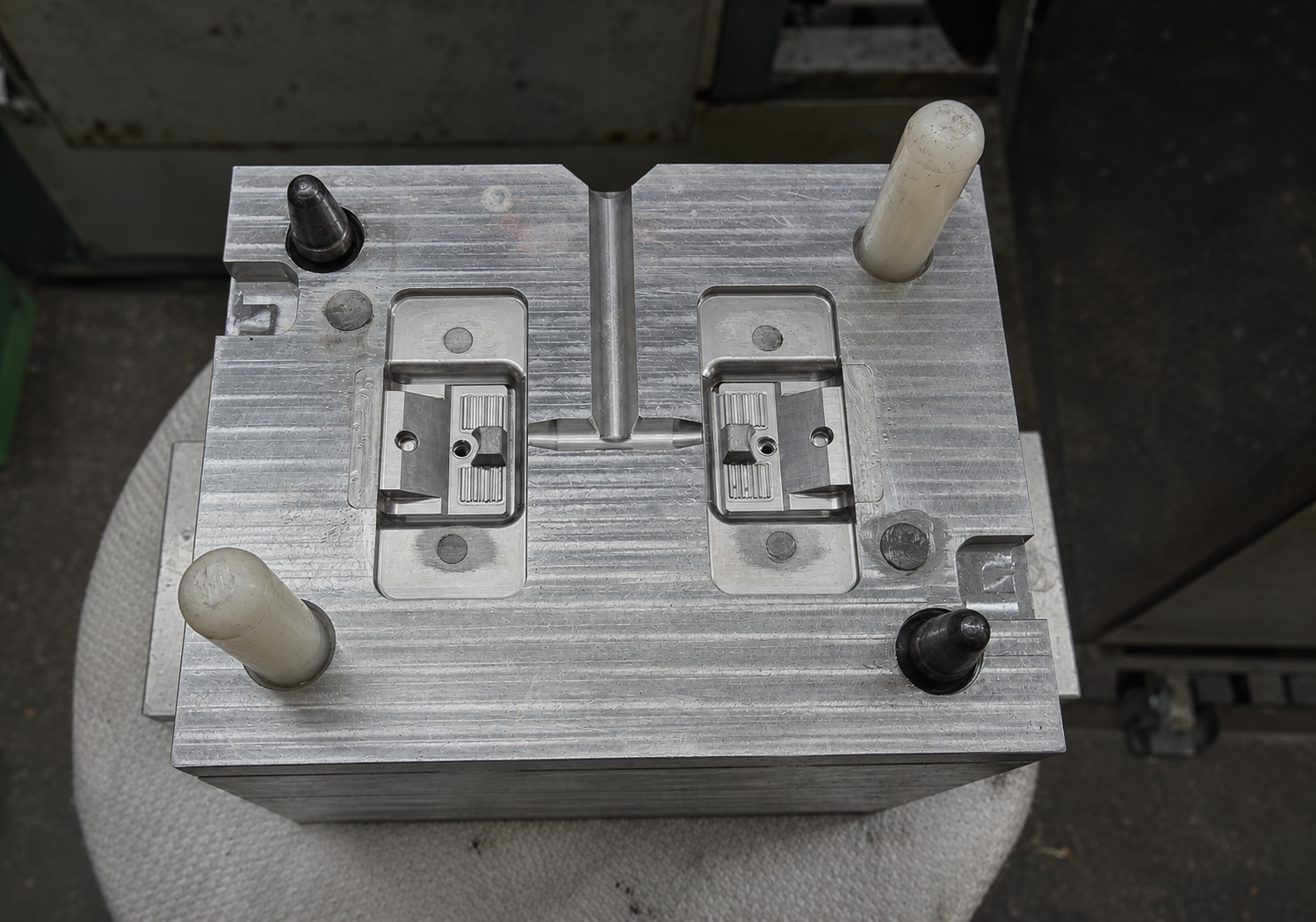

The alloy and filling process determine the tooling concept.

Assess critical faces, machining allowance and fixturing together.

Agree in advance which characteristics and results will be reviewed.

Record ownership, storage, maintenance and changes.

Coordinate technical questions and progress via TOS.
With a metal casting mould, the same mould is used for successive castings. The execution depends greatly on the way in which the metal is introduced and solidifies. A tool for high-pressure casting in China requires a different approach than a scallop that is filled by gravity. Both routes have their own options for product shape, batch size and machining.
With high-pressure casting, liquid metal is introduced into the mould under pressure. The mould, casting machine and chosen alloy must be reviewed together. With coquille casting in China the metal flows by gravity into a reusable metal form. The filling and solidification require a suitable casting design.
A housing, mounting base or technical support has different requirements than a decorative part. Therefore, record which surfaces are functional, where a partial seam is acceptable and which dimensions will still be processed after casting. A good assessment of the manufacturability of your product can prevent a difficult casting detail from only being revealed during test casting.
This page is about metal molds for metal casting. For plastic products, read more about injection molds in China. In case of a small or still changing order quantity, another route, such as sand casting, may also merit a comparison before ordering a permanent casting mould.
A casting design is more than the outer shape of the product. The location of the partial seam, release direction, any cores and accessibility of details determine how the tool can be opened and the casting removed. The exact alloy and desired delivery condition are therefore already part of the mould request.
Metal supply, venting and temperature inspection influence the filling and cooling. For more complex products, an assessment with casting simulation can be agreed. The aim is to discuss relevant risks before tool construction; a simulation does not replace the assessment of real test parts.
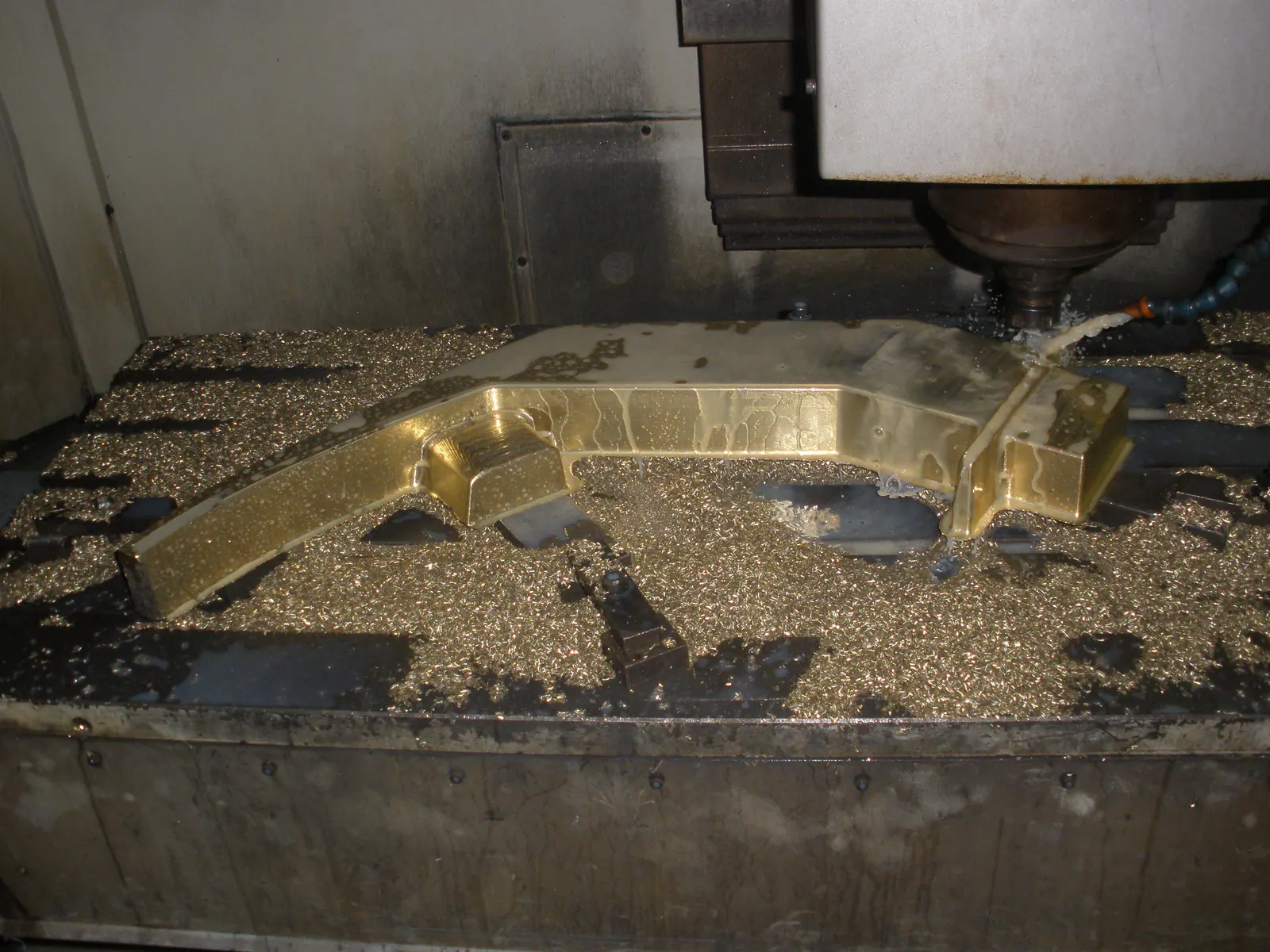
Immediately include machining. For mating surfaces, bores or threads, CNC machining of castings may be required. Machining stock, clamping surfaces and measuring references must then match the cast shape. Deburring and any coating are also part of the agreed final condition.
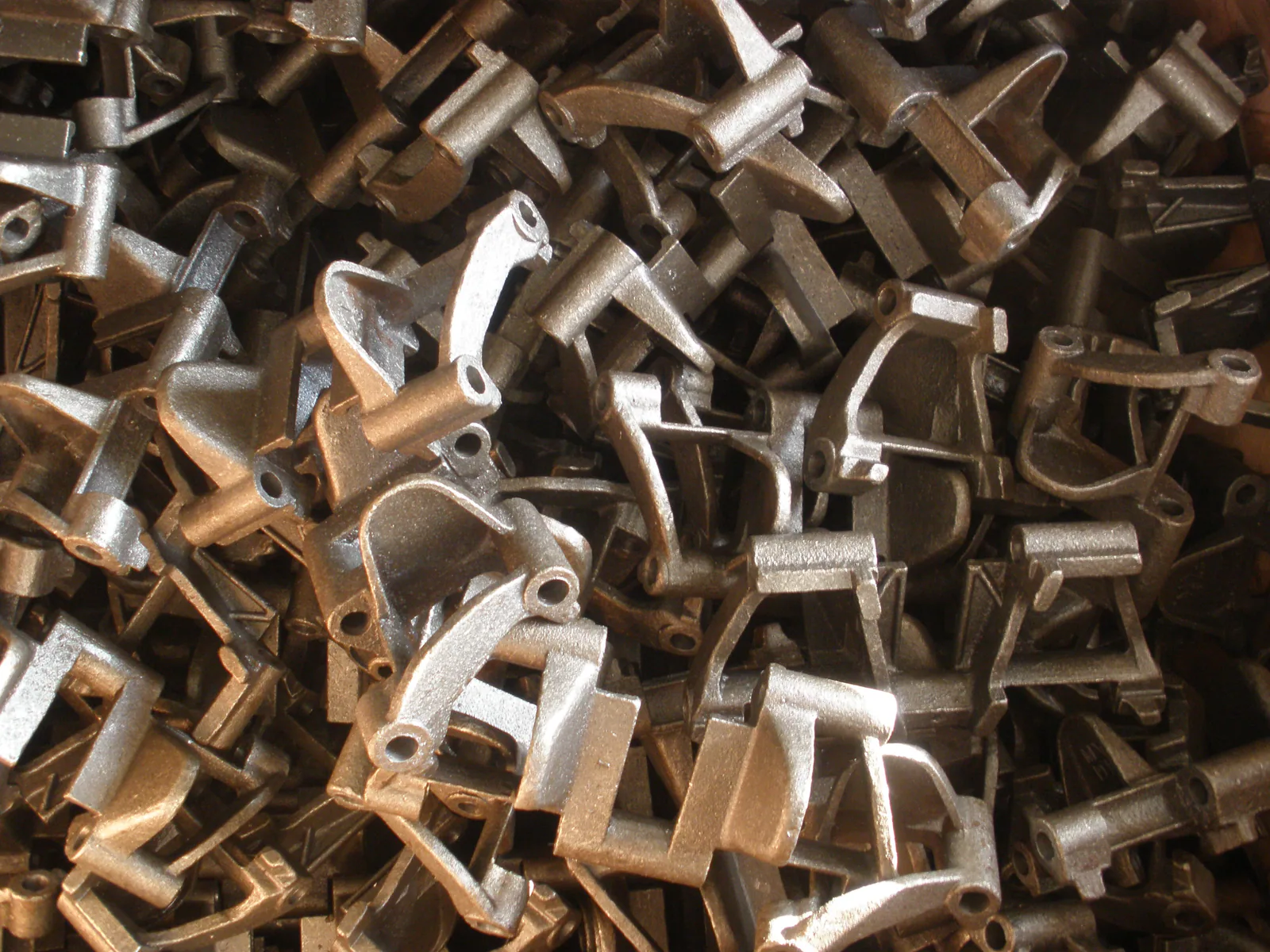
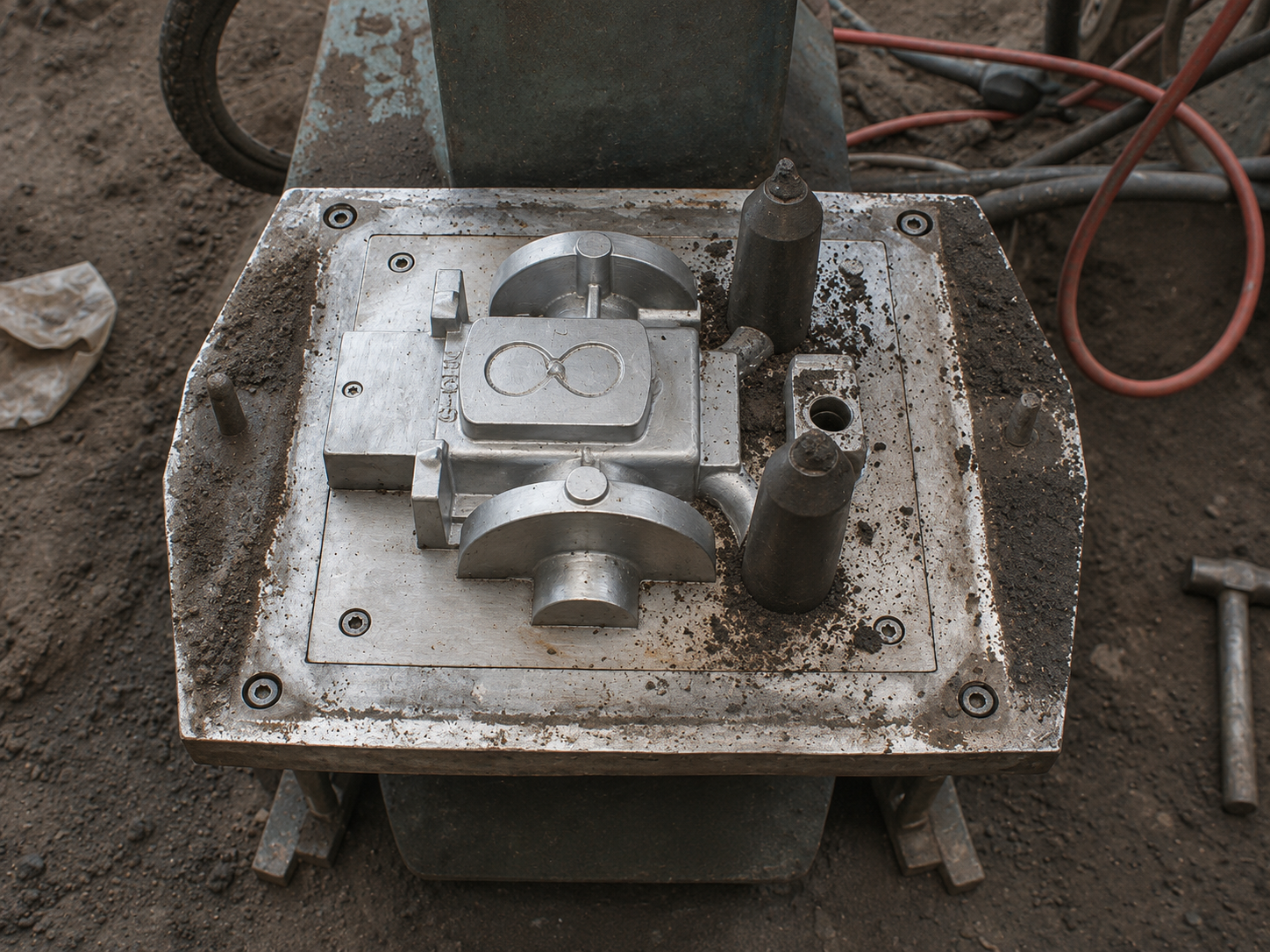
The images show examples of moulding tools, casting parts and CNC machining. The material and structure of your final casting mould are determined for the chosen casting route.

Collect drawing, alloy, acceptance and desired delivery condition.

Assess manufacturability, tool concept and machining.

After approval, have the specified mould version made.

Check sample parts and assess any corrections.

Agree on references, management and commitment to the series.
Before the first casting test, determine what needs to be demonstrated. Consider the correct drawing revision, material designation, critical dimensions and the desired surface quality. With an assembly, the fit with counterparts may also have to be reviewed.
A rough casting and a finished product have different inspection moments. A size that is milled later must be tested after that operation. If tightness or internal quality is functionally important, agree on the assessment method and acceptance criteria in advance. Additional tests are project agreements and are not automatically supplied with every casting mould.
Link the quality inspection to the use of the end product. For sized features, a measurement report can be agreed upon with the trial parts. Also describe how visible surfaces, reworked edges and any finishing are reviewed.
If test parts deviate, the cause, correction and new inspection are coordinated. A change can have consequences for tools, casting settings or finishing. The released samples and revision then form the reference for the series. Approval of the tools and release of the delivery are clearly recorded.
Compare quotes on the same job size. The price of the mould alone does not reflect what is required for approved castings. Discuss which design review, tests, corrections, tools and documentation are included and which activities are budgeted separately.
Justify the investment with the expected volume. The desired number of products per delivery, repeat orders and the stability of the design factor into the choice. A complicated detail or subsequent design change may require additional tooling. There is no fixed economic lower limit or universal lifespan for all die casting moulds.
Determine who will own it, where the tool will be stored and for what products it may be used. Agree on identification, maintenance, recovery and change management. In the case of a core or insert that is susceptible to wear, it can be discussed in advance how replacement and availability will be arranged.
Transferring a mould requires a technical assessment.The receiving machine, mounting, controls and connections must fit. Availability of tool data and any accessories is part of the transfer agreements. Therefore, please report a proposed other production location when submitting your request.
TOS connects the tooling process with the complete delivery: casting, processing, inspection and, where necessary, assembly. Also view the overview of outsourcing production to China for the connecting production routes.
Collect the current 3D model, the 2D drawing, the function of the casting part and the expected quantities. Please indicate whether you would like to receive a rough casting or a finished and finished product.
Record the exact metal or alloy designation. Discuss usage loads, visible surfaces and functional requirements. A different alloy or delivery condition may require a new assessment of the product and tools.
Assess which casting route suits the design and volume. Discuss release, partial seam, cores, wall structure and the required machining before the tool concept is established.
Adjust the mould structure, metal supply, venting and temperature inspection to the chosen process. Include the production environment and, where useful and agreed, a casting simulation in the assessment.
Record the approved revision, job scope, assessment moments and tooling agreements. Make it clear which test parts, corrections and data are part of the assignment.
After approval, the tools are built according to the agreed version. TOS coordinates progress and technical questions with the production partner. Design changes are first reviewed for cost and schedule implications.
Have test parts made with the agreed alloy and casting route. Assess the relevant product characteristics and have functional dimensions checked even after the agreed machining.
Record discrepancies and suggested corrections. After adjustment, the agreed new test or check follows. Determine which samples and results form the basis for tool acceptance and series start.
Check identification, reference samples and agreed tool data. Agree on storage, maintenance and the approach to repair or replacement for subsequent production runs.
Use the released version for the agreed series. In the event of a planned transfer, technical connection, protection during transport and data to be supplied are checked in advance.
A high-pressure casting mould and a mould belong to different processes. In high-pressure casting, metal is introduced under pressure; In mould casting the mould fills by gravity. The choice depends on, among other things, product geometry, alloy, quantities and the required final condition.
Among other things, dimensions, shape complexity, cores or slides, choice of material for the tool and required tests determine the price. Also compare the agreed corrections, documentation and any accessories. TOS assesses the mould costs together with the costs of the complete casting part.
This can be included in the application. Indicate which surfaces, bores and threads must be machined after casting. The cast shape, machining stock and fixture must be tailored to this. Inspection takes place on the agreed delivery statement.
This is reviewed per tool and receiving production environment. A different machine or casting assembly may have different requirements for mounting, dimensions and operation. Record ownership, data, fittings and transfer before mould is built.
Send a current 3D model, a 2D drawing with critical dimensions, alloy, quantities and usage requirements. Indicate visible surfaces, any tests, CNC machining and finishing. Also indicate where the tool should ultimately be used.
Technical request
Upload a PDF, DWG or STEP/STP file and receive a detailed response about manufacturability, the production route and your request for quotation.