
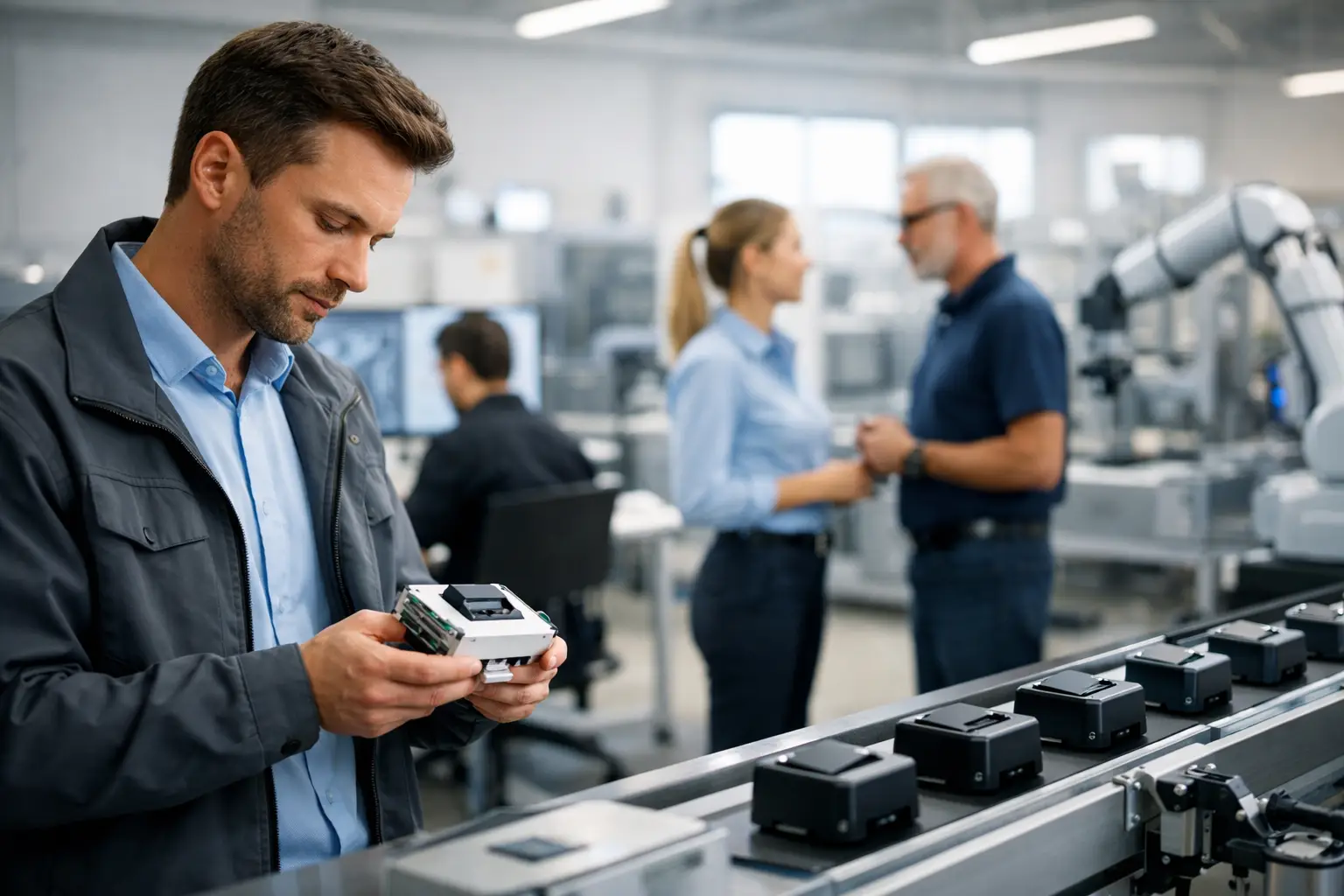
Scaling from prototype to production is not a simple increase in quantity. A prototype proves selected functions under limited conditions; production must deliver the same result repeatedly, at the planned cost and lead time, using controlled materials, processes and suppliers.
The scale-up phase is where hidden tolerance, tooling, capacity and quality problems become expensive. A gated approach exposes them while changes are still manageable.
Define what the prototype has proved
List the questions answered by the prototype and those still open. Was it built using production-intent material? Were dimensions representative? Was assembly performed with temporary fixtures or hand fitting? Did testing cover the operating environment and expected life?
A prototype made for appearance or functional learning may not validate the production process. The guide to outsourcing prototype manufacturing explains how to set a clear validation objective for each build.
Freeze requirements, not assumptions
Before production transfer, control the drawings, 3D models, bill of materials, specifications, software or test requirements and revision status. Mark critical characteristics and acceptance criteria. Resolve discrepancies between documents.
Design freeze should not block justified improvements; it should ensure every change is visible, reviewed and linked to a new revision.
Run a production-focused DFM review
Review the design against expected volume, process capability and assembly sequence. A feature that is easy to machine once may dominate cycle time in thousands of parts. Hand-adjusted tolerances can fail when components come from separate batches.
Evaluate material availability, standard stock, tooling access, fixture strategy, inspection access and packaging. Where appropriate, use the methods in component redesign for lower unit cost.
Select suppliers for ramp-up and series
The chosen supplier must support engineering questions, samples, corrective actions and rising volume. Verify equipment, relevant process experience, inspection capability, capacity, subcontractors and contingency plans.
Do not assume the prototype supplier is automatically the best series supplier. If a transfer is required, qualify the series source independently using a structured supplier qualification process.
Plan tooling and process validation
Define ownership, maintenance and transfer rights for moulds, dies, fixtures, gauges and programmes. Approve the tooling concept before investment. Where a tool has multiple cavities or stations, validate all of them rather than inspecting only one favourable output.
Document the intended process flow, key parameters, setup controls and inspection points. Critical outsourced processes should be visible in the plan.
Use pilot production as a separate gate
A pilot batch should use production-intent equipment, operators, materials, tooling and work instructions. It tests far more than the component: it reveals cycle time, yield, queueing, inspection workload, packaging and information flow.
Measure first-pass yield, scrap, rework and takt or cycle performance. Record deviations and close corrective actions before the batch is accepted as evidence of readiness.
Approve first articles and the quality plan
First-article inspection should verify critical dimensions, material, finish, function and documentation against the released baseline. For assemblies, include fit, torque, test and traceability requirements.
Then define ongoing controls. Not every characteristic needs 100% inspection, but critical risks need capable processes and appropriate evidence. Our supplier quality inspection plan guide helps select the right controls.
Ramp volume in controlled steps
Increase output only after the previous stage is stable. Early batches may need tighter monitoring, more frequent review and additional stock protection. Track supplier capacity, yield, open actions and on-time delivery.
Agree a stop-and-escalate rule for repeated defects or unauthorised changes. A deadline should not override an unresolved safety, compliance or functional risk.
Prepare the logistics system
Confirm order quantities, production lead time, packaging, labelling, transport, customs responsibilities and buffer policy. Long production runs can lower unit cost while increasing inventory and exposure to design changes.
The wider guide to outsourcing series production of custom parts connects these choices to ongoing delivery management.
Production-readiness checklist
- Requirements and revisions are approved.
- DFM actions are closed.
- Series suppliers and subcontractors are qualified.
- Tooling ownership and status are documented.
- Pilot and first-article evidence is accepted.
- Inspection, traceability and change control are active.
- Capacity, packaging and logistics are validated.
- Open risks have owners and due dates.
Conclusion
Prototype-to-production scale-up succeeds when design, process, supplier and supply chain mature together. Pilot builds, evidence-based approval and controlled volume increases prevent the launch date from hiding unresolved risk. TOS coordinates this complete transition, from DFM and suppliers to quality and delivery.