
Do you need a product-specific forging die? TOS manages forging dies from China from your finished part, material and expected volumes. We coordinate die impressions, any preform stages and the interface with the forging press.
The route involves more than two die halves. Trial forgings, trimming tools, corrections and subsequent machining all determine suitability. You retain one Dutch point of contact for technical preparation, toolmaking and agreements for repeat production.
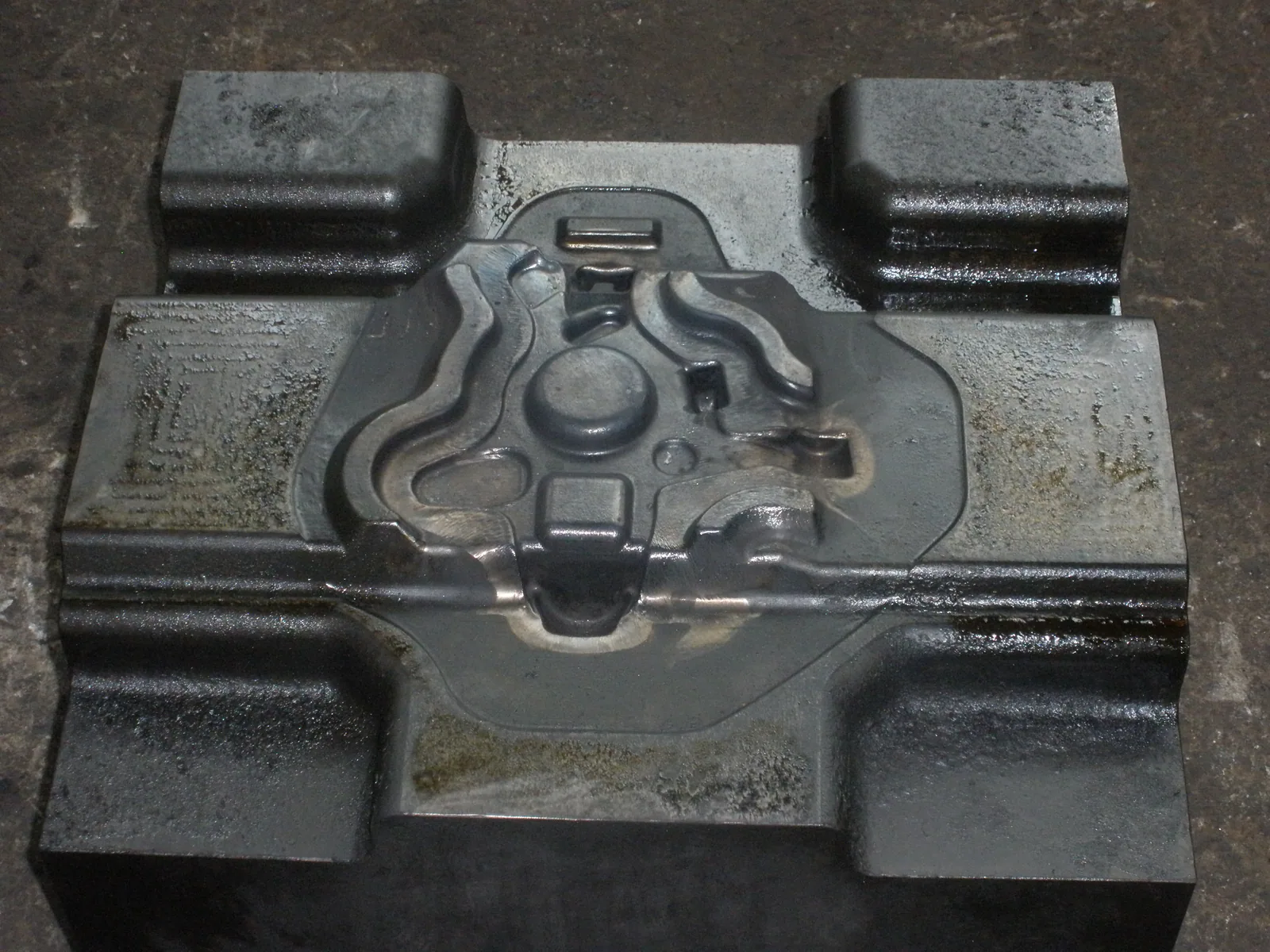

Assess part geometry and material flow together.

Coordinate preforms, final impressions and flash trimming.

Inspect sample parts against pre-agreed characteristics.

Record maintenance, wear and tear and documentation.
Technical coordination via TOS.
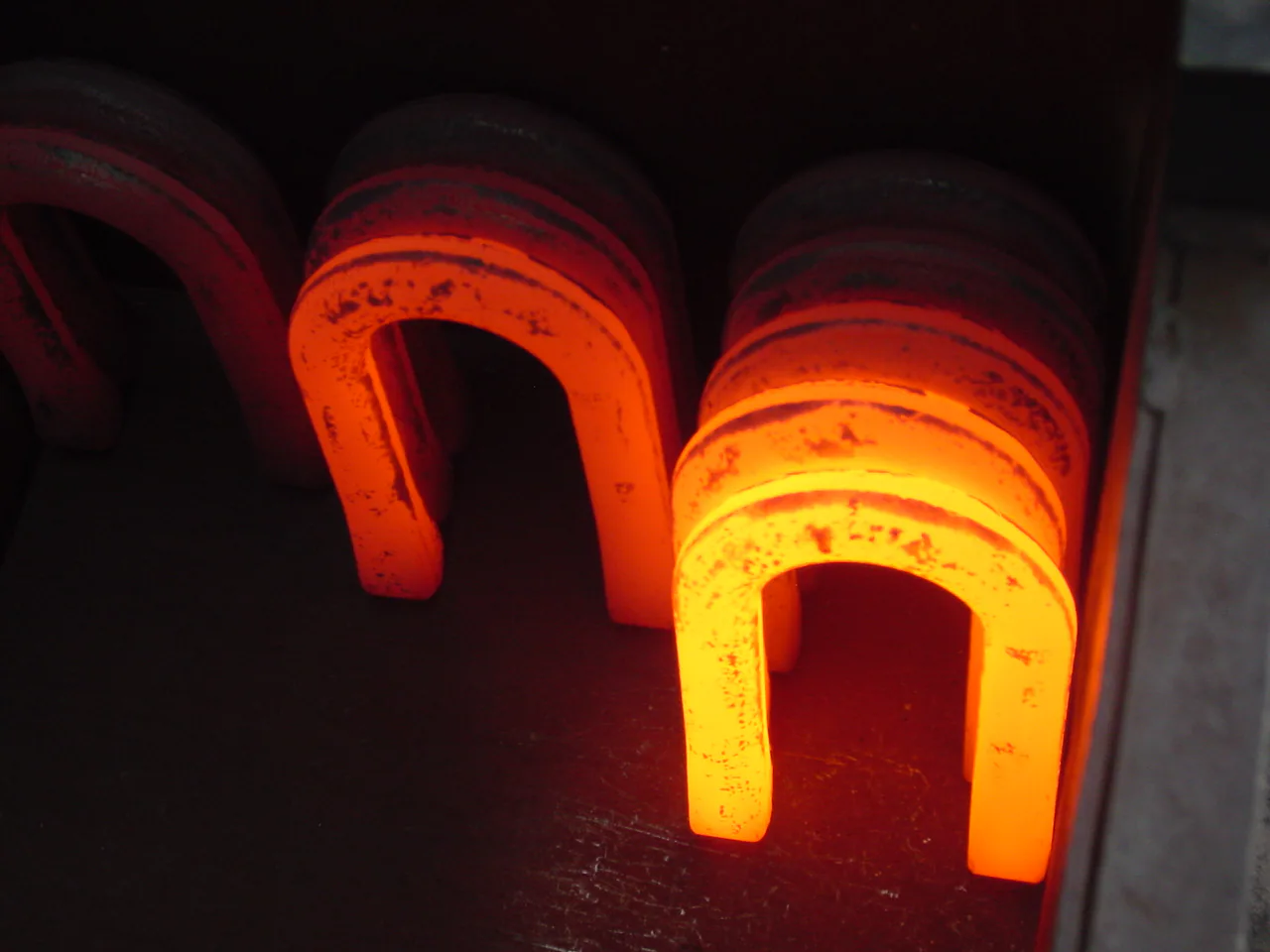
A forging die controls the formation of a metal blank under pressure or impact load. In shape-based forging, the tool halves contain the product shape. The distribution of the material must match bosses, ribs and transitions in the part. A final drawing alone does not yet describe how that shape is best created.
Start with the function and the condition to be delivered. Which surfaces will be processed later? What are the determining factors for fit, load or a connection with another part? TOS connects the tool request with the complete route for die forging in China.
During the design, die division, radii, release and accessibility are reviewed, among other things. Unfavorable material distribution may require a preform before forging the final shape. A possible design adjustment for manufacturability will first be discussed with you and recorded in the appropriate drawing revision.
With free-form forging, the material is formed with more general tools. That is a different choice than a product-related die cavity. Where relevant, also compare freeform forging before investing in a specific die.
Preform, final shape and burr belong to one tool concept. A forging route can consist of several operations. The production partner determines how the starting material is distributed over the die and which tooling steps are required for this. Depending on the product and process, calibration or an additional shaping operation may also be included.
With many forging processes, a burr is formed along the die division. This is removed in a subsequent step, for example with a cutting tool. A burr-free route requires its own technical assessment; this is not automatically suitable for every part.
Distinguish between the rough forging form and the final end product. For precise bores, threads and mating surfaces, CNC machining of forgings may be required. The machining stock and references must already be included with the forging die.
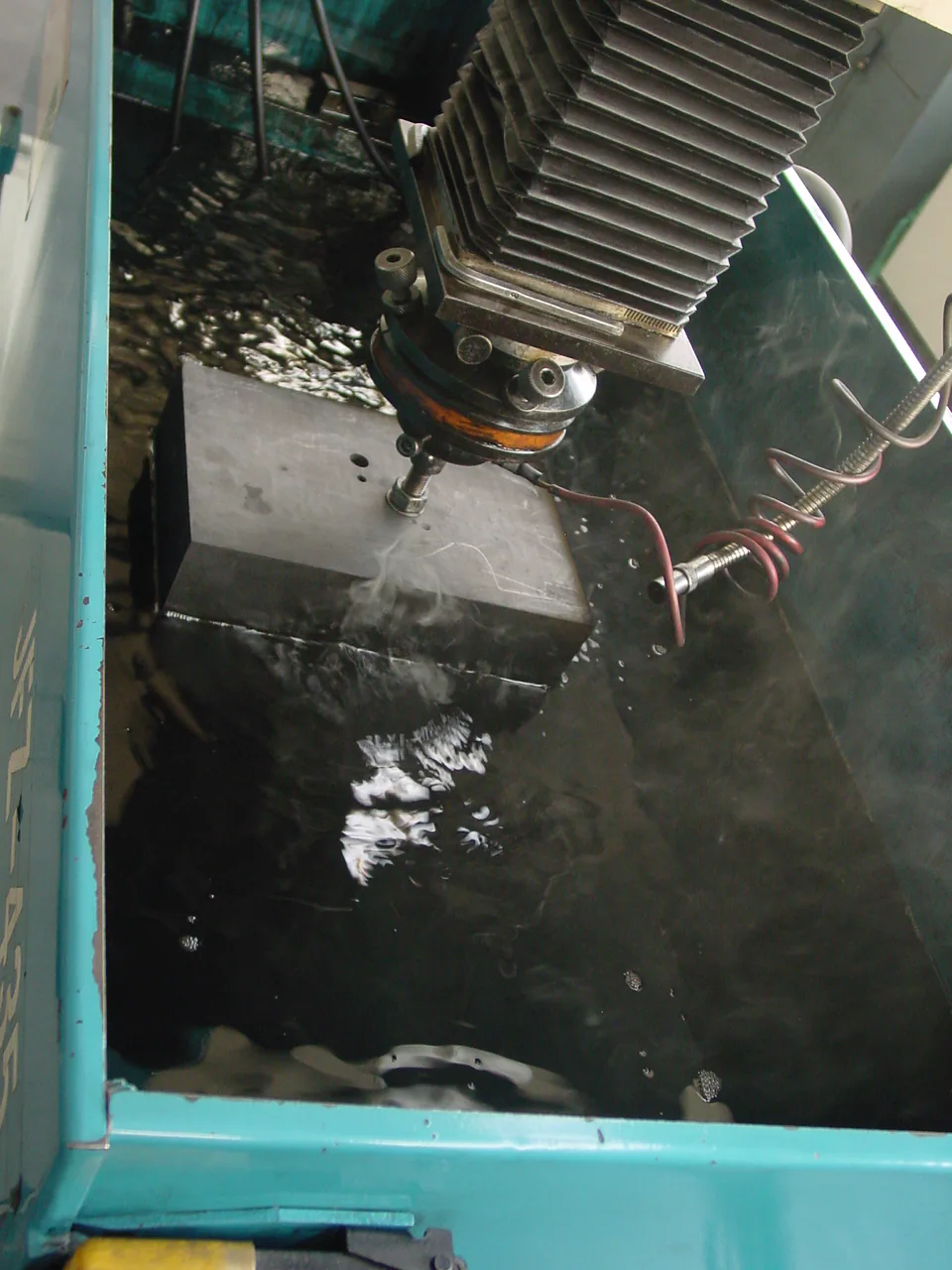
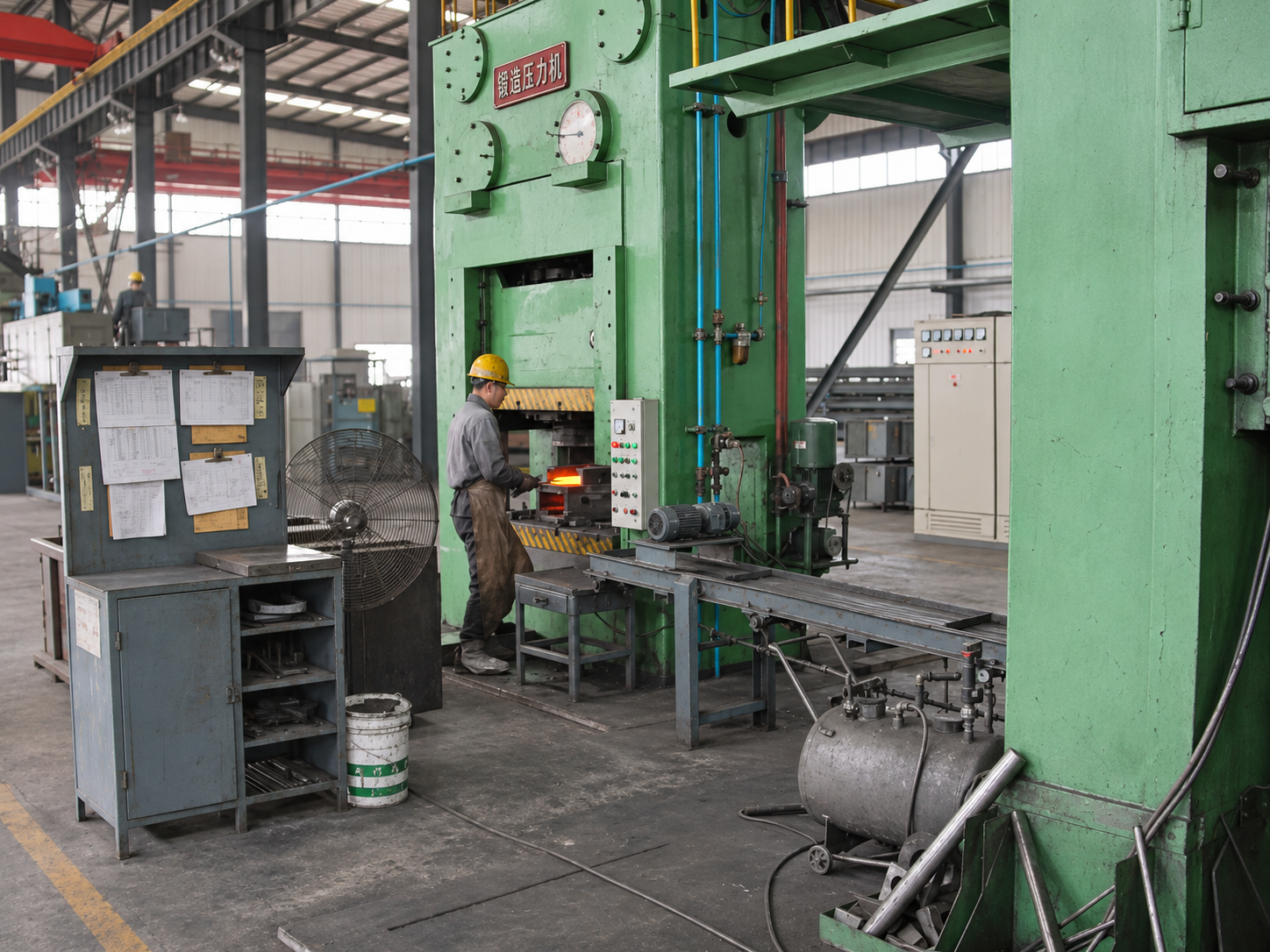
The photo shows the sinking of a steel die block during tool construction. Include cutting tools and any aids separately in the quotation, so that it is clear which production steps are included.

Collect drawing, metal type, application and series.

Assess die impressions and processing steps.

Match tools to the forging assembly.

Check, correct and release execution.

Record revisions, maintenance and follow-up orders.
The exact metal type and forging route are starting points. Cold, warm or hot forging places different demands on the tools. The toolmaker chooses material and treatment of the die based on the thermal and mechanical load, shape complexity and planned deployment. A fixed steel type or hardness is therefore not a general solution.
Discuss the intended press or hammer, tool holder, assembly space and available process options. Lubrication, temperature inspection and removing the product may also require attention. If the die must be used at another location, the data from that receiving assembly is required before construction.
Determine which characteristics are reviewed directly on the forging and which only after heat treatment or machining. The material condition and the measuring moment must match the requirement. For complete delivery, material certificates and an agreed measurement report can be included.
Test forging checks the combination of tool and process. Assess the test parts for the agreed shape, dimensions, filling and surface. Also discuss what additional controls are required for the application. A visual assessment alone does not prove internal quality or mechanical properties.
Possible simulation, additional material examinations and correction rounds are mentioned in advance in the assignment. If test pieces deviate, the cause is reviewed before a tool correction or process change takes place. New test results accompany the release.
Assess the tooling investment together with the expected delivery of your parts. Number of molding steps, which dimensions, construction complexity and additional tools influence the order. Trial forging, inspection and changes must also be clearly budgeted.
A low purchase price means little without the same order size. Ask what is included in the design, mold halves or inserts, cutting tools, sample material and documentation. Agree on how a correction will be handled and how a later product change will be priced.
The loads during forging can wear or damage the tool. Record how wear is reviewed, when repair or replacement is discussed and which spare parts must be available. A guaranteed lifespan cannot be assumed without project-specific principles.
Arrange identification, ownership, storage and maintenance. Also agree on which drawings, revisions, setting data and test references will be available. Before transfer, connection to the new installation, transport protection and a possible new test run are points of attention.
TOS links tool management to the agreed quality control. This way, the released product revision and acceptance points remain recognizable for repeat orders. Also view the overview of outsource production to China for related techniques and delivery.
Share the current final drawing, application, 3D model if available and expected volume. Indicate critical areas, dimensions and the desired delivery condition.
Record the metal type and properties of the end product. Agree on the requirements that apply after forging, heat treatment and any machining.
Assess die division, radii, release and material distribution. Possible product adjustments are substantively fine-tuned before the concept is released.
Coordinating preforms, final shapes and any calibration or cutting operations to the chosen forging assembly. Immediately include a planned other production location.
Make agreements about the complete scope of tools, test products, checks and correction rounds. Record ownership, documentation and the conditions for maintenance.
The toolmaker manufactures the die according to the agreed concept. TOS discusses progress and technical questions with the production partner.
Make the agreed forging tests with the intended material and process route. Assess the results according to the established inspection plan.
Investigate deviations and record adjustments. Assess new test pieces and any reworked parts before the execution is approved.
Connect tool identification, drawing revision and proof references. Coordinate maintenance, storage, spare parts and repairs in case of wear.
Plan the series based on the approved version. When delivering tools, machine connection, packaging and acceptance at the receiving location are arranged in advance.
The product shape, material distribution, dimensions and required processing steps partly determine the investment. Additional cutting tools, test forging, inspection and corrections also count. Compare the full job scope.
A preform may be necessary to suitably distribute the material before making the final shape. The production partner assesses this based on product geometry, material and forging process. The number of steps is not fixed for each part.
Yes, in many forging processes. Separate cutting tools may be required for this. Whether a burr-free route is possible and appropriate is reviewed per component. Include the complete tool set in the quotation.
This requires prior coordination with the receiving press or hammer and the available process options. Mere ownership of the die does not guarantee interchangeability. Include machine data, documentation and any new test series in the application.
This is related to tool design, die material, load, process inspection and maintenance. Discuss the expected deployment and criteria for wear, repair and replacement. A general fixed number of forgings is not a reliable guarantee for every project.
Technical request
Upload a PDF, DWG or STEP/STP file and receive a detailed response about manufacturability, the production route and your request for quotation.