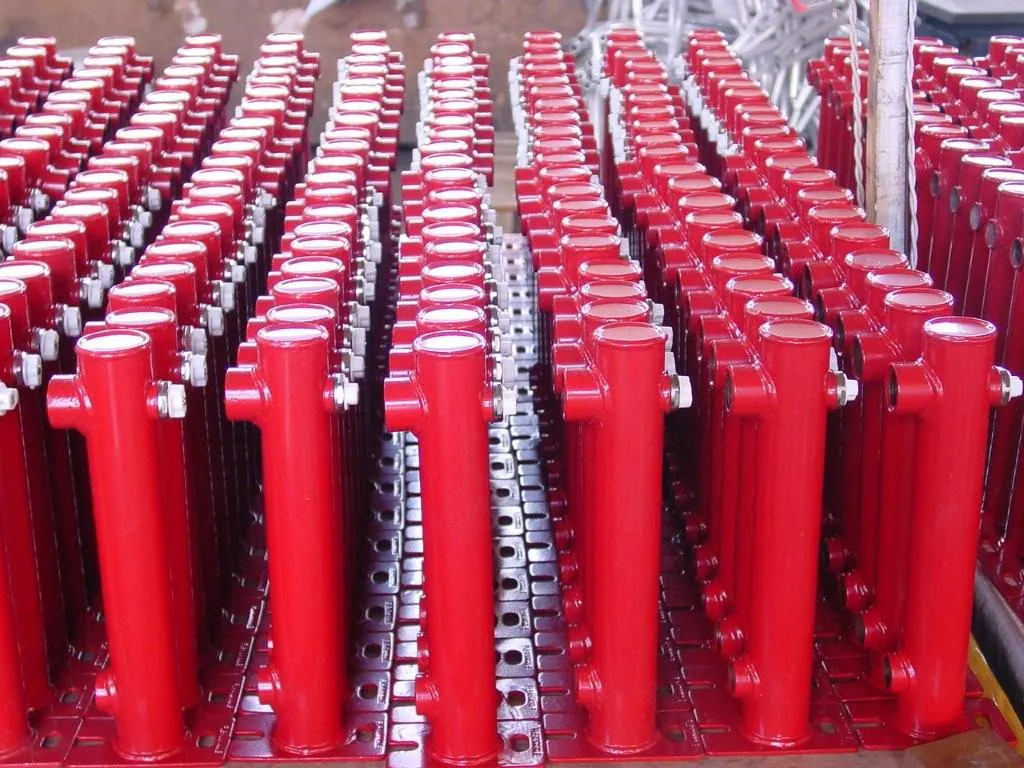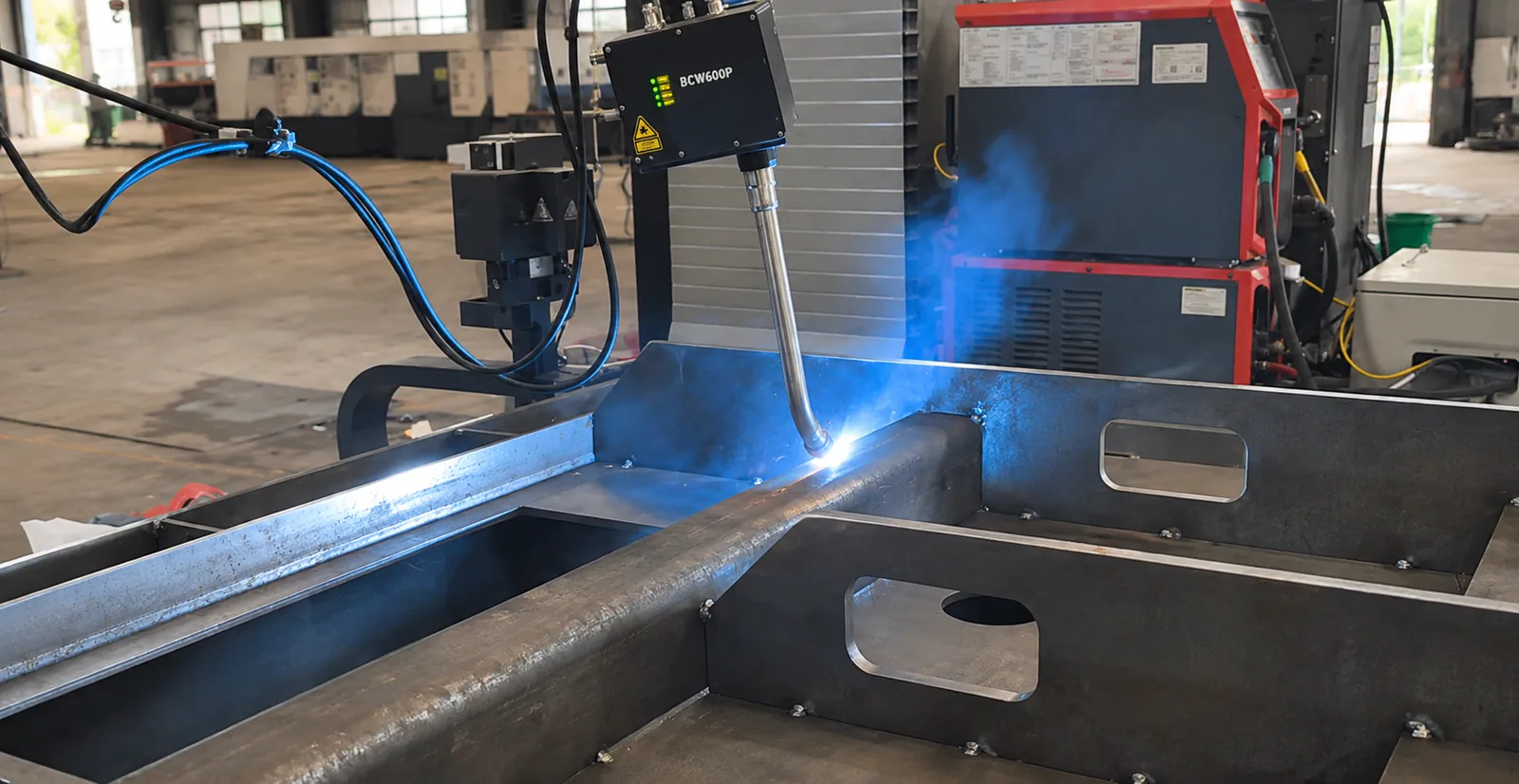

Do you need repeat production of welded parts or assemblies? TOS assesses whether robotic welding in China suits your product. We review the welds together with the consistency of individual parts, fixturing, accessibility and expected volumes.
The objective is a complete, ready-to-use product. The route can also include cutting, bending, bonding, CNC machining, surface treatment and assembly. You retain one Dutch point of contact for technical coordination, first articles, inspection and delivery.

Programming, welding fixtures, changeovers and inspection are reviewed against expected volumes.

Cuts, bends and joint preparation must follow the agreed welding and fixturing route.

Stops, clamps and workpiece position must hold the parts and leave room for the welding torch.

The first parts are tested for the agreed welded connections, final dimensions and functional fit.
TOS aligns robotic welding with machining, protection, assembly and the required delivery condition.
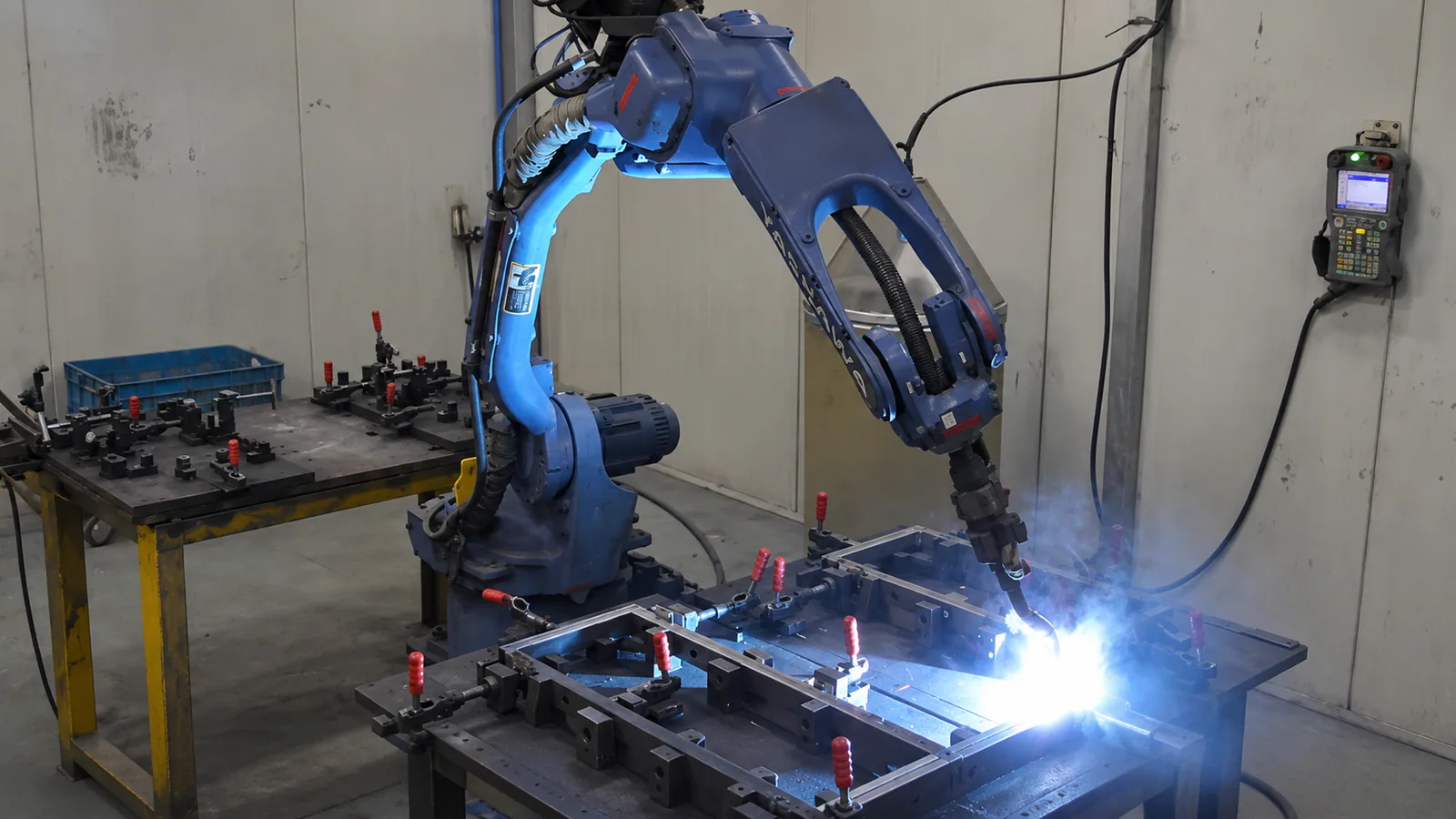
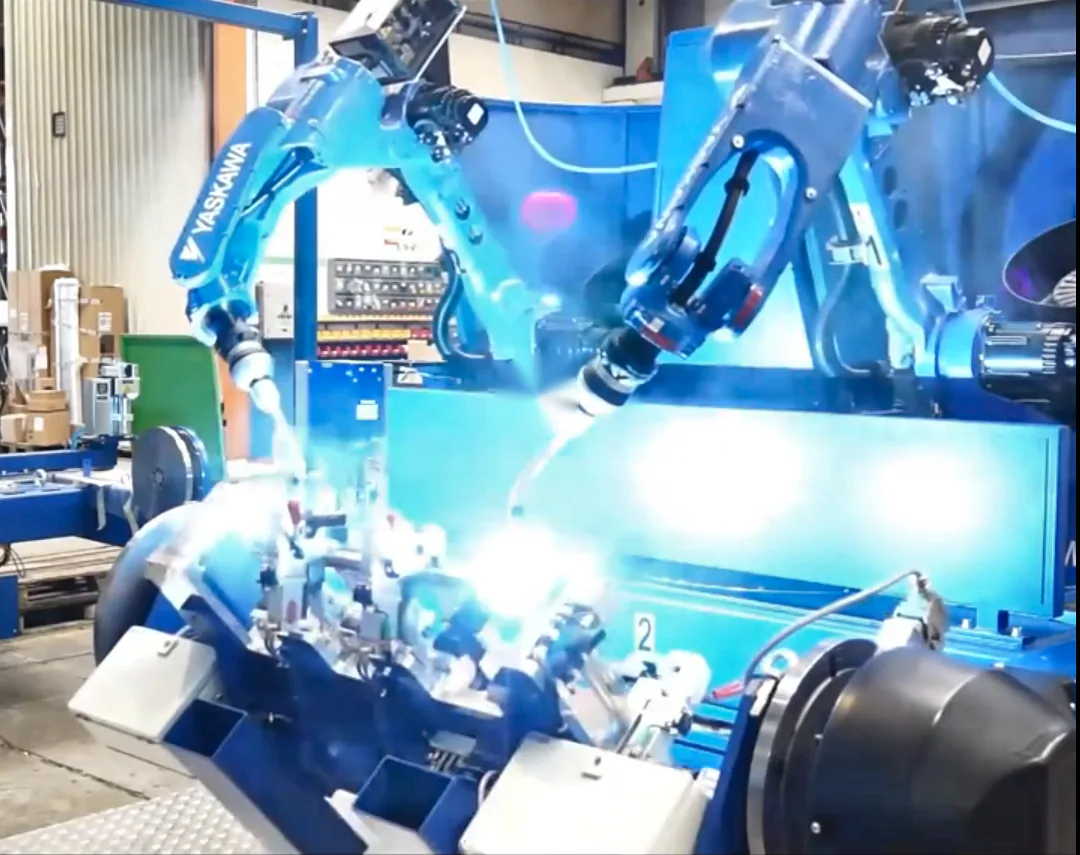
With robotic welding, a welding torch follows a programmed path along the joint. The robot automates the movement; the chosen welding process determines how the connection is made. In series production, this could, for example, be MIG/MAG welding.
A repeatable robot movement requires a suitable product and controlled preparation. The parts must fit reliably in the welding mold and the connection seams must remain within the agreed variation. The entire route, from individual parts to a welded assembly, is therefore reviewed.
Recurring frames, brackets, tube fabrications and sheet metal assemblies can be candidates. Accessible welds, stable geometry and predictable removal help with the decision. A robot is not automatically the best choice for every series product.
TOS compares the possibilities with manual welding. Depending on the product, a combination may be appropriate: certain welds automated, other connections or preparatory actions manual. TIG welding is also reviewed from a material and connection point of view.
From what quantities does robotic welding become interesting? There is no fixed lower limit for all products. Programming, welding jigs, bending, loading and unloading, welding time and inspection together determine the costs. TOS compares that investment with the first order, repeat orders and expected design changes. Production in China also includes machining, finishing, packaging and transport. A favorable welding time alone does not make the entire route suitable.

You share drawings, parts list, material, quantities and expected repeat orders.

We assess part variation, welding accessibility, welding jigs and required preparation.

The partner works out the welding route and makes the first products for the agreed assessment.

After release, series production and agreed operations, protection and assembly follow.

Final inspection, documentation, packaging and logistics are linked to your end product.
individual parts and fit. Variation in cutting length, settlements, holes or seams can affect the welding. Record references and critical dimensions of the parts. Pre-processing such as laser cutting and bending must be included in the clamping route fitting.
Positioning and clamping. A welding jig must repeatedly accommodate parts and support the relevant geometry. The assessment also includes loading, bonding, unloading and any product variants. Agree costs, ownership, maintenance and changes to product-related resources in advance.
Accessibility and work sequence. The torch, robot arm and any positioner need space. Clamps and adjacent parts must not block the execution. The partner assesses the welding sequence and required workpiece positions.
Heat and final dimensions. Robotic welding can also cause deformation. A repeatable job is no guarantee of the dimensions of the final product. Indicate which dimensions must be achieved after welding, finishing and finishing.
Programming and changes. A change in drawing, material or fixture can have consequences for program and process settings. Change management and the required reassessment are coordinated for repeat orders.
inspection remains necessary. Record visual assessment, dimensional check and any additional testing. Indicate required welding details, qualifications, standards and reports in the application. Automation does not replace these quality agreements.
A robotic welding route is not separate from the rest of production. TOS coordinates material, cutting, bending, clamping and welding from the complete composition. The proposed approach may also include manual bonding, additional welding or other operations.
After welding, CNC machining may be required for accurate faces, mounting holes or fits. This is followed by cleaning, appropriate surface treatment and, if necessary, assembly in accordance with the agreed delivery status.
The final choice is based on the feasibility, quality, costs and planning of the end product. Also see welding fabrications, quality inspection and the overview of outsourcing production to China.
The current assembly drawing, part drawings and parts list form the basis. Indicate material, revision, welding details, quantities and the expected volume over a longer period.
The partner assesses weld geometry, part variation, accessibility and possible workpiece positions. Robotic welding is compared with manual or combined welding.
Cutting, bending and other preprocessing must produce parts that fit together reliably. References and connection seams are matched to the fixture.
Welding jigs and clamps are tailored to positioning, loading, bonding, welding and removal. Agreements on costs, maintenance and changes to the tools are recorded.
The production partner develops robot paths, welding sequence and process settings for the selected connections. Where necessary, test welds or test cycles are carried out before the first products are reviewed.
A first product or test series is checked for the agreed welds, geometry and fit. Corrections will be processed prior to series release.
The series follows the released drawing, fixture and production route. Interim checks focus on the critical characteristics and relevant variation in parts or welding process.
Precise surfaces and holes can be finished after welding where necessary. Cleaning, finishing and any assembly are in line with the desired delivery condition.
The end product is reviewed according to the agreed dimensions, welding details and finish. Additional testing, material data and reports will be provided when agreed.
Packaging protects the assembly, mating surfaces and coatings. TOS coordinates logistics and delivery. For repeat orders, approved revisions and agreements on changes remain the starting point.
There is no universal minimum series. The trade-off depends on welding time, welding jigs, programming, bending, loading and unloading, inspection and expected repeat orders. TOS compares the total cost of the end product with alternative routes.
No. Geometry, accessibility, material, connections and part variation determine whether the route is suitable. A combination of robotic welding and manual work may be more suitable. The assessment starts with the drawing and application.
The robot must be able to perform the connection at the expected location. Good clamping helps with this, but does not automatically compensate for all variation in individual parts. The preparation, connecting seams and permitted deviations are reviewed together.
No. A repeatable robot path does not say everything about the weld connection or final geometry. Material, preparation, process settings and deformation remain important. Dimensional inspection, weld assessment and any additional tests are agreed in advance.
The application may include cutting, bending, welding, CNC machining, surface treatment and assembly. Provide drawings, parts list, material, quantities, critical dimensions, welding agreements and desired delivery condition. Feasibility is confirmed per product.
Technical request
Upload a PDF, DWG or STEP/STP file and receive a detailed response about manufacturability, the production route and your request for quotation.