
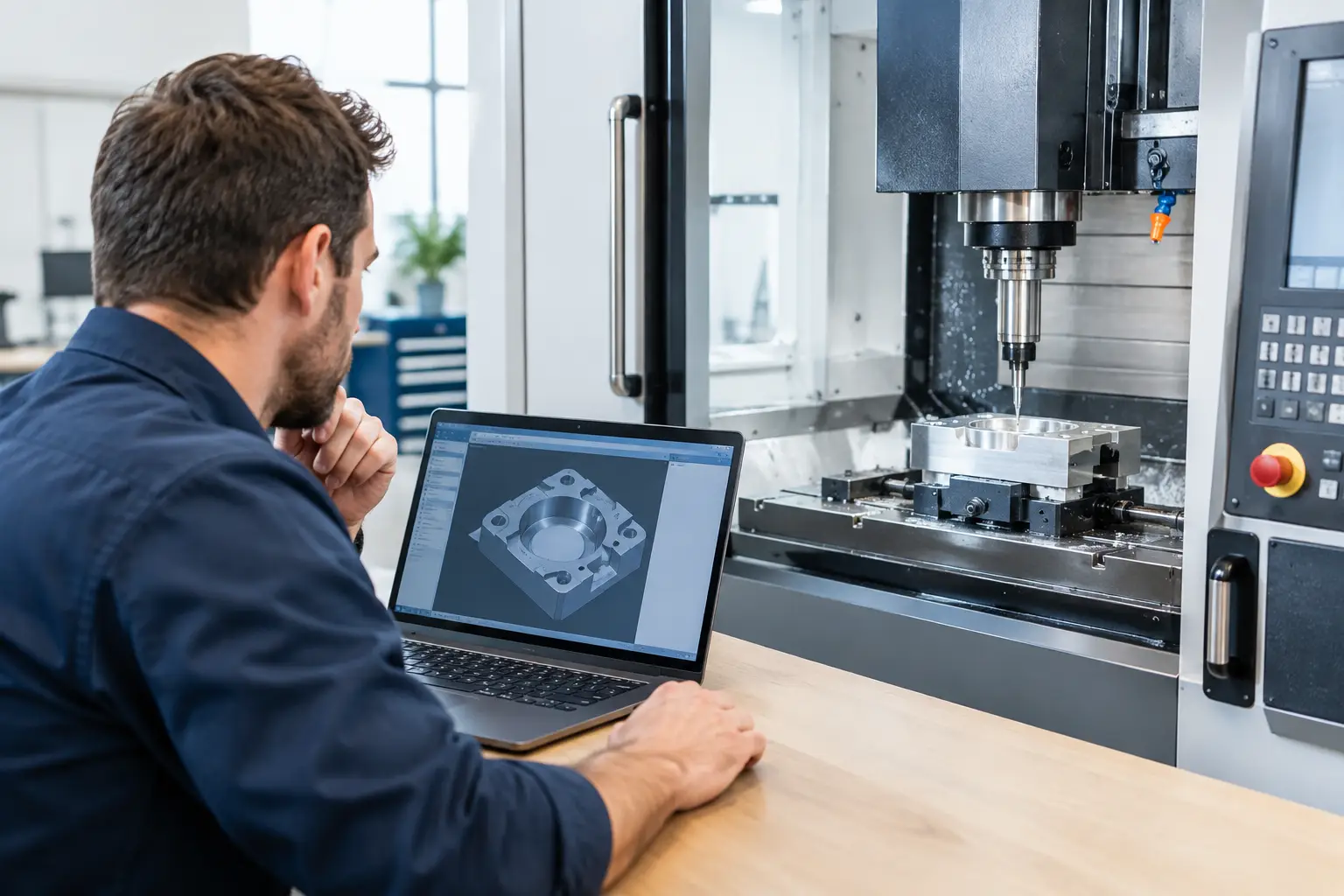
Outsourcing CNC milling gives OEMs access to specialist machines, programming knowledge and flexible capacity, but responsibility for the finished component still needs clear ownership. Good results depend on complete technical data, a supplier whose equipment fits the part, controlled sampling and transparent performance during series production.
Define a production-ready requirement
Provide a released drawing and 3D model, material grade, heat treatment, surface finish, annual volume, batch size and required certificates. Identify critical datums and characteristics. State whether sharp edges, cosmetic surfaces, cleanliness or special packaging matter. Avoid unnecessarily tight tolerances: they increase machining and inspection cost. Review our guide to achievable CNC machining tolerances when preparing the specification.
Match part geometry to supplier capability
Evaluate machine travel, spindle, axis configuration, workholding, probing and CAM capability. Three-axis machines can be highly efficient for prismatic parts, while four- or five-axis machining may reduce setups for complex features. Fewer setups can improve positional accuracy, but only when the process is properly engineered. Ask which machine and fixture concept are included in the quotation.
Review material and distortion risks
Machining behaviour varies by alloy, stock condition and heat treatment. Thin walls, deep pockets and large material removal can release residual stress and distort the part. Agree roughing, stress relief, finishing sequence and inspection temperature where relevant. For cast or forged blanks, define machining allowance and datum strategy with both suppliers.
Compare quotations on the same scope
Normalise material, programming, setup, fixtures, tools, inspection, deburring, finishing, cleaning, packaging and delivery. Check batch assumptions and minimum order quantities. A low unit price can conceal a large fixture charge or expensive secondary operation. Our overview of manufactured part cost drivers helps identify the economic levers.
Qualify the supplier with evidence
Review similar parts, quality-system scope, machine maintenance, calibration, nonconformance control and capacity. Verify how critical dimensions are measured and whether inspection equipment can reproduce the drawing requirement. For important or recurring work, use a shop-floor assessment supported by our supplier audit checklist.
Use a controlled first article
Order representative parts made with production-intent material, programming, workholding and finishing. Agree a first-article report for critical dimensions and certificates. Check not only measurement results but also burrs, cleanliness, markings, packaging and assembly fit. Resolve deviations through documented corrective action before approving series production.
Control revisions and process changes
Keep one approved data package and define how changes are released. Require approval before changes to material source, manufacturing location, major tooling or subcontracted finishing where these affect risk. Link orders to drawing revisions. The method in technical drawing handover prevents old programmes or prints from re-entering production.
Monitor series performance
Track on-time delivery, first-pass yield, nonconformities, response time and open actions. Review capacity ahead of demand changes. Use traceability appropriate to the risk, connecting material certificates and inspection records to the delivered batch. Do not allow repeated sorting to replace root-cause correction.
One point of control for multiple operations
Milled parts often require heat treatment, grinding, anodising, coating or assembly. Fragmented purchasing can create gaps between suppliers. TOS coordinates machining and secondary processes, validates quality evidence and manages delivery through one accountable route. For the broader principles, read our guide to outsourcing CNC machining.
Plan workholding and datum transfer
Workholding is part of the process, not an incidental supplier choice. Review how the part is located, clamped and supported in each setup. Excessive clamping can distort thin sections, while poor datum transfer can create positional errors between faces. For repeat production, agree fixture ownership, maintenance and replacement. Where soft jaws or dedicated fixtures are used, confirm how their condition is checked.
Control secondary operations and cleanliness
Deburring, washing, marking and surface treatment can change dimensions or contaminate critical interfaces. Define edge-break requirements, protected surfaces and cleanliness criteria. If an outside processor is involved, retain batch identity and inspection responsibility across the transfer. Packaging should prevent contact damage and corrosion during storage and shipment.