
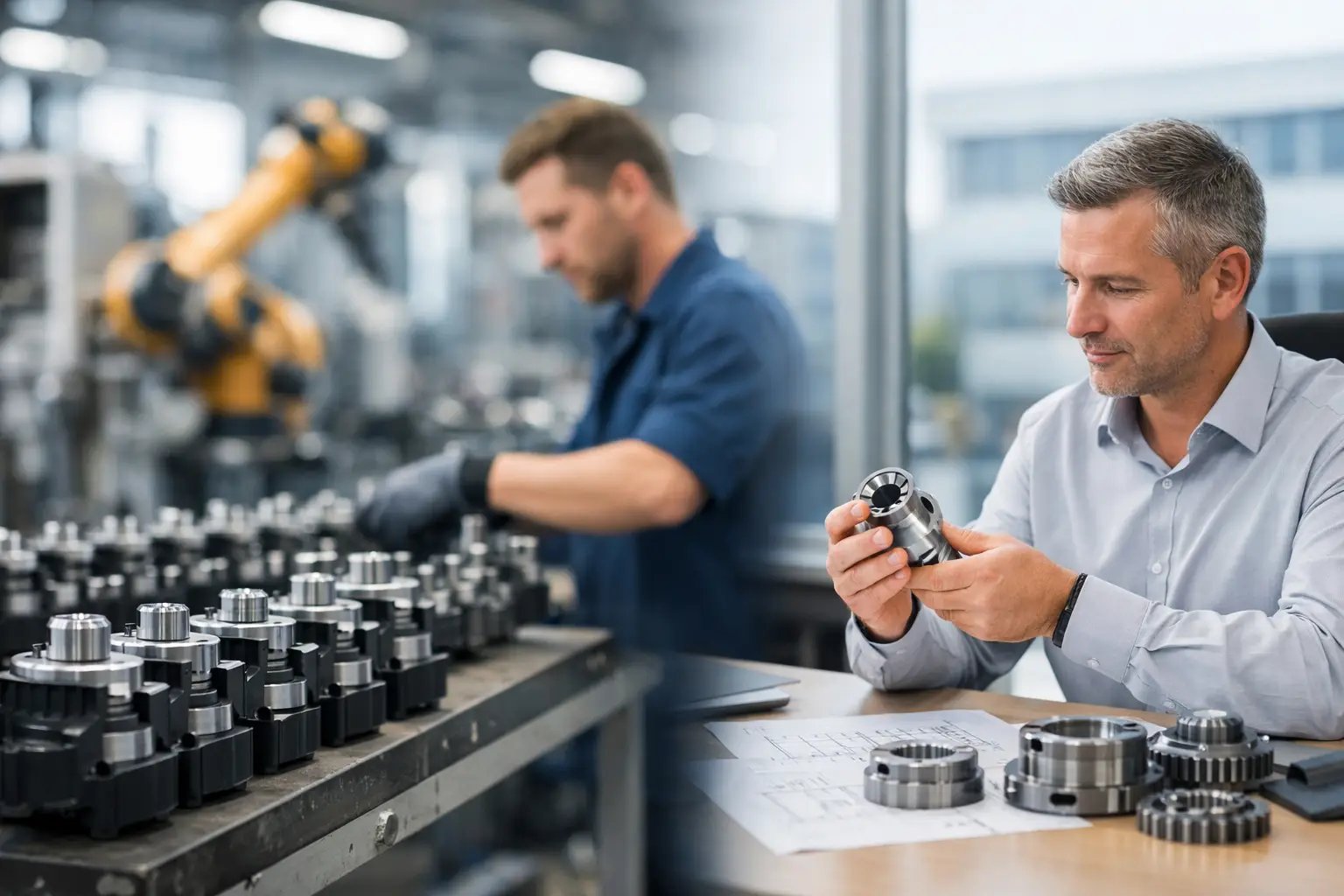
Outsourcing machine building series production can release internal capacity and reduce cost, but the transfer must preserve configuration, quality and delivery. A prototype that works once is not automatically ready for repeat production across multiple suppliers and batches.
Recognise the right moment to outsource
Common triggers are growing volume, internal bottlenecks, specialist processes, cost pressure and a need to focus internal resources on engineering or final integration.
The best time is when product requirements are sufficiently stable, yet there is still room to improve manufacturability before a large volume commitment.
Assess design maturity
Review drawings, models, BOMs, software, tolerances, test methods and approved deviations. Identify prototype adjustments that were never formally documented.
Use transferable manufacturing documentation to ensure the external route does not depend on internal memory.
Define the outsourced scope
Options include individual components, welded frames, subassemblies, complete modules or build-to-print machines. A broader scope reduces handovers but requires stronger supplier integration and test capability.
Retain clear ownership of design, safety, compliance and final configuration.
Group parts into logical packages
Bundle parts by process, material, tolerance or assembly. Avoid splitting tightly interacting components across suppliers without one party controlling interfaces.
For modules, define supplied condition, connection points, test evidence and packaging.
Run DFM and value engineering
Series volume can justify better fixtures, standard materials, part consolidation or alternative processes. Review tolerance, machining access, weld design and assembly sequence before freezing the series route.
The goal is stable cost and repeatability, not merely a lower first quotation.
Select suppliers for series capability
Prototype responsiveness and series control are different capabilities. Assess capacity, repeatability, maintenance, inspection, planning and subcontractor management.
Use supplier qualification and verify the intended site and process through samples or pilot production.
Validate components and assembly
Approve production-relevant first articles and critical process evidence. For assemblies, test fit, function, torque, wiring or pressure as applicable. Confirm that inspection reports link to the correct revision and batch.
See outsourcing industrial assembly for additional controls.
Plan the production ramp
Start with a pilot batch using increased inspection and short feedback loops. Measure yield, cycle time, rework, assembly issues and actual lead time.
Increase volume only after corrective actions are closed. Where continuity is critical, keep the current route available during qualification.
Control configuration and changes
Machine-building products often evolve. Establish revision effectivity by serial number or batch and require approval for supplier changes. Keep mechanical, electrical and software configurations aligned.
Integrate logistics and line-side delivery
Define packaging, labels, kit structure, delivery sequence and buffer stock. Large or sensitive assemblies may require transport fixtures and preservation.
Coordinate forecasts, minimum order quantities and recovery plans with the supplier.
Measure the business case
Compare tooling, unit cost, internal hours, quality, inventory and capital. Include the value of freed engineering and factory capacity. Use the total cost model.
Decision checklist
- Stable requirements and controlled documentation
- Clear retained and outsourced scope
- Demonstrated supplier series capability
- Approved first articles and pilot batch
- Configuration and change-control process
- Quality, assembly and functional testing
- Logistics, capacity and continuity plan
TOS supports component families, modules and serial supply through outsourcing series production. Review technical manufacturing outsourcing or contact us to assess a machine-building programme.
Frequently asked questions about machine-building series production
Should complete machines or only components be outsourced?
Choose the scope that creates clear interfaces and matches supplier capability. Components are easier to qualify; modules can reduce internal coordination but need stronger functional testing and configuration control.
How is engineering change handled during a series?
Use formal change requests, impact review and effectivity by batch or serial number. Confirm disposition of existing stock and update drawings, BOMs, software and inspection together.
What proves that the ramp-up is complete?
Stable yield, approved quality evidence, achieved cycle and lead time, closed corrective actions and successful repeat delivery provide stronger proof than a single accepted batch.