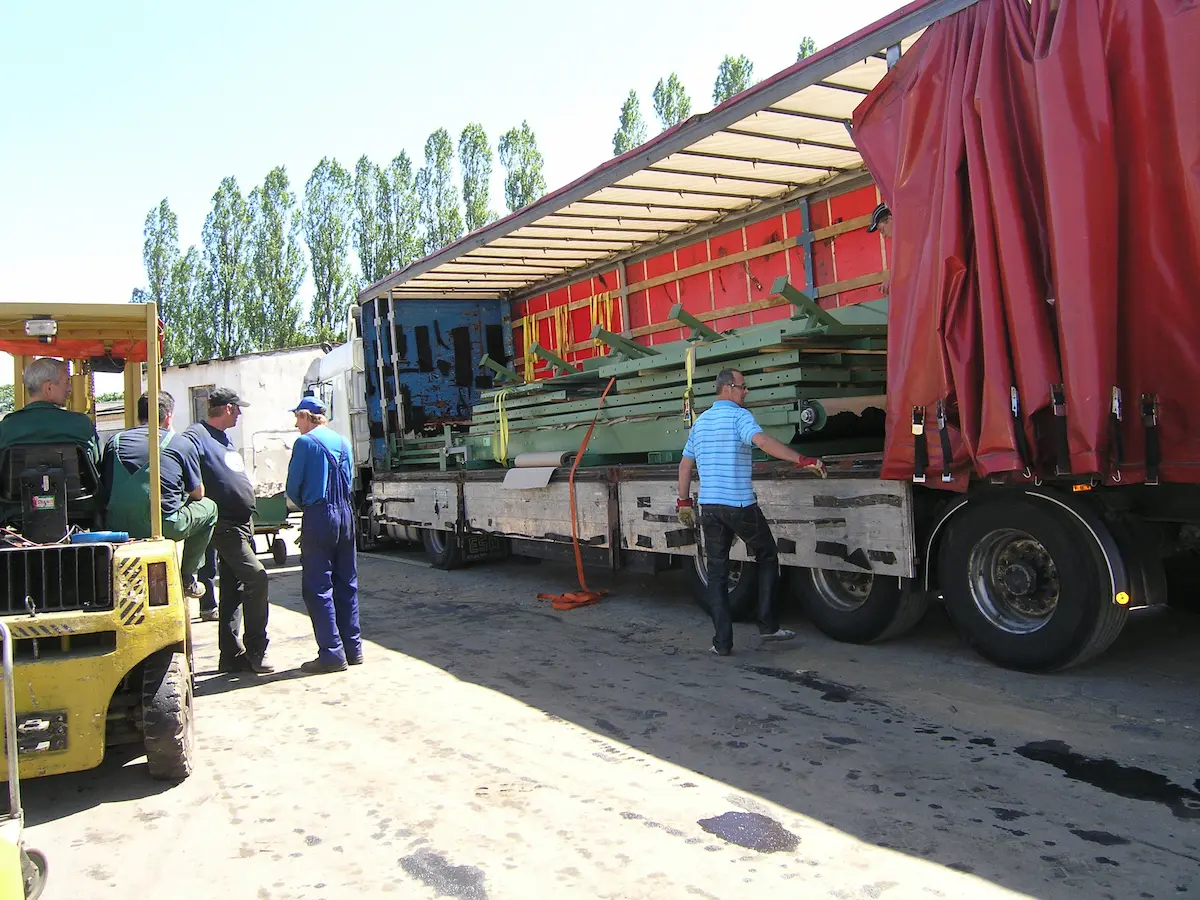

Transport from Poland starts with a product that is ready to ship and a destination prepared to unload it. For your manufacturing order, TOS coordinates packaging, loading, transport and delivery. From boxes of parts and pallets of sheet metal to large frames and machinery, the logistics plan is matched to the product, schedule and delivery location across Europe.

Collection is aligned with completion, inspection and packaging.

Protection and support match the product’s shape, finish and handling requirements.

Shipment data determines the required loading space and transport method.

The delivery address, time window and unloading equipment are confirmed in advance.

TOS keeps the manufacturer, carrier and recipient aligned.
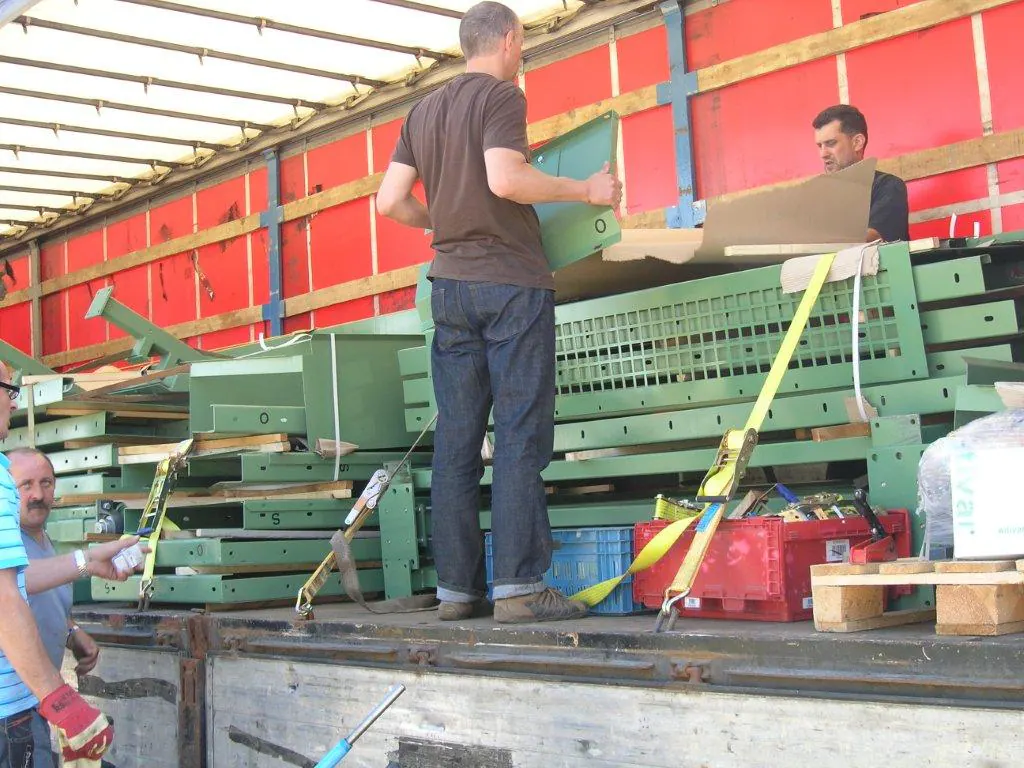
Weight alone is not enough to plan a shipment. Packaged dimensions, the number of loading units, stackability and vulnerability also determine the right solution. A lightweight but bulky fabrication may require considerable loading space, while finished parts may need extra protection against contact and movement.
We therefore collect the shipment data before the final booking. The collection location, actual readiness date and available loading equipment are confirmed in advance. This helps prevent avoidable problems during collection or at the delivery address.
Production-ready is not the same as transport-ready. The agreed quality control, packaging, identification and documentation must be complete before the shipment is released. A change in the production schedule may therefore also affect the collection date.
TOS connects delivery with your manufacturing in Poland, from finished sheet-metal parts to assembled modules and machinery. Part shipments and consolidation are assessed for feasibility in advance.

We collect quantities, packaged dimensions, weights and the delivery address.

Planning, loading method, packaging and required equipment are agreed.

Products are inspected, packaged and identified before collection is authorized.

Collection follows the confirmed readiness date and transport arrangements.

The recipient checks quantities and visible condition upon arrival.
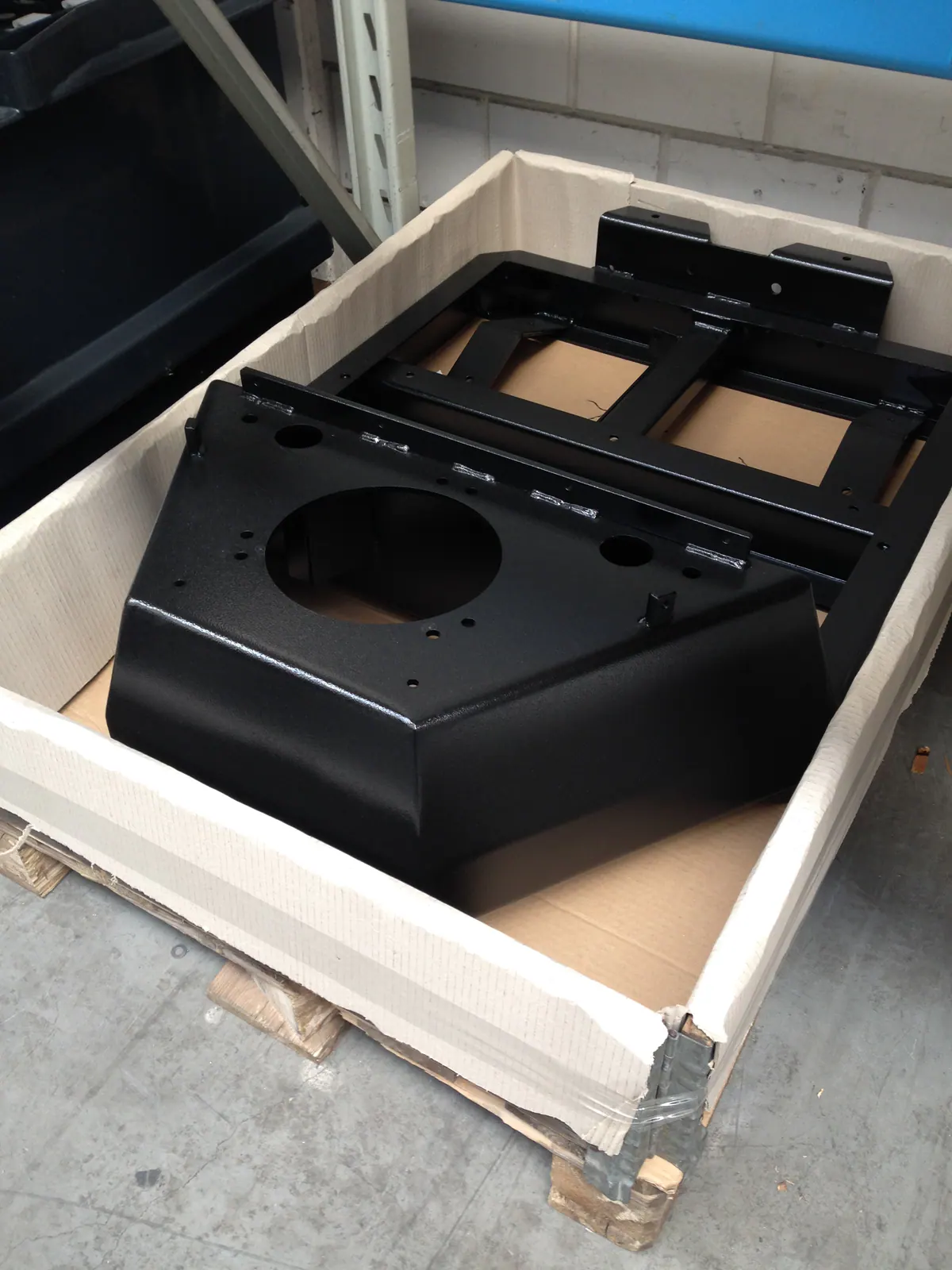
Small items such as CNC-machined parts can be packed by item or set, with labels matched to your receiving process. For palletized goods, the outer dimensions, total weight, stackability and protection of visible surfaces are important planning data.
Welded fabrications and machine frames with a large or irregular shape require suitable support and an appropriate loading method. We assess whether transport frames, separators or another packaging solution are needed and how the products will remain secure in transit.
For assembled machinery and modules, we consider the transport position, protruding parts, center of gravity and accessible lifting points. Delivery in modules may sometimes be more practical. Non-standard dimensions, weights or handling requirements always require a separate assessment.
Good packaging supports the product and protects surfaces, edges and vulnerable components. It must also suit every handling step along the route. Agree whether the shipment can be stacked, how it will be lifted and whether packaging or transport frames must be returned.
Check the delivery location as well: vehicle access, opening hours, unloading space and available lifting equipment. A tail lift, forklift or crane is not automatically included with every shipment. TOS coordinates the required facilities with the parties involved.
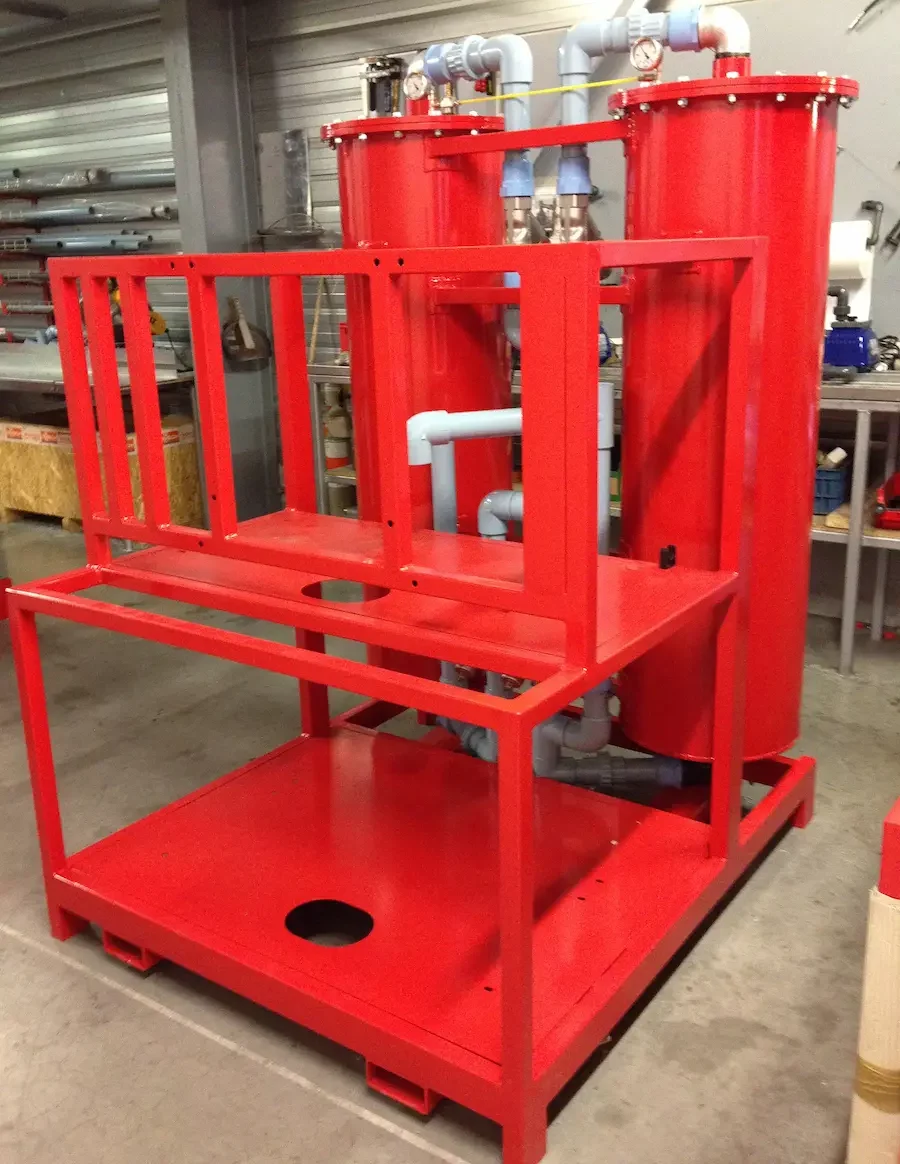
Provide the number of packages or pallets, the outer dimensions including packaging and the total weight of each loading unit. Include protruding parts, stackability and any special sensitivity. For machinery, a photograph or drawing of the transport position is helpful.
Boxes, pallets, crates or transport frames are selected according to the product and route. This may include separators, edge protection and protection for machined surfaces. Define which packaging is part of the order and who is responsible for preparing it.
Confirm whether rear, side or overhead loading is required and which lifting equipment is available. The packaged product must remain accessible and safe to handle. The manufacturer and carrier must receive the same loading data.
Depending on size, vulnerability and schedule, groupage, part-load or full-load transport may be appropriate. Additional handling can affect the required packaging. TOS coordinates the selected method with the carrier involved in the manufacturing order.
Distinguish between the planned production date, the actual readiness notification and the delivery date. Inspection and packaging form part of that preparation. Changes are coordinated before a new collection or delivery time is confirmed.
Combining several items in one shipment can be practical when they are ready at the same time. A part shipment may support your production sooner, but it requires additional handling and may increase transport costs. Agree in advance which option best serves your order.
A clear packing list connects items, quantities and order references to the shipment. Labels support efficient receipt at your warehouse. Agreed inspection reports and other product documents are clearly linked to the delivery.
Provide opening hours, a contact person and any registration requirements. Check access, maneuvering space and the capacity of unloading equipment. Agree who will unload the shipment and whether a tail lift or crane is required.
Heavy, long or wide products must be assessed early. The route, vehicle, loading method and possible special arrangements may require additional preparation. A complete machine is therefore not automatically treated as a standard pallet shipment.
For recurring deliveries, fixed packaging agreements and reusable carriers can be beneficial. Define who organizes returns and how quantities are tracked. If the product or packaging changes, review the transport data again.
For a client in the fruit and vegetable storage industry, we manufacture a wide range of products, ranging from welded....
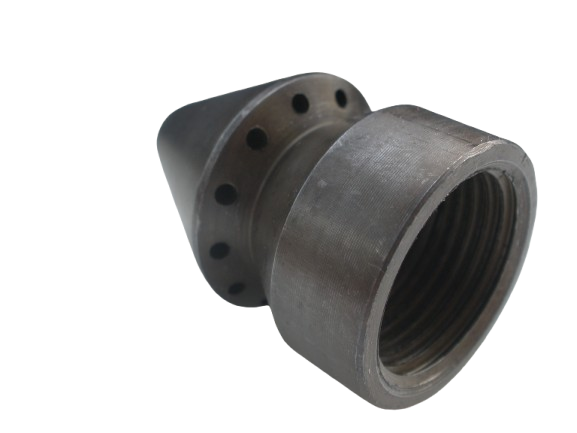
For a client specializing in self-propelled sprayers, we manufacture special spray nozzles that must withstand high pressure, chemical loads, and....
This depends on the collection and delivery locations, transport method, availability and any intermediate handling. The readiness notification and agreed time window also matter. TOS coordinates a realistic schedule for your order; production and transport lead times are assessed separately.
There is no fixed rate that suits every shipment. Packaged dimensions, weight, required loading space, route and additional equipment all affect the cost. Complete shipment data allows transport to be assessed as part of your manufacturing order.
This is assessed from the dimensions, weight, transport position and available loading and unloading equipment. Large or unusual loads may require a different vehicle and additional preparation. Provide this information early in the project.
Part shipments are possible when production and scheduling allow. They can support your consumption or assembly plan, but may involve additional packaging and transport costs. The required split is agreed in advance.
Provide the order reference, collection and delivery locations, number of loading units, packaged dimensions and weights. Include the required date, stackability, vulnerable areas and available loading and unloading equipment. Photographs or a drawing are helpful for large assemblies.
Technical request
Upload a PDF, DWG or STEP/STP file and receive a detailed response about manufacturability, the production route and your request for quotation.