
CNC turning and precision parts in Poland

CNC turning in Poland

Are you looking to have CNC-turned parts manufactured in Poland for machinery, equipment, or technical products produced in series? TOS will evaluate your drawing, select a suitable production partner, and coordinate material procurement, CNC turning, secondary operations, quality control, and delivery—all managed through a single Dutch point of contact.

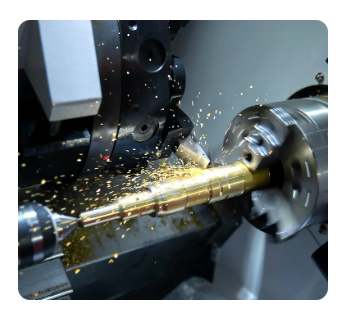
CNC turning machine producing precision metal parts in Poland

Why choose CNC turning in Poland via TOS?

Suitable for both prototypes and recurring production runs

TOS identifies a production route tailored to your specific quantities, material, tolerances, and required lead times.

Partner selection for each turned part

Factors such as diameter, length, complexity, batch size, and required secondary operations determine the ideal machining partner.

Turning combined with milling and drilling

Where technically feasible, features such as driven-tool operations, cross-drilling, slots, and threading can be performed in a single setup.

Quality control and documentation available

Requirements for critical dimensions, material certificates, first-article inspections, and measurement reports are defined and agreed upon for each individual inquiry.

European production and streamlined logistics

Manufacturing in Poland combines a European production process with efficient delivery to the Netherlands and Belgium.
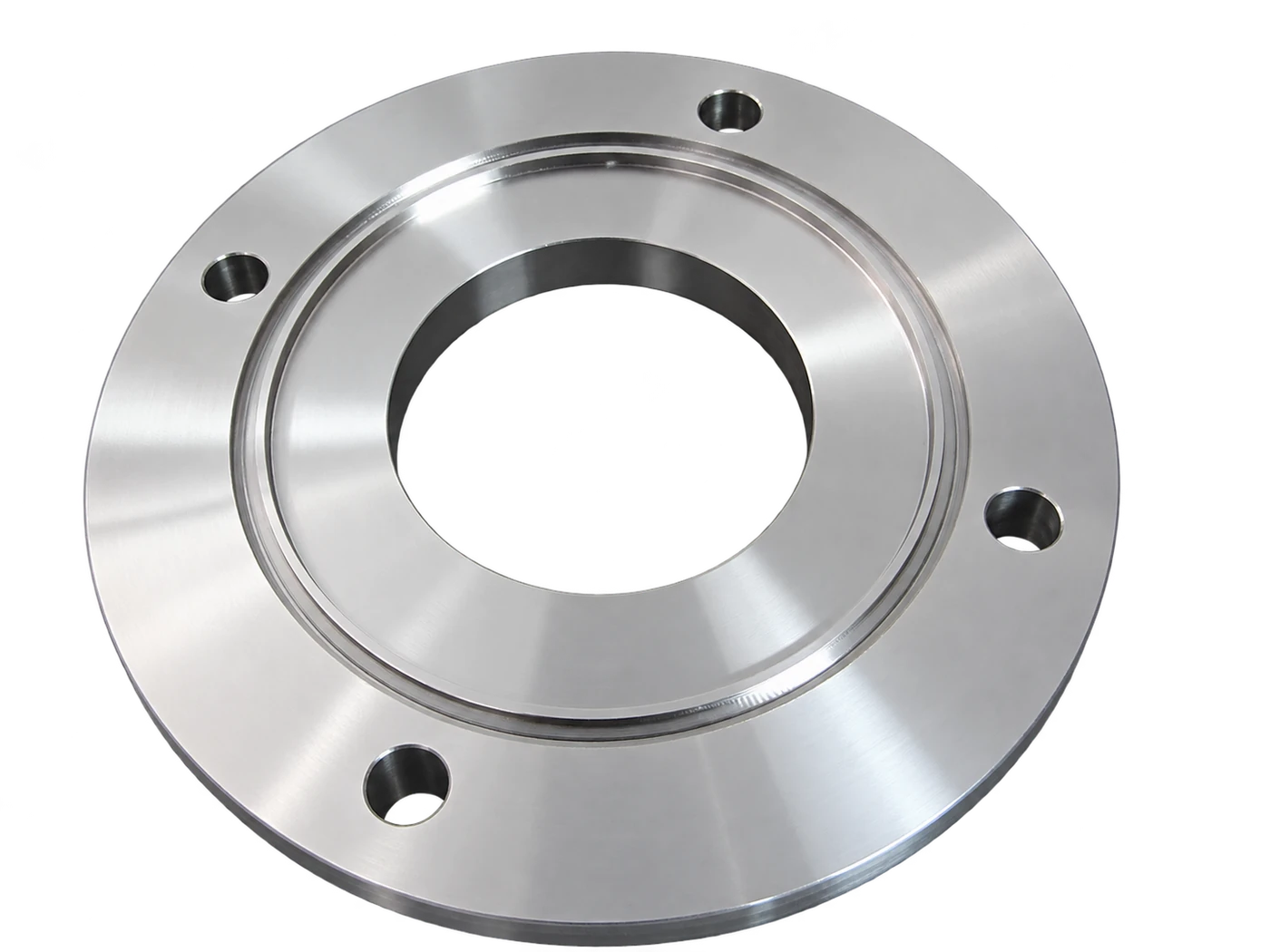
CNC-turned steel flange manufactured in Poland

Polish CNC turning capacity for precision components

Poland is an excellent option for the production of shafts, bushings, rings, flanges, threaded components, and other rotationally symmetrical precision parts. The ideal manufacturing partner depends on factors such as the raw material, maximum diameter and length, tolerances, surface finish requirements, production volume, and any additional milling or drilling operations. Therefore, rather than automatically assigning a request to a single fixed machine shop, TOS selects the production route that is the best fit both technically and economically.

This page complements our overview of outsourcing production to Poland and our service page on CNC machining. For CNC turning projects, we specifically evaluate work-holding methods, tooling capabilities, the use of bar stock versus cut-to-size blanks, cycle times, finishing, and the measurability of critical features.

For turned parts, diameters, lengths, and fits serve as the starting point for a quotation. Please specify which threads, grooves, and surfaces are functional, and indicate the required surface roughness. Also, provide details regarding the material, order quantities, and annual volume so that the manufacturer can determine the optimal clamping method and production route.

Does the component also feature flat sections, slots, or cross-holes? If so, we will coordinate the necessary additional operations; you can also read more about CNC milling in Poland. For processes such as hardening, grinding, or surface finishing, please refer to our information on complete CNC parts and finishing. Critical specifications are incorporated into the agreements for quality control in Poland.

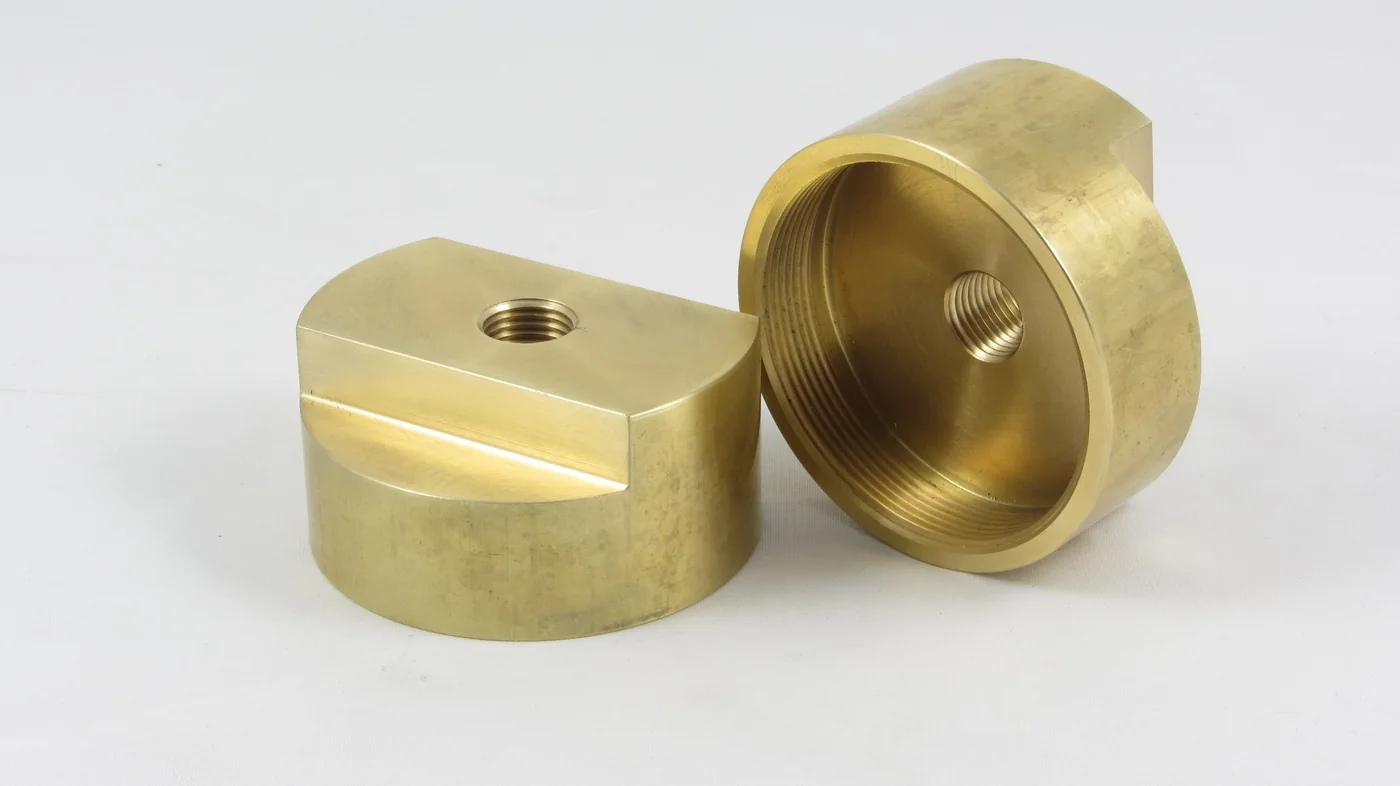
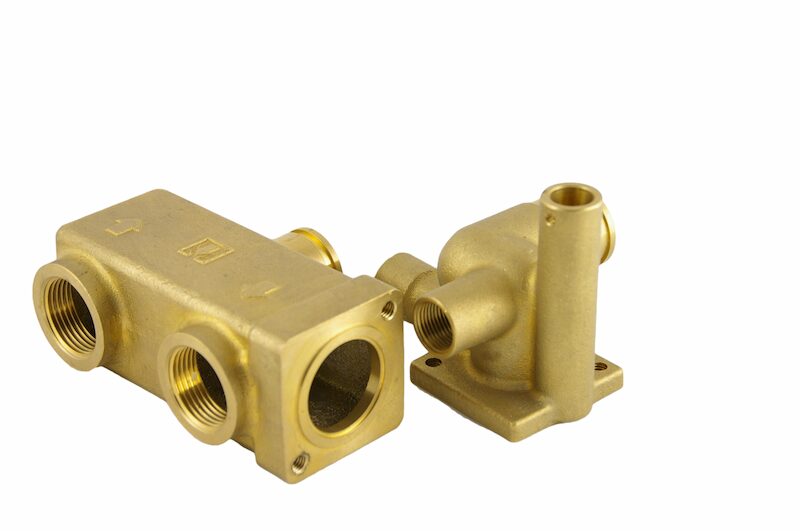
Brass CNC-turned parts with internal threads for series production in Poland

From inquiry to delivery

Technical inquiry

Submit your technical drawing, 3D file, material specifications, quantities, and quality requirements. We will assess the manufacturability and identify any missing information.

Production route and partner selection

TOS evaluates and compares suitable machinery, fixtures, material forms, batch sizes, pricing, and lead times.

Quotation and quality agreements

You will receive a clear quotation covering machining processes, inspections, finishing, packaging, and delivery.

Trial part or first article

For new or critical components, we verify dimensions, fits, surface roughness, and finish before authorizing full-scale production.

Series production and delivery

Following approval, we proceed with production, agreed-upon quality inspections, packaging, and transport from Poland.
Materials, processes, and applications

CNC turning can be performed on materials including structural steel, free-machining steel, stainless steel, aluminium, brass, bronze, and engineering plastics. Depending on the technical drawing, the machining process may include external and internal turning, grooving, parting, drilling, reaming, tapping, and the cutting of internal or external threads. On suitable machines, the use of driven tools also allows for the creation of flat surfaces, slots, and cross-drilled holes.

For individual components, repair parts, prototypes, and small production runs, conventional turning in Poland can also be an appropriate manufacturing solution. For each inquiry, we assess whether conventional or CNC turning is best suited to the geometry, tolerances, and required quantities.

Examples include shafts, spacers, flanged bushings, nipples, couplings, rings, threaded components, and parts for mechanical engineering and equipment. Following the machining process, operations such as heat treatment, grinding, polishing, passivating, galvanizing, or other surface treatments can be incorporated, depending on the material and the specific application. TOS also manages deburring, cleaning, assembly, packaging, and logistics.

When is Poland a suitable choice for CNC turning?

How TOS manages CNC turning in Poland

A successful CNC project begins with technical clarity. The more precisely material specifications, tolerances, surface roughness, quantities, and any secondary operations are defined, the more effectively TOS can assess manufacturability and identify the ideal Polish production partner.

Throughout the process, TOS oversees technical drawings, revisions, quality agreements, and delivery. We do not apply a generic, one-size-fits-all tolerance standard; instead, we arrange for material certificates, inspection reports, first-article inspections, and additional documentation whenever technically required and agreed upon in advance with the production partner.

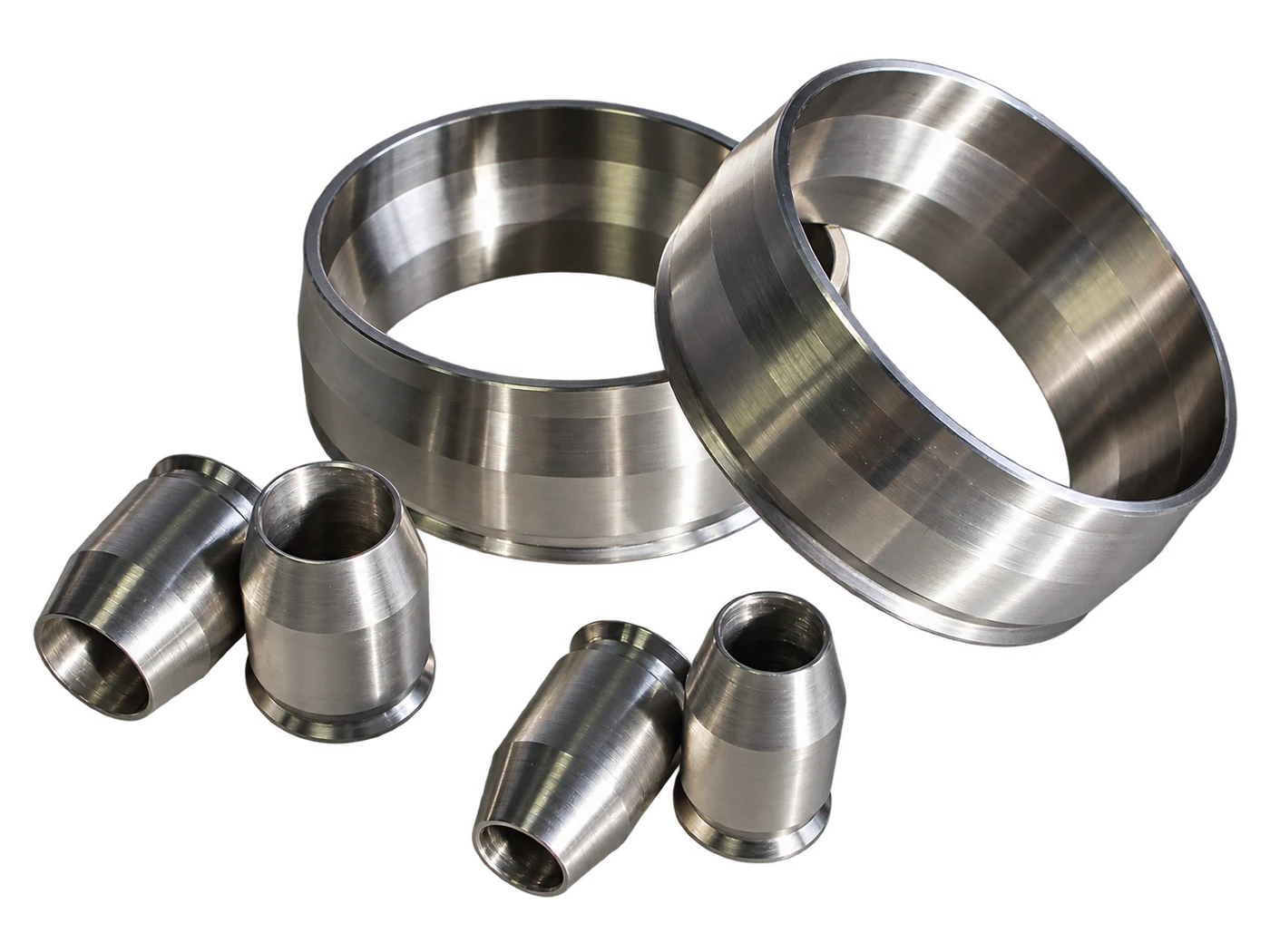
CNC-turned steel rings and bushings manufactured in Poland

Ideally, you should provide a dimensioned PDF drawing and a STEP or STP file, along with details regarding the material, quantities (per order and per year), tolerances, surface roughness, thread specifications, finishing requirements, and desired delivery terms.

TOS evaluates factors such as the raw material, wall thicknesses, tooling accessibility, work-holding methods, the risk of deformation, and measurability. Where appropriate, we discuss design adjustments that could make the part more stable or more cost-effective to manufacture.

The diameter, length, material, quantities, and any secondary operations determine the most suitable lathe and production partner. If necessary, we source capacity with features like bar feeding, sub-spindles, or driven tooling—though we do not automatically assume these are required for every request.

Our quotation specifies the raw material, CNC machining processes, quantities, tolerances, any applicable tooling costs, finishing, quality inspections, packaging, and delivery. This ensures that offers can be compared based on identical technical criteria.

For new or critical turned parts, we can produce a test piece, a first article, or a small pilot run. This allows us to verify dimensions, fits, threads, surface roughness, deburring, and overall finish before authorizing full-scale production.

Once approved, production begins in accordance with the current drawings and specifications.

TOS manages technical queries and revisions, ensuring that programs, tooling, and inspection instructions are updated in a controlled manner.

Depending on the component, we can arrange for measurements using calipers, micrometers, roughness testers, or form-measuring equipment, as well as thread inspection, fit checks, photographic documentation, or formal measurement reports. Learn more about our quality control capabilities.

Following the turning process, additional operations—such as milling, drilling, grinding, heat treatment, polishing, passivating, galvanizing, or other surface treatments—may be required. TOS coordinates these steps based on the material, tolerances, and functional requirements.

For turned parts, protecting cylindrical mating surfaces, threads, and delicate finishes is essential. For each item, we determine the appropriate protective measures—such as caps, sleeves, compartmentalized packaging, VCI (Volatile Corrosion Inhibitor) protection, or individual wrapping. By consolidating shipments from Poland, we ensure that recurring turned parts are delivered to your production facility efficiently and in an organized manner.

After an initial production run, we evaluate key factors such as dimensional stability across batches, tool life, the presence of burrs (particularly in grooves and on threads), and the practicality of the packaging. We use these insights to make future production runs more predictable and to avoid unnecessary secondary processing.

Case studies: CNC machining and precision components

Brass Cast Parts for Heating Technology

For a client in the heating technology industry, we produce high-quality brass castings for use in technical installations. These components....

Custom Stainless Steel Wedge Nails: Smart Design for Lower Mold Costs

For a regular customer, we produced a series of stainless steel road nails used to mark walking and cycling routes.....

Frequently asked questions about CNC turning in Poland

Which materials can be CNC-turned in Poland?

Commonly used materials include steel, free-machining steel, stainless steel, aluminium, brass, bronze, and engineering plastics. Suitability depends on the specific alloy, dimensions, tolerances, batch size, and any required finishing.

Poland is a suitable option for prototypes, small to medium-sized batches, and recurring production. The economic break-even point depends on factors such as setup time, complexity, material, order quantity, and transport; therefore, we evaluate this on a part-by-part basis.

It is not possible to provide a single, universal value for achievable tolerances. They depend on diameter, length, wall thickness, material, clamping method, measurement technique, and any subsequent treatments. Consequently, critical dimensions are assessed individually based on the technical drawing.

Yes, if required for your project, we can arrange material certificates, first-article inspections, measurement reports, or additional quality checks. The specific requirements and frequency of measurements are agreed upon in advance with the selected partner.

Please provide a dimensioned PDF drawing, ideally accompanied by a STEP or STP file. Include details such as the material, order quantities (per batch and annually), tolerances, surface roughness, thread specifications, any heat or surface treatments, packaging requirements, and delivery preferences.

You can attach files directly when submitting a technical inquiry.