
From brackets to enclosures—via production partners in Poland

Sheet metal bending in Poland

A bracket must align perfectly with its mounting points. A cover must fit into place without any tension.

For an enclosure, flanges and holes must be positioned accurately after the bending process. TOS assists you in outsourcing sheet metal bending to partners in Poland, with the final required shape as the starting point. We coordinate manufacturability, dimensions, and production run agreements with a suitable bending partner.

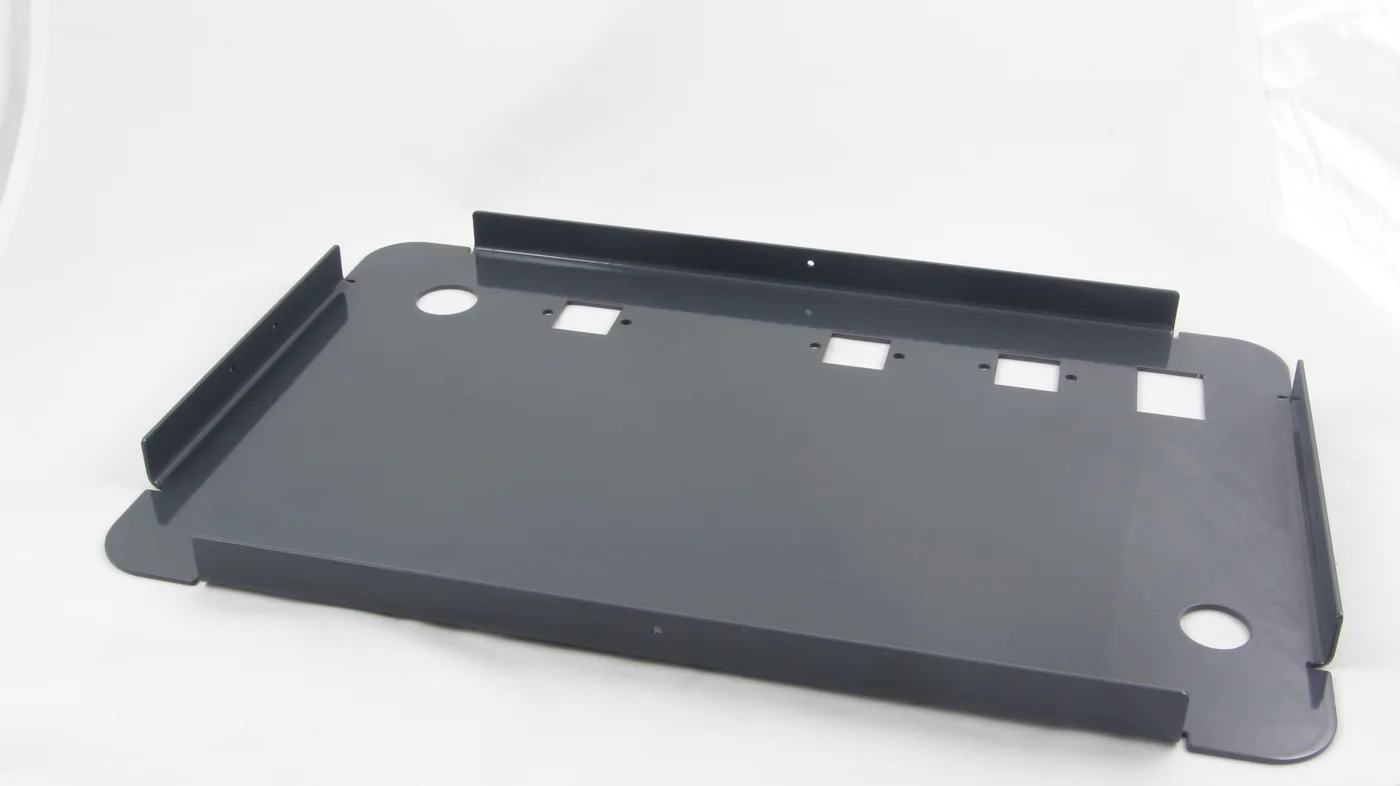
Bent steel sheet metal component with folded edges and a dark powder-coated finish

Where quality bending begins

A manufacturable final shape

Bend radii, short flanges, and tool accessibility are evaluated together.

Functional reference dimensions

Internal dimensions, mounting surfaces, and hole patterns determine the critical specifications that must be met after bending.

An appropriate bending sequence

Multiple bends require a sequence that ensures both the part and the tooling remain accessible.

Accounting for springback

Material type and sheet thickness are factored into setting and verifying the bend angle.

Protected visible surfaces

We agree in advance on acceptable tool marks and the necessary protection during handling.
Bent steel sheet metal component with folded edges and a dark powder-coated finish

Bend radius, flange length, and bending sequence

The shape shown in the drawing must be accessible to the press brake. A short flange may lack sufficient support on the die. In cases involving multiple bends, a previously formed side might obstruct the tooling. For this reason, we evaluate internal radii, flange lengths, bending direction, and the bending sequence as an integrated whole.

Holes and cutouts located near a bend line also require careful attention. Any supplied flat pattern is reviewed with the manufacturer to ensure it is compatible with the material and the bending process. For information on the preceding cutting operation, please see our page on laser cutting in Poland.

What must fit precisely after bending? Specify which dimension is critical—for example, the internal dimension of a cover, the distance between mounting flanges, or the position of a hole pattern. With multiple bends, deviations can accumulate; therefore, we establish reference surfaces and critical final dimensions in advance.

Materials tend to spring back slightly after bending. The manufacturer accounts for this when setting up and verifying the bend angle. For components that will be visible, we also discuss acceptable tool marks and surface protection. An initial sample part can be produced to assess dimensions and fit.

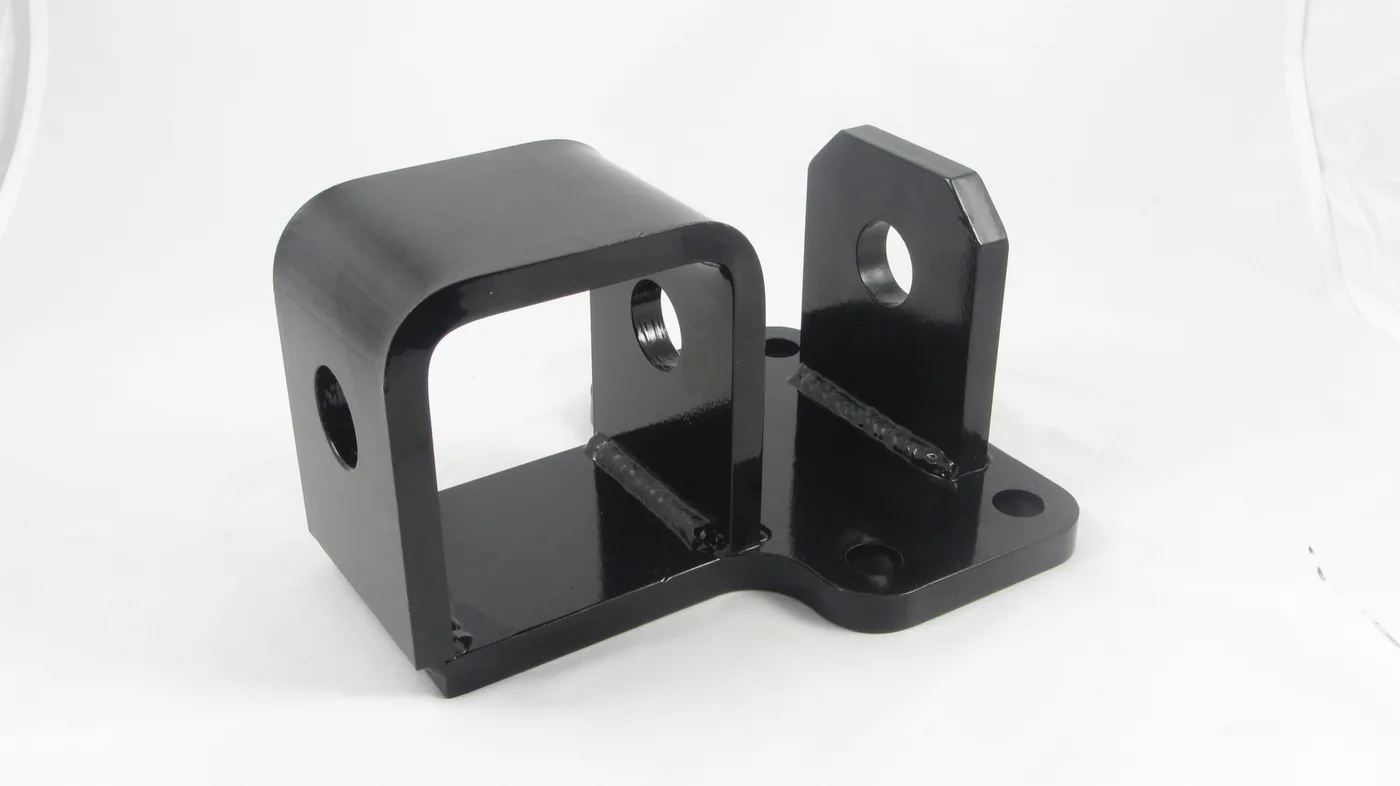
Welded steel mounting bracket with a black coating, manufactured in Poland
Mounting bracket featuring bent and welded sheet metal components, finished with a black coating.

Five agreements before the first bend

1. Final model and revision

Provide the 3D model of the bent part, accompanied by a dimensioned PDF and a clear revision status.

2. Material and bend radii

Specify the material type, sheet thickness, and required internal bend radii.

3. Critical dimensions

Identify which angles, internal dimensions, and mounting points are functionally critical.

4. Evaluation of the first part

Determine whether a fit check or first-article inspection is required before authorizing full-scale production.

5. Production runs and visible surfaces

Align order quantities, repeat orders, requirements for visible surfaces, and packaging with the intended application.
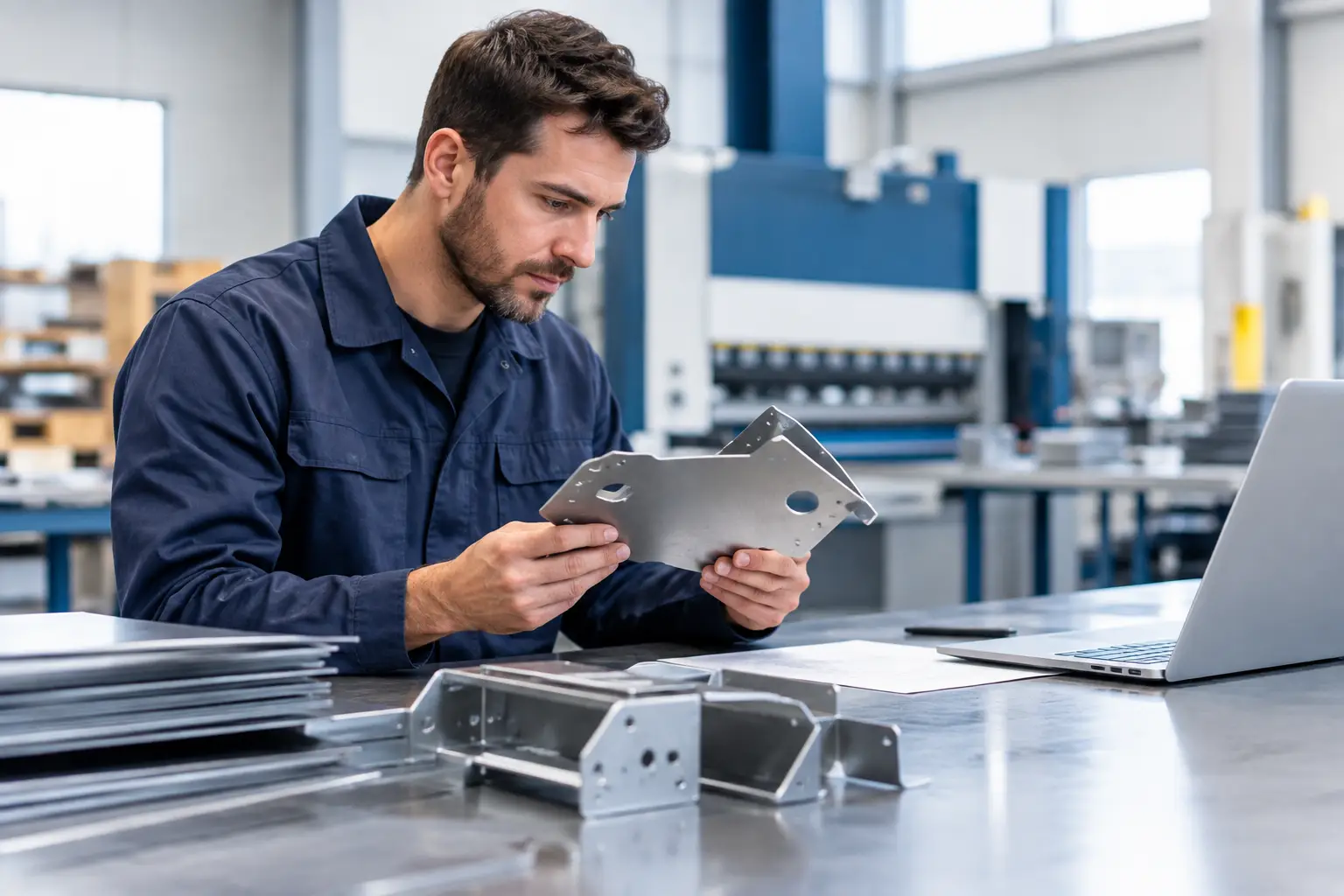
Custom brackets, covers, and enclosures

Brackets and mounting profiles: the positioning of holes and the distance between flanges determine whether a part can be mounted without further modification.

Covers and enclosure components: internal dimensions, corner transitions, and visible surfaces require careful attention when multiple parts are to be fitted together.

Trays and bent panels: the bending sequence and the accessibility of short, upright edges are evaluated during the production preparation phase.

Steel, stainless steel, and aluminium each require specific material and tooling choices. We tailor processes such as welding, powder coating, or assembly to the intended function of the bent part.

Will the bent part be welded and delivered as a finished product? Explore our production route for complete sheet metal components produced in Poland.

When should you outsource sheet metal bending to Poland?

From the initial bent part to a repeatable production run

When it comes to recurring bending work, it is not just the first part that matters; the shape must remain consistent for every subsequent order. Therefore, the handover process includes up-to-date technical drawings, established reference dimensions, and clear approval agreements.

TOS manages the coordination with our bending partner in Poland. Any change in material, sheet thickness, or geometry requires a fresh review of the flat pattern, tooling, and inspection requirements. Our quality control process is tailored to the specific functional characteristics of your component.

Explore the broader range of services at outsourcing production to Poland.

Reducing failure costs in sheet metal production: 7 steps

Please provide a dimensioned PDF drawing and a STEP model of the bent part. Specify the material, sheet thickness, quantities, revision, critical angles and dimensions, visible surfaces, and the desired finish.

The production partner evaluates internal radii, flange lengths, holes near bend lines, tooling accessibility, and the bending sequence. The influence of the material on springback is also taken into account. Any necessary design adjustments are discussed and agreed upon beforehand.

TOS selects a partner based on material, sheet thickness, bending length, geometry, and batch size. The required machine capacity and available tooling are confirmed for your specific part.

The quotation details the material, cutting, bending, any secondary operations, quantities, setup costs, inspection, packaging, and delivery. The agreed-upon drawing and revision serve as the definitive reference.

For new or critical parts, a first-article sample or pre-production run can be arranged. Where relevant, angles, flange dimensions, fit, flatness, and appearance are evaluated before the full production run is approved.

Once approved, production proceeds according to the agreed-upon drawings, flat patterns, and bending instructions. We coordinate any technical queries or revisions to ensure that changes are clearly incorporated into both the production and inspection processes.

Inspections are tailored to the part’s intended function. This includes checking angles, overall dimensions, flange lengths, hole positions, and how the part interfaces with other components.

Where necessary, we can arrange for fit checks, measurement reports, or photographic documentation.

Bent parts can undergo further processing, such as welding, the addition of fasteners, coating, or assembly. We coordinate the sequence and handover, and define how visible surfaces, fits, and vulnerable edges will be protected.

Components can be cleaned, marked, fitted with purchased parts, and assembled. They are then packed securely to protect against impacts, scratches, corrosion, and mix-ups. TOS ensures that packaging and transport from Poland are tailored to the weight, finish, and intended application.

Following the initial delivery, we evaluate dimensions, handling, rejection rates, assembly, packaging, and lead times. For subsequent orders, drawings, control plans, and logistics instructions are refined as needed to ensure a stable production chain.

Examples of production via TOS

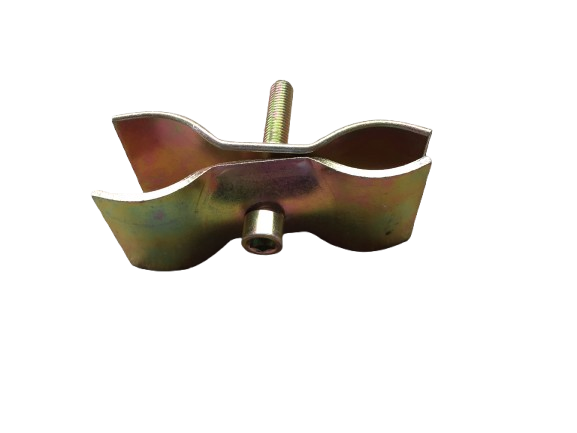
Construction Fence Clamps in All Sizes: Stamped, Welded, Galvanized, and Ready to Use

For a client who supplies construction fences, we produce a wide range of construction fence clamps in various sizes and....

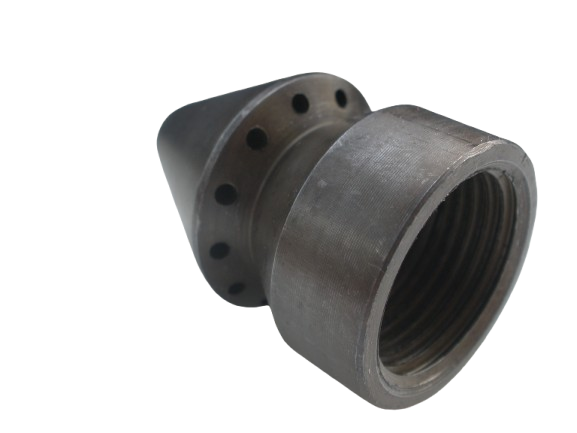
Hardened Nozzles for Self-Propelled Sprayers: Wear-Resistant, Premium Custom Engineering

For a client specializing in self-propelled sprayers, we manufacture special spray nozzles that must withstand high pressure, chemical loads, and....

Frequently asked questions about sheet metal bending in Poland

Which materials and sheet thicknesses can be bent?

Materials such as steel, stainless steel, and aluminium are suitable for bending/forming processes. The achievable sheet thickness and bend length depend on the material, geometry, tooling, and machine capacity. TOS will confirm these parameters for each individual request.

In practice, press braking is commonly used to bend sheet metal components. When submitting a request, the desired shape, angles, bend radii, and dimensions are of primary importance. TOS will coordinate the appropriate production method with the manufacturer.

During the bending process, the sheet metal part must be adequately supported by the tooling. The minimum flange length depends on factors such as the die, sheet thickness, and the required radius. A short flange or an adjacent bend may also restrict accessibility. Please have such details assessed in advance; it may be necessary to adjust the radius, the bending sequence, or the geometry.

Feasibility depends on the material type, sheet thickness, bend length, geometry, and tooling. Please specify critical angles, internal radii, and connecting dimensions on your drawing. The manufacturer will evaluate feasibility, and any necessary adjustments or checks will be agreed upon beforehand.

Please provide a dimensioned PDF drawing and, ideally, a STEP model of the bent component. Include the flat pattern (if available) and specify the material, sheet thickness, quantities, revision, critical dimensions, visible surfaces, finish, and delivery requirements.

You can submit your request via our contact page.