
Do you need plastic parts turned or milled to drawing without an injection mould? For CNC machining of plastics in China, TOS assesses how material, dimensions and repeat orders form a suitable production route.
From a bush or guide to a component with a bearing fit, your application determines what must be specified. We coordinate plastic grade, critical dimensions, first articles and any assembly, with one Dutch point of contact for production and delivery.

Define the material, colour and any fillers or additives in advance.

Define critical fits, datums and inspection requirements.

Review geometry, fit and inspection before series release.

Coordinate processing, inserts, assembly and packaging.

Revision and material agreements as a basis for the next series.
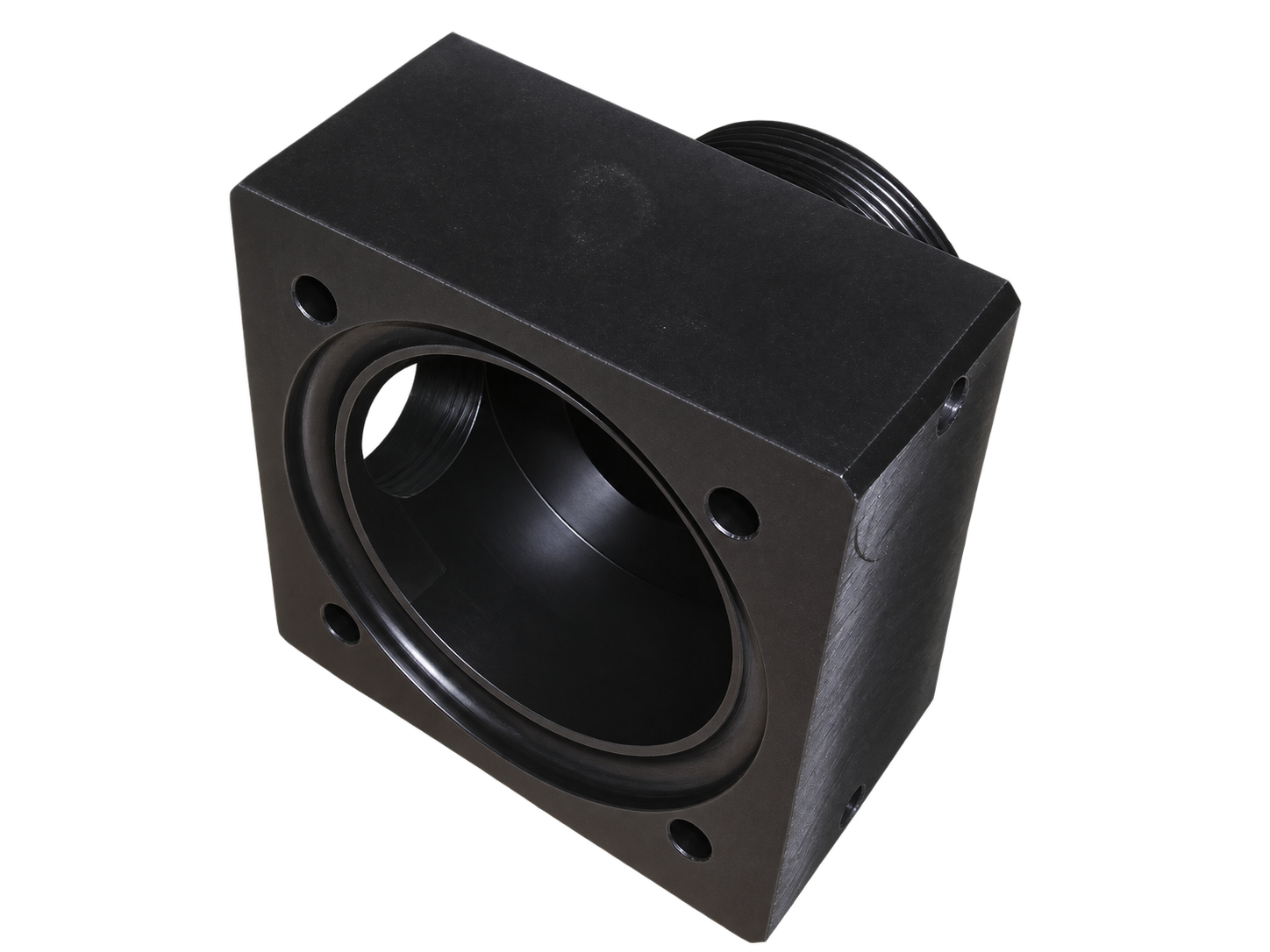
When machining, the shape is created by removing material from rod, tube or plate. Turning is suitable for round bushings, rollers and spacers, among other things. Milling allows for planes, pockets, slots and hole patterns. Both operations can be combined in one production route.
This route can be interesting for recurring smaller series, product variants or parts for which an injection mould does not provide sufficient benefit. A first product to test shape and fit can also be machined. However, a CNC test part does not automatically predict the properties of a later injection molded part.
Whether production in China is economically suitable also depends on preparation, material loss, inspection, transport and the desired delivery time. A local rush prototype and a planned repeat series therefore require a different consideration.
Start with the function, then with the plastic. Loads, temperature, wear, chemicals and moisture can determine the choice of material. Record the exact quality and any fillers; the designation ‘plastic’ or ‘nylon’ alone is insufficient for a reproducible order.
POM, PA, PET, PE and PEEK are examples of material families that can be investigated for machined parts. They are not simply interchangeable. Availability of the prescribed quality and substantiation for the application are discussed per request.
Also make it clear whether you need a separate part, a part with inserts or a complete assembly with metal components. The delivery statement determines which operations and checks are included in the quotation.

Collect drawing, application, quantities and desired delivery condition.

Coordinate plastic quality, starting material and processing.

Assess critical dimensions and functional fit as agreed.

Record revision, check points and possible assembly.

Make products recognizable and protected, consistent with your planning.
A plastic part requires its own measuring and processing agreement. Temperature changes, clamping force and residual stresses in the semi-finished product can influence the final shape. For moisture-sensitive qualities, including certain PA qualities, the condition of the material also deserves attention during inspection. Therefore, indicate which dimensions are functionally critical, against which references are measured and under which agreed conditions the assessment takes place. A close fit with a metal shaft or bearing should continue to function under operating conditions. A general tolerance for metal parts cannot be applied to every plastic part without assessment.
Thin walls, long narrow parts, deep drillings and a lot of material removal may require additional preparation. We discuss the accessibility of surfaces, support during clamping, processing sequence and any material-dependent intermediate treatment. Deburring should not unintentionally change functional edges and fitting surfaces.
Determine which dimensional check and functional fit are required for the first products. For specific contact applications or other special usage requirements, the exact material quality and required declarations are agreed in advance; a general material name is no proof of this.
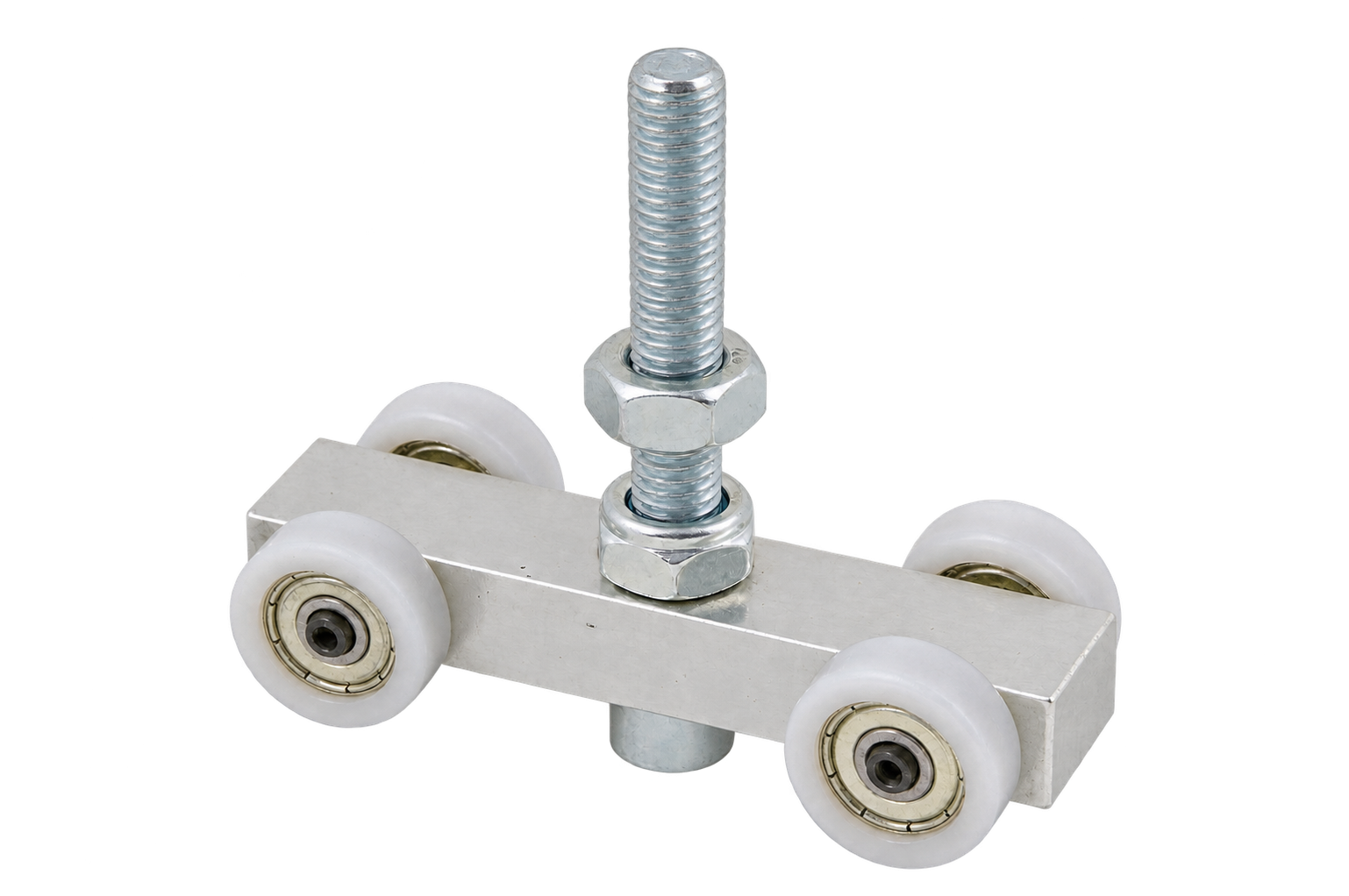
The machined shape can be one step in a larger product. Consider a plastic roller with bearing, a guide with metal mounting or a set of parts that are packaged recognizable per machine. Assembly sequence, press fit, screw thread and contact with counterparts then deserve the same attention as the individual dimensions.
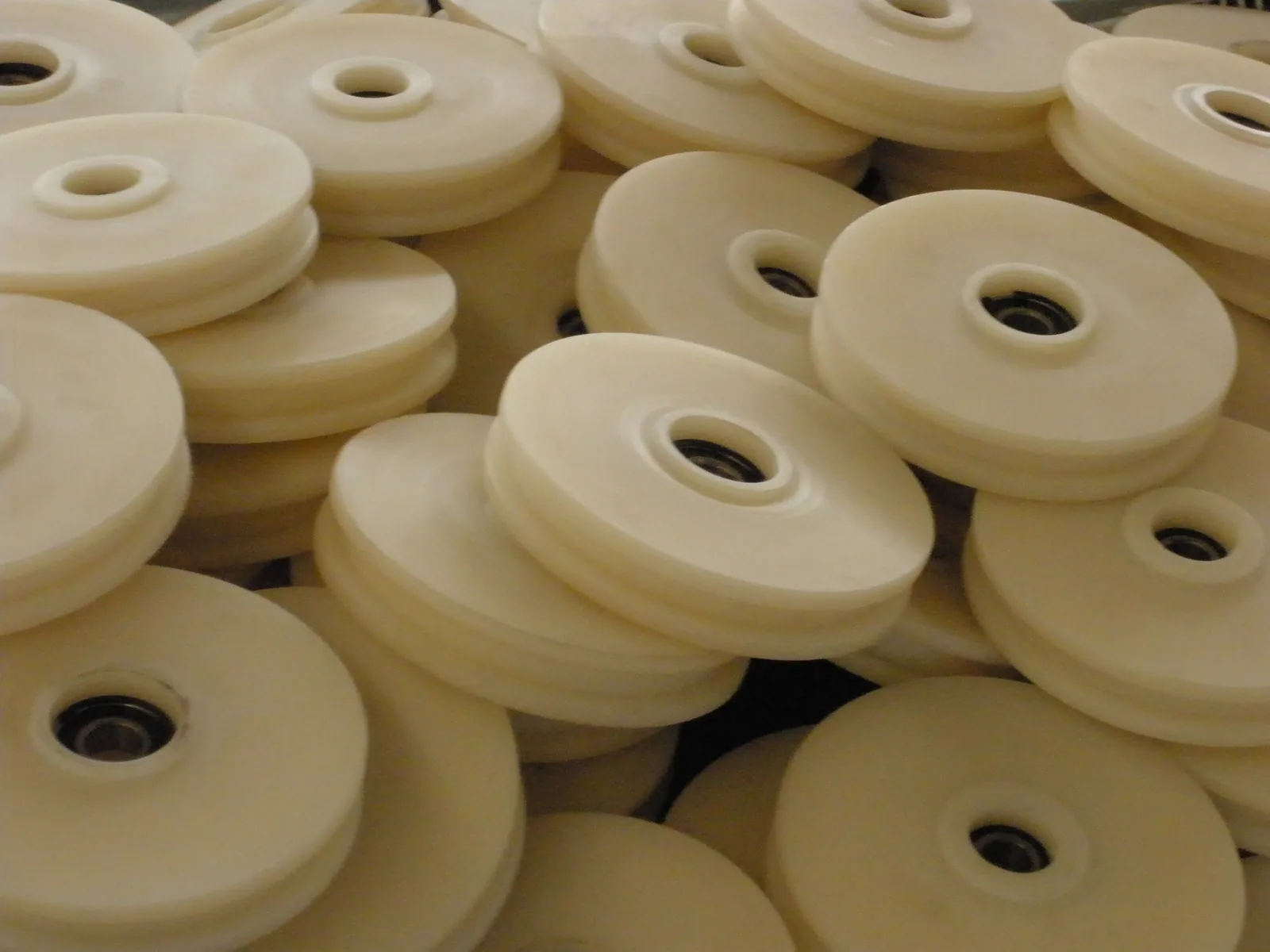
TOS therefore assesses the complete delivery condition: purchasing material, turning and milling, deburring, inspection, assembling where agreed and protecting it for transport. Photos of cable pulleys and roller constructions on this page illustrate such product and mounting types; the chosen production method is determined per drawing.
Also view outsource production to China, our general explanation of CNC machining and the route for plastic injection moulding in China. This way you can consider the trade-off between a machined semi-finished product and a mould-related series in the complete application.
Send a current 2D drawing and where available a 3D model, with revision, quantities per order and expected recurrence. Mark the critical dimensions and describe what the part is for in your product.
Record the plastic quality, color and any fillers or special usage requirements. Indicate whether a specific producer or quality is mandatory and what documentation must accompany the delivery.
Discuss the choice of turning, milling or a combination. Shape, accessibility, starting material and material loss determine the route. For larger stable quantities, a comparison with injection moulding may also be useful.
Choose how thin walls and slender shapes are supported. Fixture and machining sequence must inspection distortion and heat development. Any intermediate treatment will only be agreed in accordance with the material and product.
Make agreements in advance about references, measurement method and the condition in which critical measures are reviewed. Where possible, add a counterpart or the necessary connection dimensions to test the fit.
Have the first products checked for agreed sizes, edges, surfaces and function. Record deviations and necessary adjustments before the series is released.
Produce according to the released drawing and recorded material and process agreements. Assess changes in quality, semi-finished product or product form before entering them into a repeat order.
Finish edges and bores as agreed. When mounting with bearings, inserts or metal parts, also check the composition and function, so that damage or unwanted deformation becomes visible.
Carry out the agreed final inspection and link reporting to the correct product revision. Agree in advance which material data, measurement reports and identification are actually needed.
Protect vulnerable edges and fitting surfaces. Adjust packaging, product recognition, quantities and transport to your processing after receipt and to the agreed delivery schedule.
Machining forms a part from a semi-finished product and does not require an injection mould. In injection moulding, a mould determines the product shape. Quantities, geometry, material use, mould investment and repeat needs determine which route is suitable. Moreover, a machined test part does not automatically have the same properties as the later injection molded version.
POM, PA, PET, PE and PEEK, among others, can be examined in an application. The exact quality, any additives, shape of the semi-finished product and usage requirements determine its suitability. TOS coordinates availability and implementation per component; a material family alone is not a complete specification.
This is reviewed per product. Plastic, wall thickness, clamping, temperature and possibly moisture influence the dimensions. Mark functional sizes and specify counterparts. The required tolerance and method of measuring are agreed before production.
The process may be suitable for prototypes and small series, but production in China is not economical for every order. Preparation, minimum volume of materials, transport and lead time count. Planned repeat series or delivery as part of a complete assembly may result in a different consideration than a single emergency part.
A current drawing, possibly a 3D model, the exact plastic quality, quantities and desired delivery form the start. Add information about use, critical fits, counterparts, assembly and special documentation. On this basis, TOS discusses what must be recorded for production and initial approval.
Technical request
Upload a PDF, DWG or STEP/STP file and receive a detailed response about manufacturability, the production route and your request for quotation.