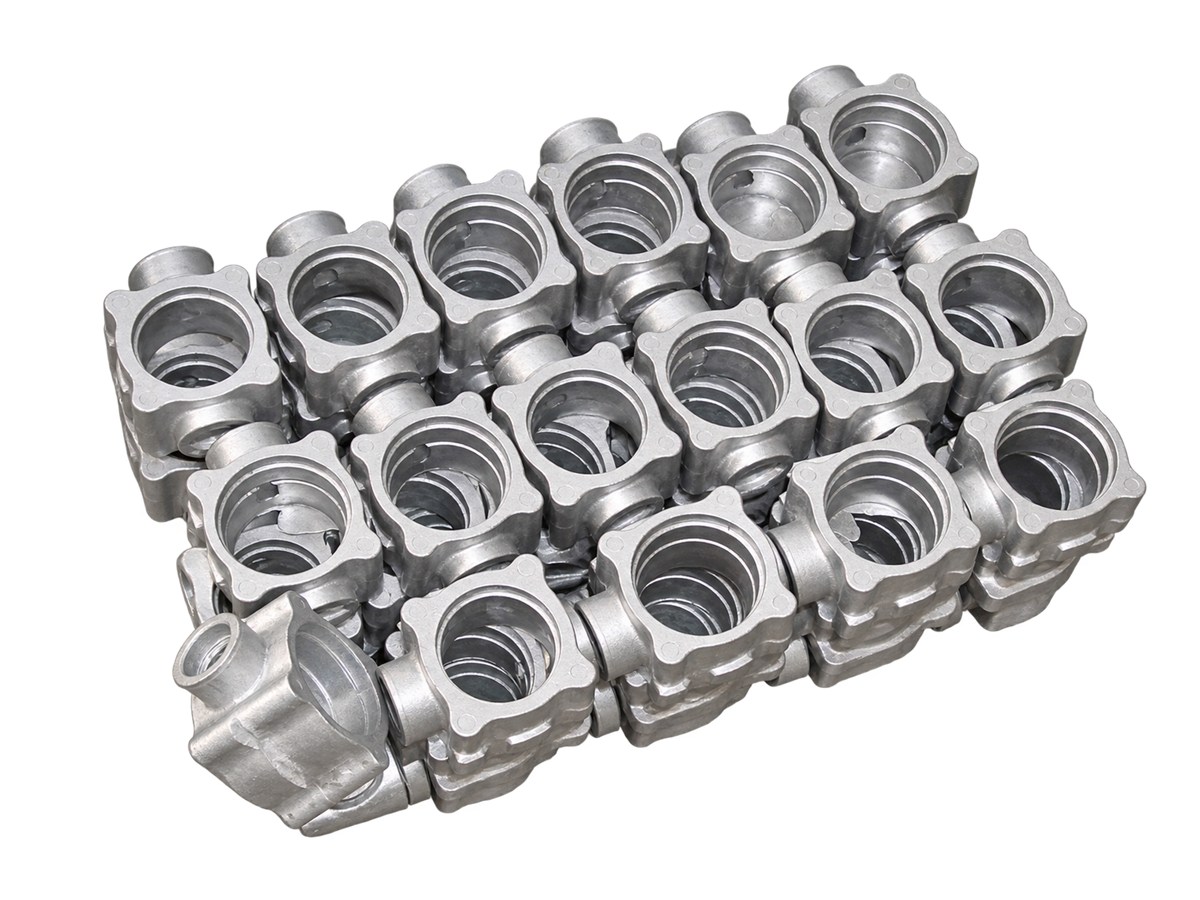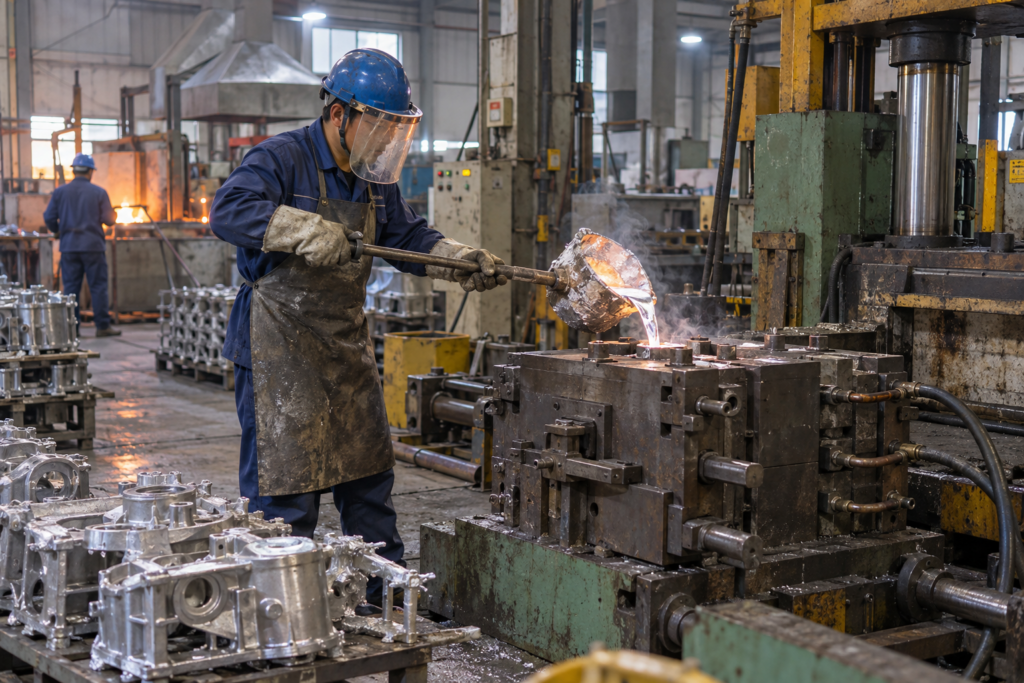

Do you want to have aluminium parts gravity die casting in China? With gravity die casting, also called gravity casting, the metal flows into a reusable permanent mould without high injection pressure. The method is suitable for medium-sized series, relatively robust wall thicknesses and products that require good material properties or heat treatment.
TOS selects a Chinese foundry based on alloy, part weight, mold structure, core options and finishing. We organize the complete route, including CNC machining, inspection, packaging and transport. Read more about gravity die casting and gravity casting.

We assess wall thicknesses, draft, cores and the position of gates from the customer drawing.

The alloy is tailored to strength, corrosion behavior, heat treatment and desired finish.

Mould material, parting lines, cores, cooling and ejection are selected for the expected production volume.

Machined faces, bores and fits receive sufficient allowance and clear dimensional references.

Tooling, casting, machining, finishing, inspection, packaging and transport form one route.
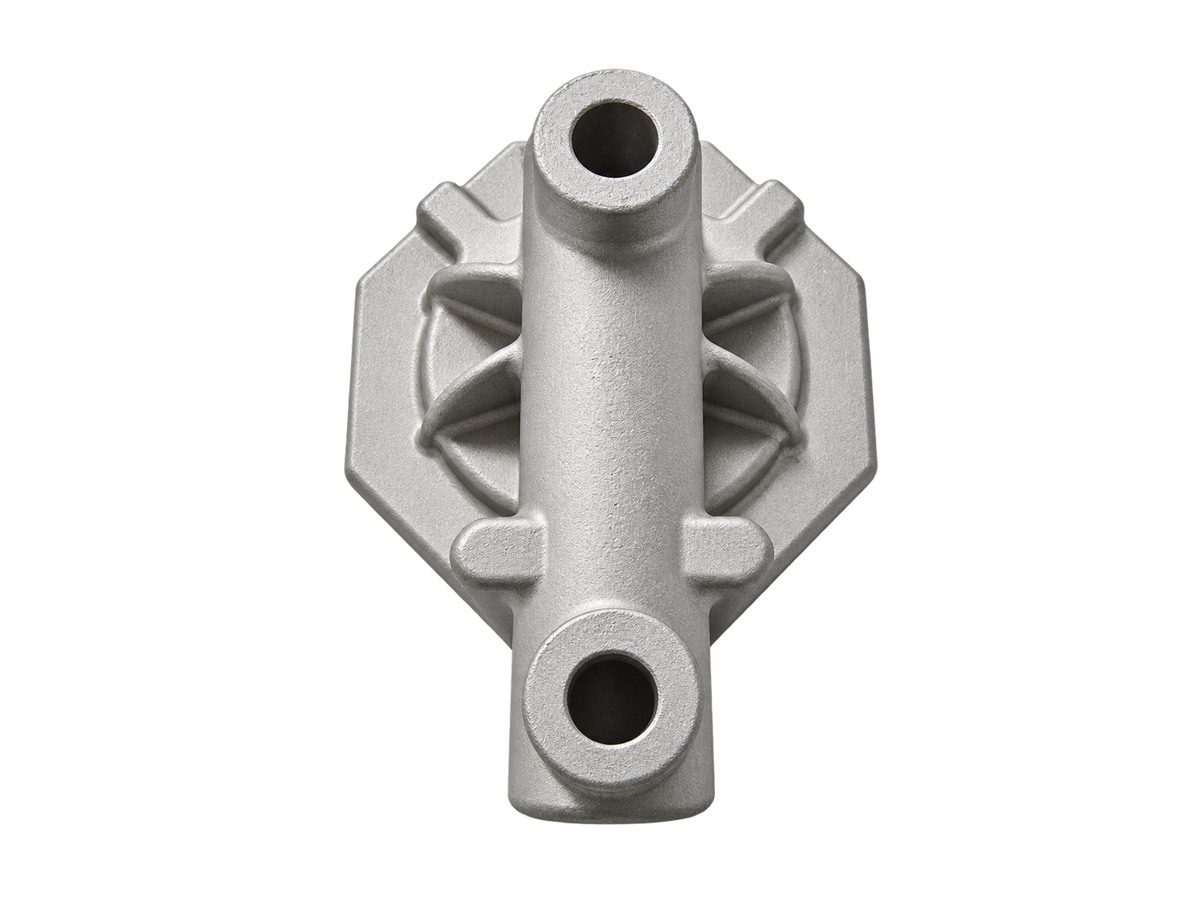
gravity die casting uses a permanent mould that can last for many casting cycles. The tool costs are higher than with a simple sand mold, but usually lower than with a complex high-pressure casting mould. Batch size, number of cores, casting efficiency, heat treatment and CNC machining together determine the unit price.
TOS compares the entire route and includes the agreed quality control, packaging and delivery.
The gravity die is part of the complete production route. See how TOS casting molds in China tailors casting molds to the alloy, test parts and desired finishing.
China can be attractive for planned medium-sized and larger series of aluminium castings. gravity die casting often offers a good combination of surface quality, reproducibility and mechanical properties, without the high injection pressure of high-pressure casting.
High-pressure casting may be a better fit for very large series with thin walls; for large or small numbers of complex casting parts, sand casting may make more sense. We therefore assess the total costs, mold life, stock and transport.

Geometry, alloy, quantities and critical characteristics determine whether gravity die casting is appropriate.

We choose based on aluminium experience, part weight, mold construction, core technology and capacity.

Partial surfaces, cores, sprue, venting, cooling and ejection are coordinated.

First parts are inspected for dimensions, surface, material and functional requirements.

Casting, heat treatment, CNC, finishing, inspection, packaging and transportation are planned.
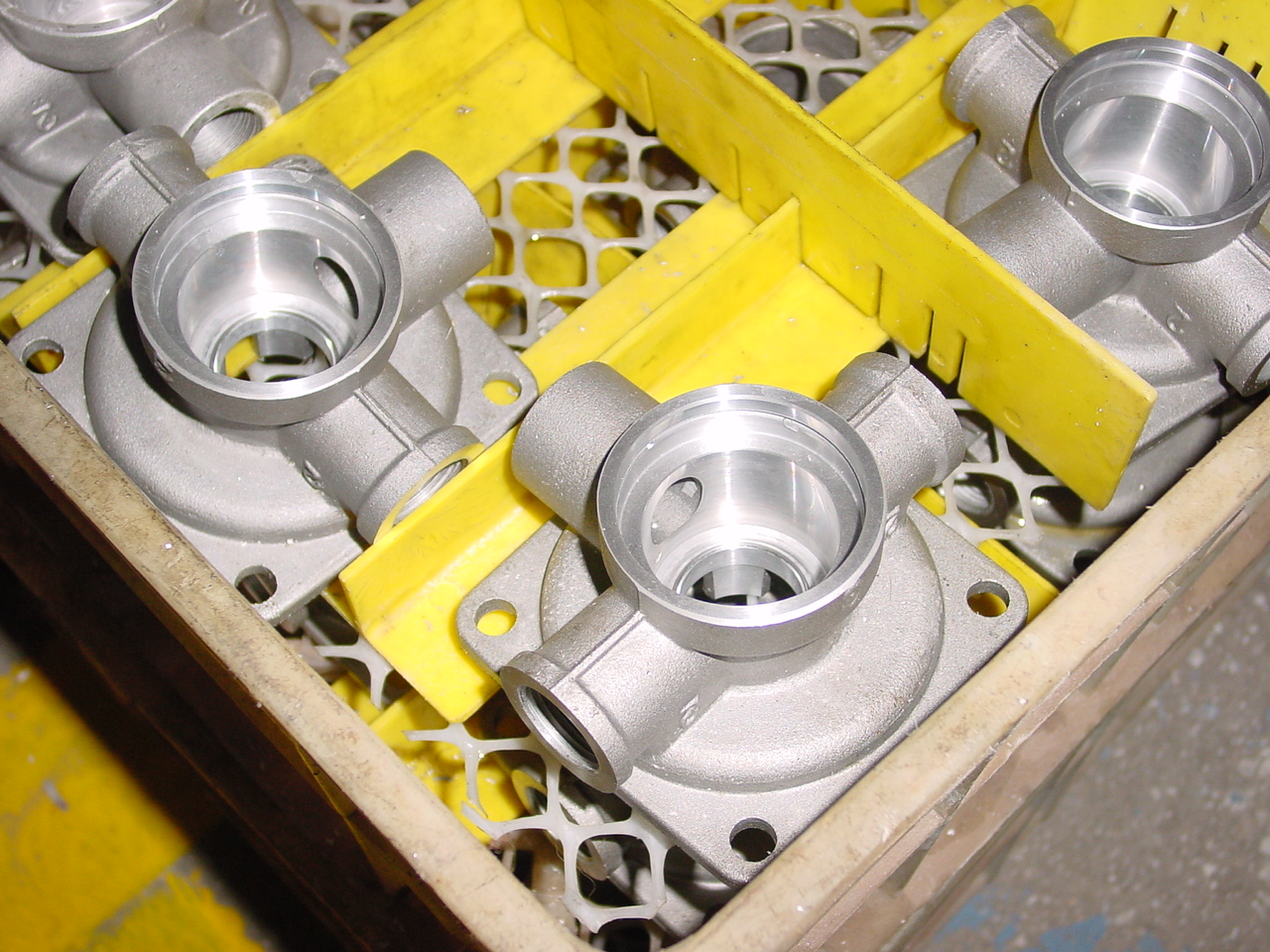
The permanent mould dissipates heat faster than a sand mold. This can produce a finer material structure and a repeatable surface. Because the filling takes place under gravity, the process is clearly different from high-pressure casting.
Sand or metal cores can form cavities. After casting, sprues are removed and parts can be heat treated, blasted, tumbled or coated. Dimensionally critical surfaces and bores are subsequently CNC machined.
The customer drawing remains the governing document. We determine in advance which dimensions must be inspected after casting, heat treatment and machining.
The customer drawing, alloy, quantities, part weight and desired finishing form the basis. We then select a suitable Chinese foundry and coordinate mold, cores, test casting, heat treatment, control and delivery as one route.
Supply drawing, STEP file, quantities and delivery condition. The drawing remains leading for dimensioning and control.
Record alloy, heat treatment, strength and any certificates. The correct condition influences the casting process and finishing.
We select based on alloy experience, part weight, size range, core technology, mold construction and follow-up processes.
Part surfaces, discharges, cores and ejection are tailored to geometry, mold life and achievable quality.
Spourers, feeders, venting and local cooling are reviewed to control filling and solidification.
After production of the mold, test parts are cast. Findings will be processed before the series is released.
First parts are inspected for agreed dimensions, surface, material and any functional characteristics.
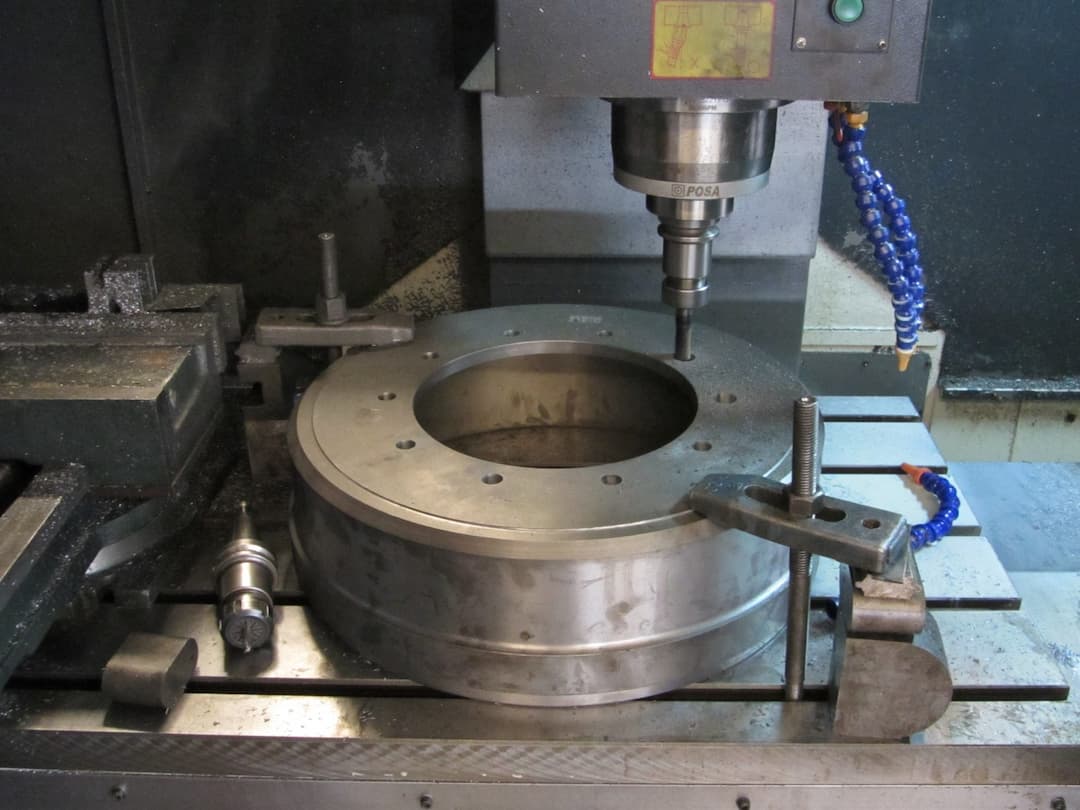
After casting, heat treatment and straightening can follow. The fitting surfaces, bores and threads are then CNC machined.
Serial parts are monitored according to agreed checkpoints and can be blasted, coated, varnished or mounted.
We coordinate protection, packaging and transport and record how the gravity die is maintained for repeat orders.
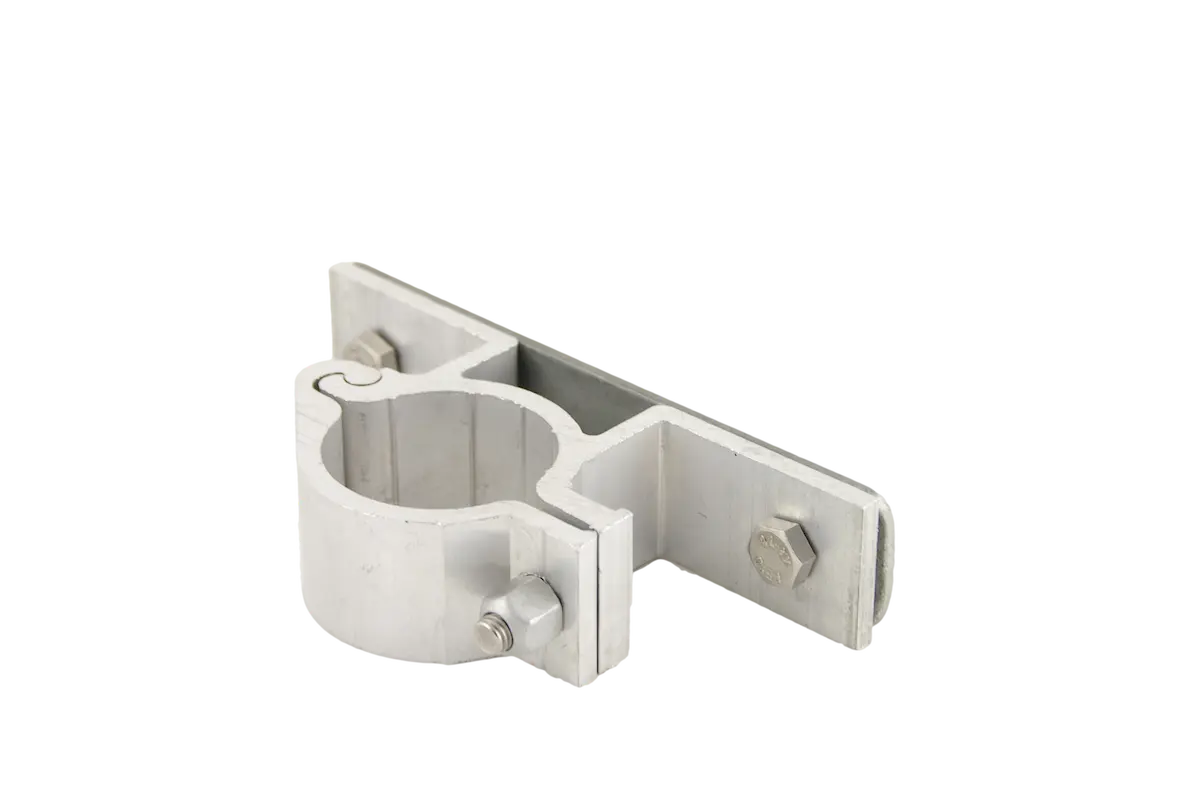
For a client in the infrastructure sector, we developed a sustainable aluminium extrusion clamp used for the installation of traffic....
For one of our regular customers, we produced brake drums with an inner diameter of 500 mm, made entirely of....
In gravity die casting, the metal fills the mold mainly by gravity. High-pressure casting uses high injection pressure and is more suitable for thin walls and very large series.
Aluminium alloys are most commonly used. Depending on the foundry, other non-ferrous alloys are also possible.
The method is especially suitable for recurring medium-sized and larger series. The turning point depends on product shape, cores and finishing.
Yes. Many aluminium gravity die casting alloys can be heat treated to achieve the desired mechanical properties.
Send drawing, STEP file, alloy, quantities and delivery condition, including critical dimensions, heat treatment and finishing.
Technical request
Upload a PDF, DWG or STEP/STP file and receive a detailed response about manufacturability, the production route and your request for quotation.