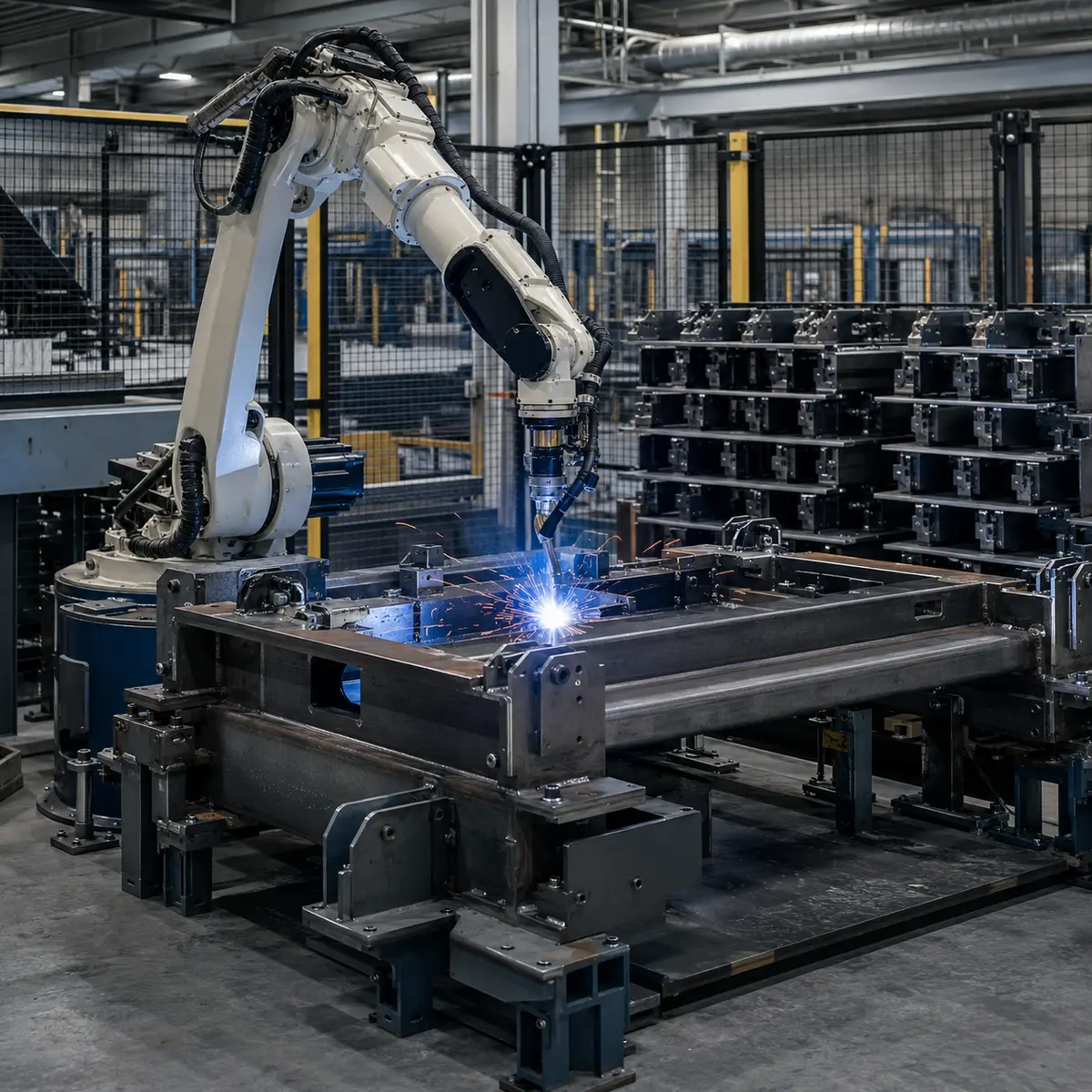

Are you looking for a production partner for robot welding in Poland? TOS manages batch welding projects for steel components, frames, and assemblies—cases where repeatability, dimensional accuracy, and a stable cycle time are essential. We evaluate the product design, production volumes, welding process, required welding jigs, and quality specifications, and then select a suitable Polish supplier.

A fixed program and a well-engineered welding jig ensure consistency in weld positioning, heat input, and the welding sequence for every product.

For sufficient production volumes, robot welding can decrease cycle times and the labor required per part—especially when a high number of recurring welds is involved.

TOS assesses accessibility, clamping, tolerances, and the welding sequence before any investment is made in tooling or programming.

Before final approval, we verify aspects such as weld appearance, dimensional accuracy, deformation, and fit—using a test piece or a small pre-production run.
Services such as grinding, machining, blasting, powder coating, galvanizing, assembly, and transport can all be integrated into the same production workflow.
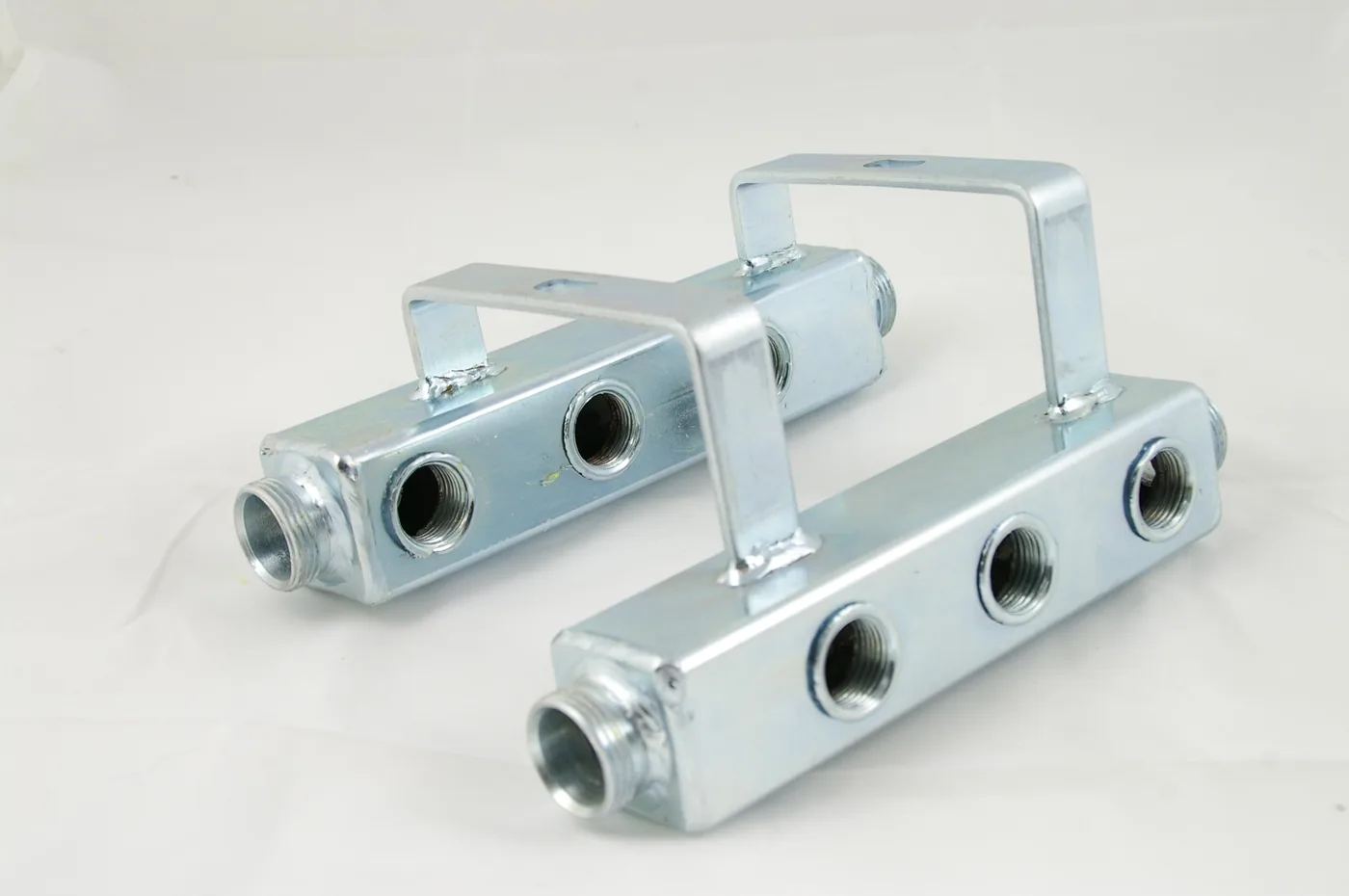
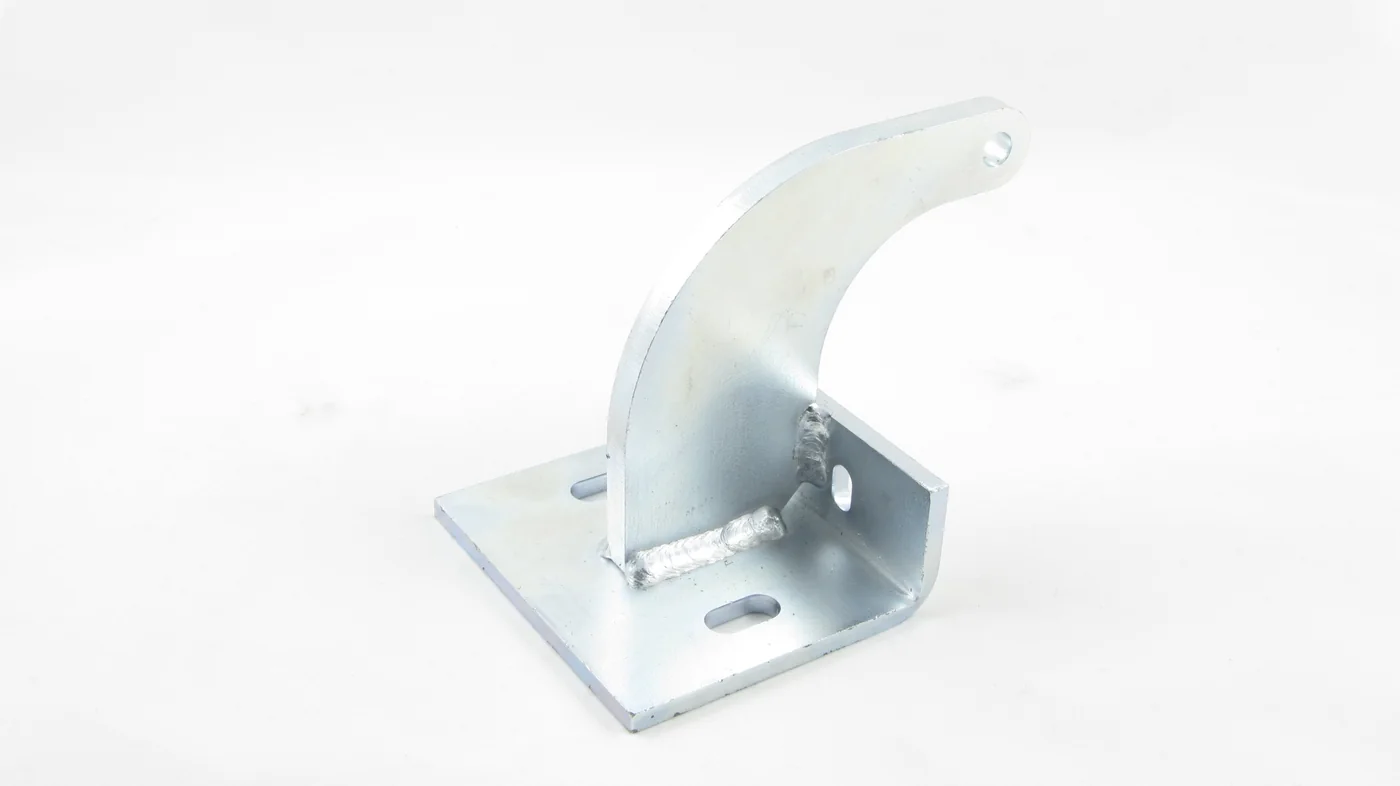
Robotic welding is particularly advantageous for recurring parts with a stable design, sufficient accessibility for welding, and production volumes large enough to recoup the costs of programming and product-specific welding jigs. The process is well-suited for repetitive MAG welding of steel components, such as brackets, frames, mounts, and smaller assemblies.
Not every product is automatically a good candidate. High variability, hard-to-reach welds, inconsistent fit-ups, or very small production runs may make manual welding a more attractive option. For this reason, TOS evaluates the entire production process rather than focusing solely on welding time. Learn more about having welded structures manufactured in Poland, MIG/MAG and TIG welding in Poland, and explore our full range of outsourcing production to Poland.
Reliable robotic welding begins with reproducible parts and a high-quality welding jig. Reference surfaces, stops, and clamping sequences must ensure the product is positioned identically every time, while the jig itself must account for heat input and potential distortion. Furthermore, factors such as wire quality, gas settings, torch reach, and the maintenance of contact tips all influence the final result.
TOS coordinates these parameters with the production partner and establishes critical dimensions and inspection points. When a project requires it, we select a partner with the appropriate welding documentation, qualified personnel, and relevant certifications. Learn more about our services in welded structures and quality control.

We evaluate drawings, materials, quantities, weld seams, tolerances, critical dimensions, and the desired finish.

The partner assesses robot reach, fixturing, product variation, and the concept for an appropriate welding jig.

You will receive a clear quotation covering tooling, programming, unit price, inspections, finishing, and lead times.

We verify the weld appearance, dimensions, distortion, fit, and cycle time before the production run is approved.

Following approval, the process proceeds to production, agreed-upon inspections, surface treatment, packaging, and transport.
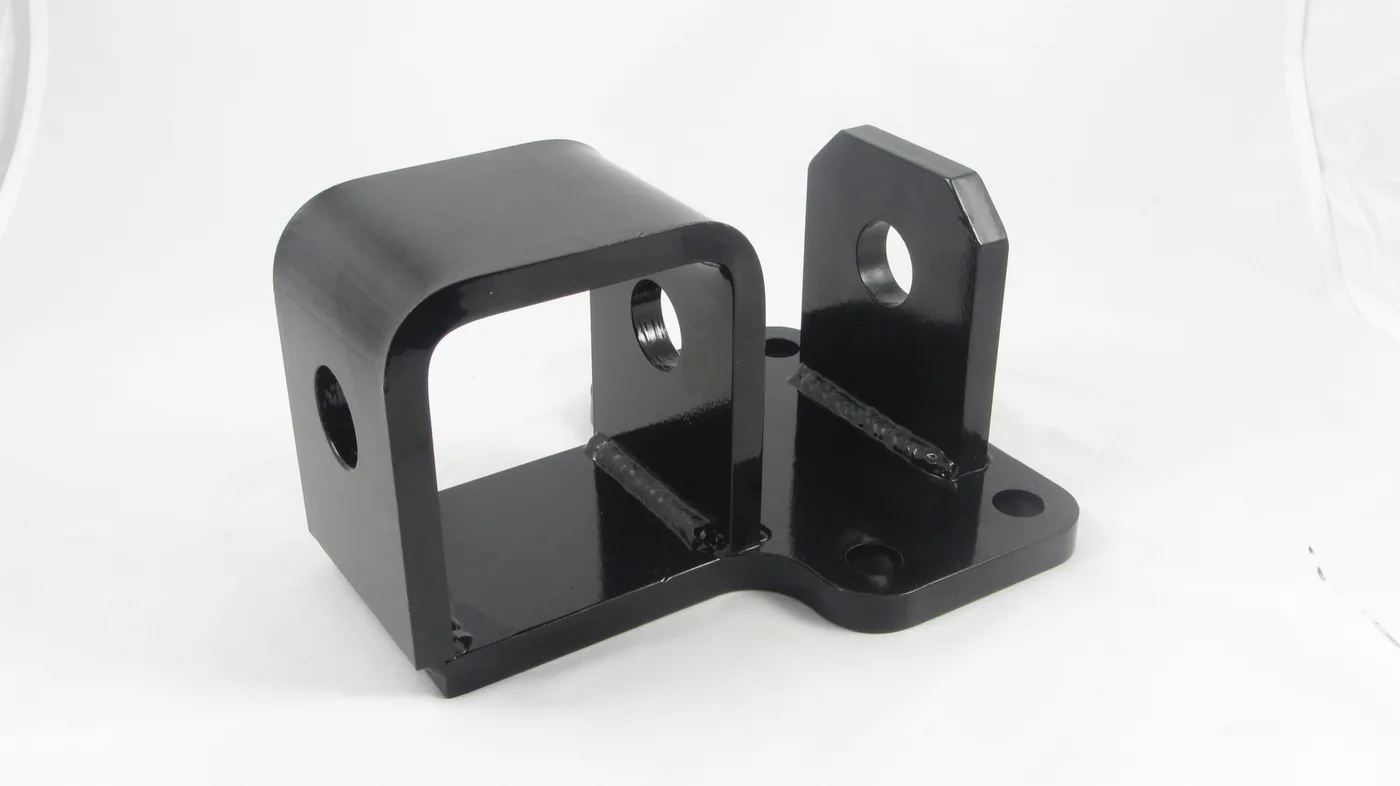
Robotized MAG welding is widely used for unalloyed and low-alloy steel. This process is well-suited for repeatable welds with good accessibility and can be integrated with rotary tables or multiple fixturing stations. Robotized MIG welding of aluminium is also an option, though it requires extra attention regarding material preparation, wire feed, and process stability. Automated TIG welding is primarily employed when precise heat input or a specific weld appearance is required.
The production workflow can begin with laser cutting, tube laser cutting, bending, or machining. Post-welding operations can include straightening, drilling, tapping, blasting, powder coating, or hot-dip galvanizing. Furthermore, assembly, packaging, and transport from Poland can also be included as part of the same project.
TOS begins by analyzing the component’s function, expected annual volume, and technical risks. We then evaluate whether robotic welding truly offers an advantage over manual welding and identify the ideal Polish production partner based on product size, material, batch size, and quality requirements.
Throughout the industrialization and production phases, we oversee technical drawings, revisions, welding jigs, trial parts, and agreed-upon inspection milestones.
Material certificates, welding documentation, measurement reports, or additional testing can be arranged if required for the specific application and agreed upon in advance.
Please provide a PDF drawing and a STEP or STP file, along with details regarding the material type, quantities per order and per year, weld specifications, tolerances, critical dimensions, and the desired finish. Also, include information on any product variants and applicable standards or documentation requirements.
We assess whether the design offers sufficient repeatability, whether the welds are easily accessible, and whether the production volume justifies the investment in a welding jig and programming. Where necessary, we compare robotic welding with manual welding.
Reference surfaces, component fit, gaps, tolerances, and torch reach determine whether the robot can reliably execute every weld.
Where necessary, TOS discusses design adjustments to improve fixturing, dimensional accuracy, or cycle times.
The quotation separately specifies the one-time costs for welding jigs and programming, as well as the recurring unit price. It also covers materials, finishing, quality inspections, packaging, and delivery, ensuring that all offers are based on the same parameters.
For series production, a trial part or a small pre-production run is created first. This allows us to verify the weld appearance, dimensions, distortion, fit, accessibility, and the functionality of the welding jig before authorizing larger-scale production.
Once approved, the robot program, welding sequence, and relevant parameters are formally documented. TOS manages revisions and technical queries, ensuring that any changes are systematically incorporated into the program, jig, and work instructions.
Depending on the product, we can arrange for visual weld inspections, dimensional checks within the jig, fit-up verification, photographic documentation, or additional testing. Through our quality control service, we tailor the inspection frequency to the specific risk profile of the component.
Following robotic welding, we offer finishing services such as weld dressing, straightening, drilling, tapping, or machining. For corrosion protection or aesthetic finishes, we can also provide abrasive blasting, powder coating, wet painting, or galvanizing, depending on the material and application.
Production parts are carefully packaged to prevent damage, deformation, or surface abrasions. TOS coordinates the stacking, protective measures, and transport from Poland based on the product’s shape, weight, quantity, and surface finish.
After the initial delivery, we evaluate the weld quality, dimensions, rejection rates, cycle times, packaging, and lead times. For subsequent orders, we refine the jigs, programs, and inspection plans as needed to ensure a stable and consistent production process.
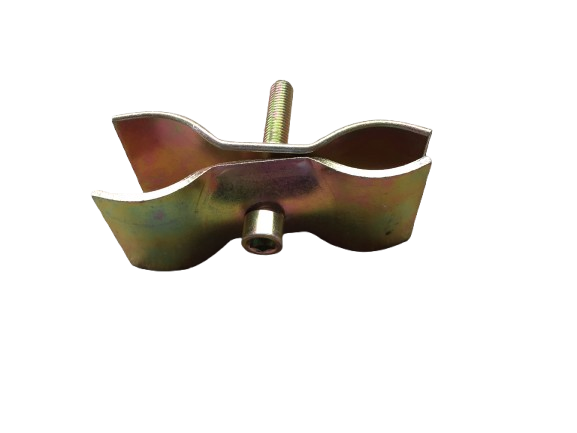
For a client who supplies construction fences, we produce a wide range of construction fence clamps in various sizes and....
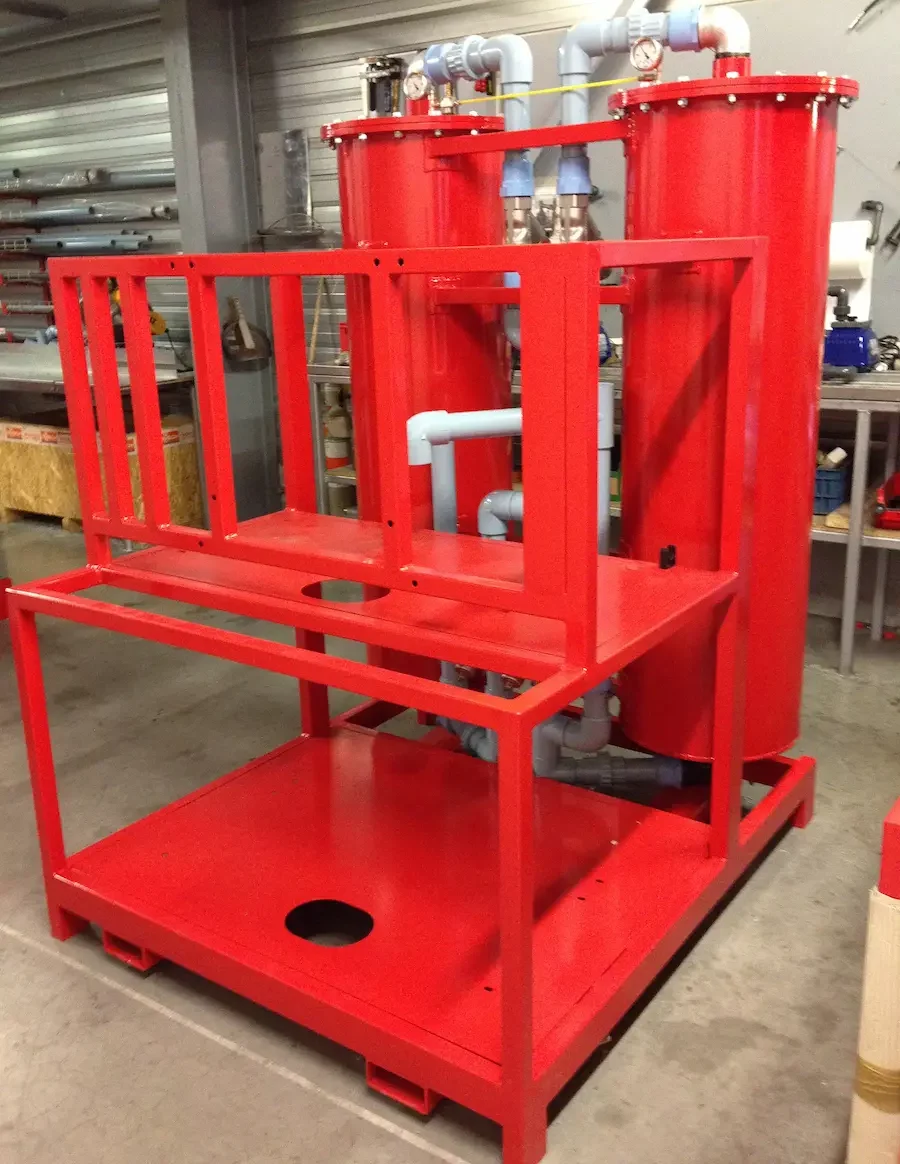
For a client in the fruit and vegetable storage industry, we manufacture a wide range of products, ranging from welded....
Robotic welding becomes attractive when a product is manufactured on a recurring basis, contains a sufficient number of identical welds, and the savings per part are enough to recoup the costs of programming and welding jigs. The break-even point depends on factors such as weld length, cycle time, the number of product variants, and expected annual volume.
Steel is typically welded using robotic MAG welding. Aluminium can be welded via robotic MIG, and for specific applications, automated TIG welding is also an option. Suitability depends on the alloy, material thickness, welding position, accessibility, and the required quality standards.
To ensure a stable and dimensionally accurate result, some form of product-specific fixture or jig is almost always necessary. The complexity of the jig can vary—ranging from simple to highly elaborate—depending on production volumes, tolerances, product variants, and the number of required welding positions.
Yes. When a project requires it, TOS will select a partner with the appropriate welding procedure specifications (WPS), qualified personnel, and relevant certifications. The specific requirements must be determined in advance based on technical drawings, applicable standards, and the intended application.
Please provide a PDF drawing, and preferably a STEP or STP file as well. Include details such as material, quantities (per order and per year), weld seams, tolerances, critical dimensions, product variants, surface treatments, and any specific documentation requirements. You can upload files directly via our technical inquiry form.
Technical request
Upload a PDF, DWG or STEP/STP file and receive a detailed response about manufacturability, the production route and your request for quotation.