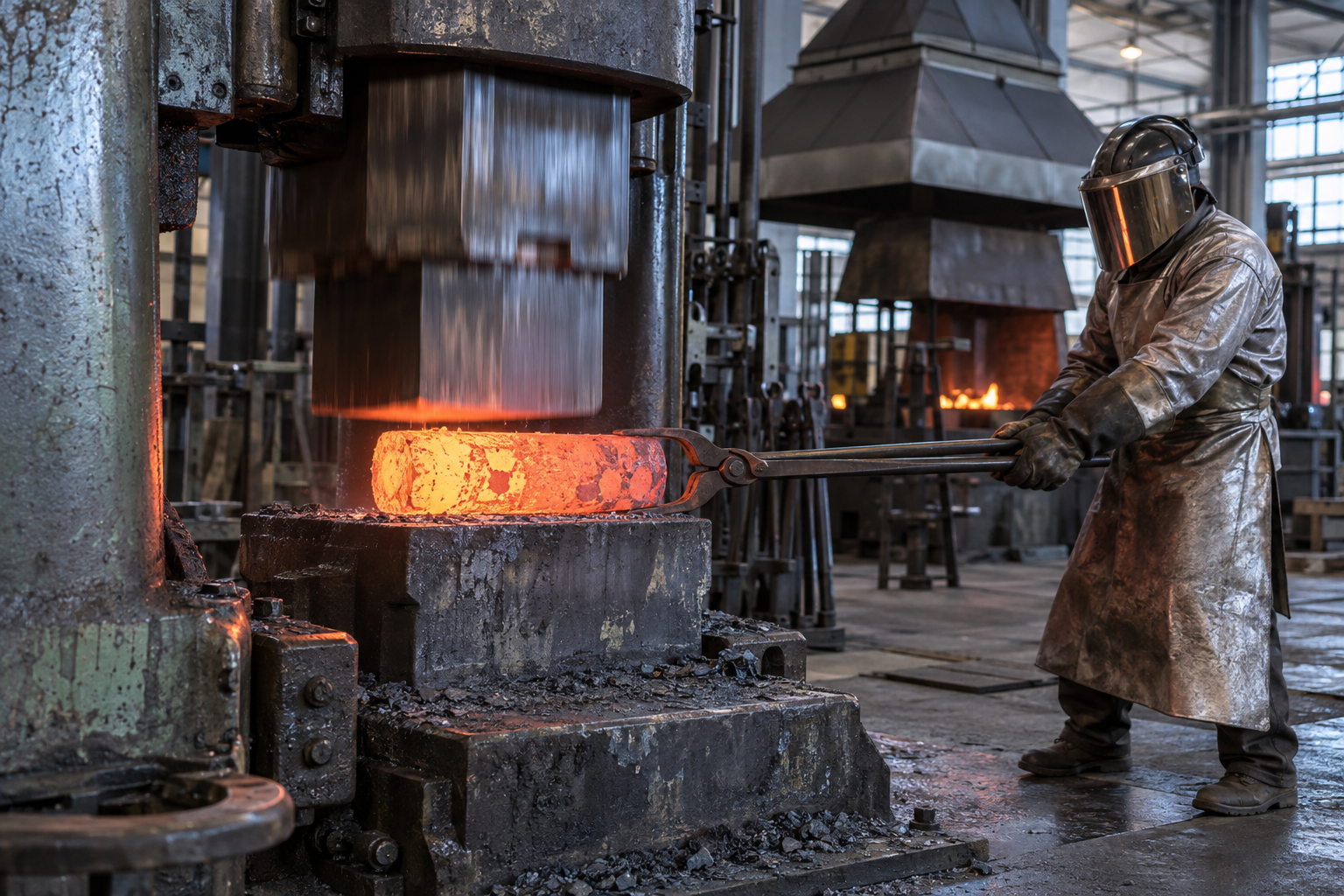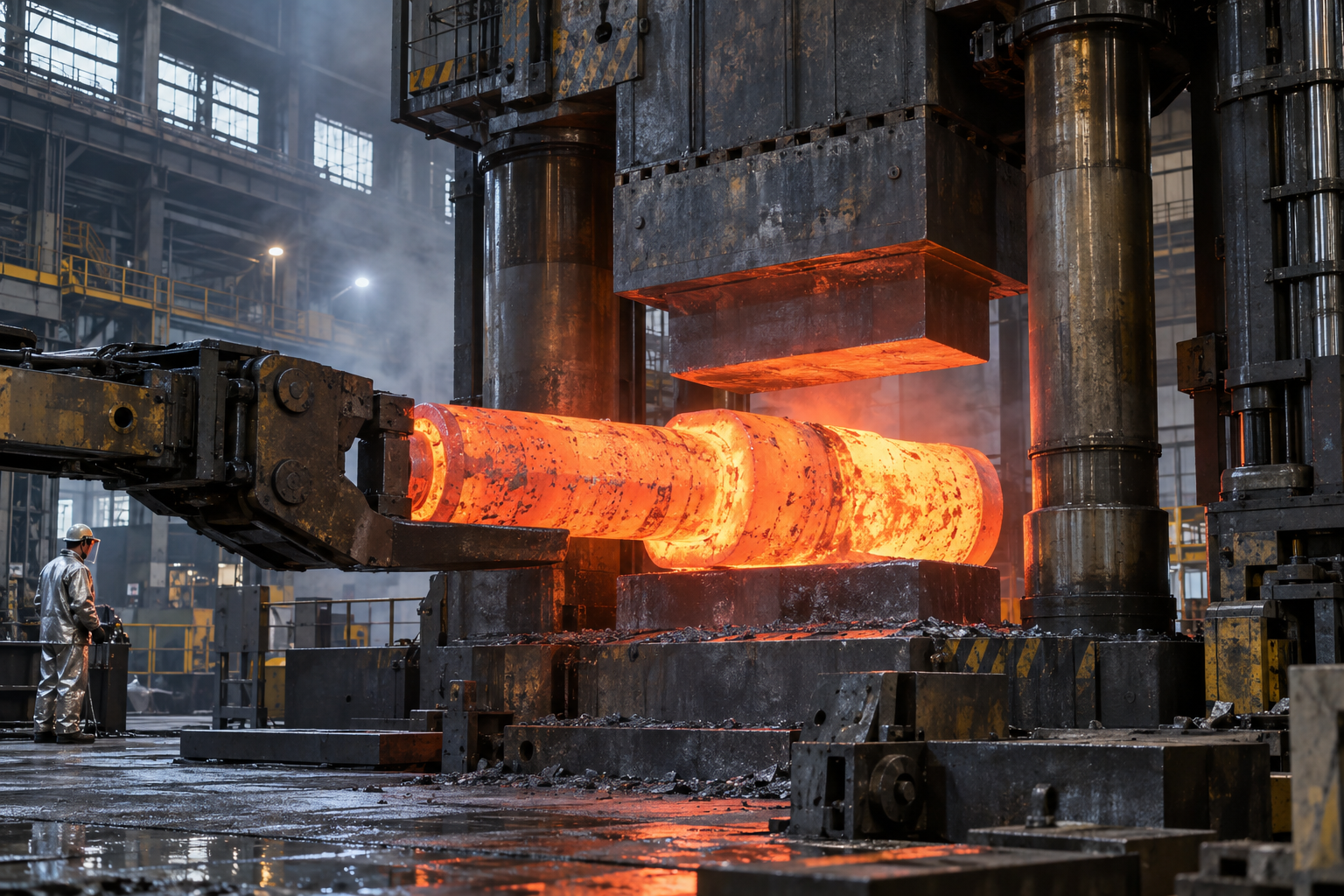

With open-die forging in China, a heated steel block, bar or preform is deformed step by step between open tools. This is done with a hydraulic forging press or forging hammer. Because a completely closed mold is not required, the technique is suitable for shafts, rings, discs, drawbar eyes and other large or heavily loaded parts.
The material is hot forged to reduce the required deformation force and achieve a favorable material structure. TOS coordinates steel type, heating, forging sequence, pressing or hammer capacity, heat treatment and delivery with a suitable Chinese forging partner.

Steel grade, initial condition and required mechanical properties determine the temperature window and heat treatment.

An appropriate billet size and any preform help to distribute the material evenly over the part.

Dimensions, weight and required deformation force determine which Chinese forging installation is technically suitable.

The forging direction is aligned with the zones that absorb tensile, compressive or alternating loads in service.

Normalising, hardening or stress-relief annealing can be combined with inspection, protection and transport.
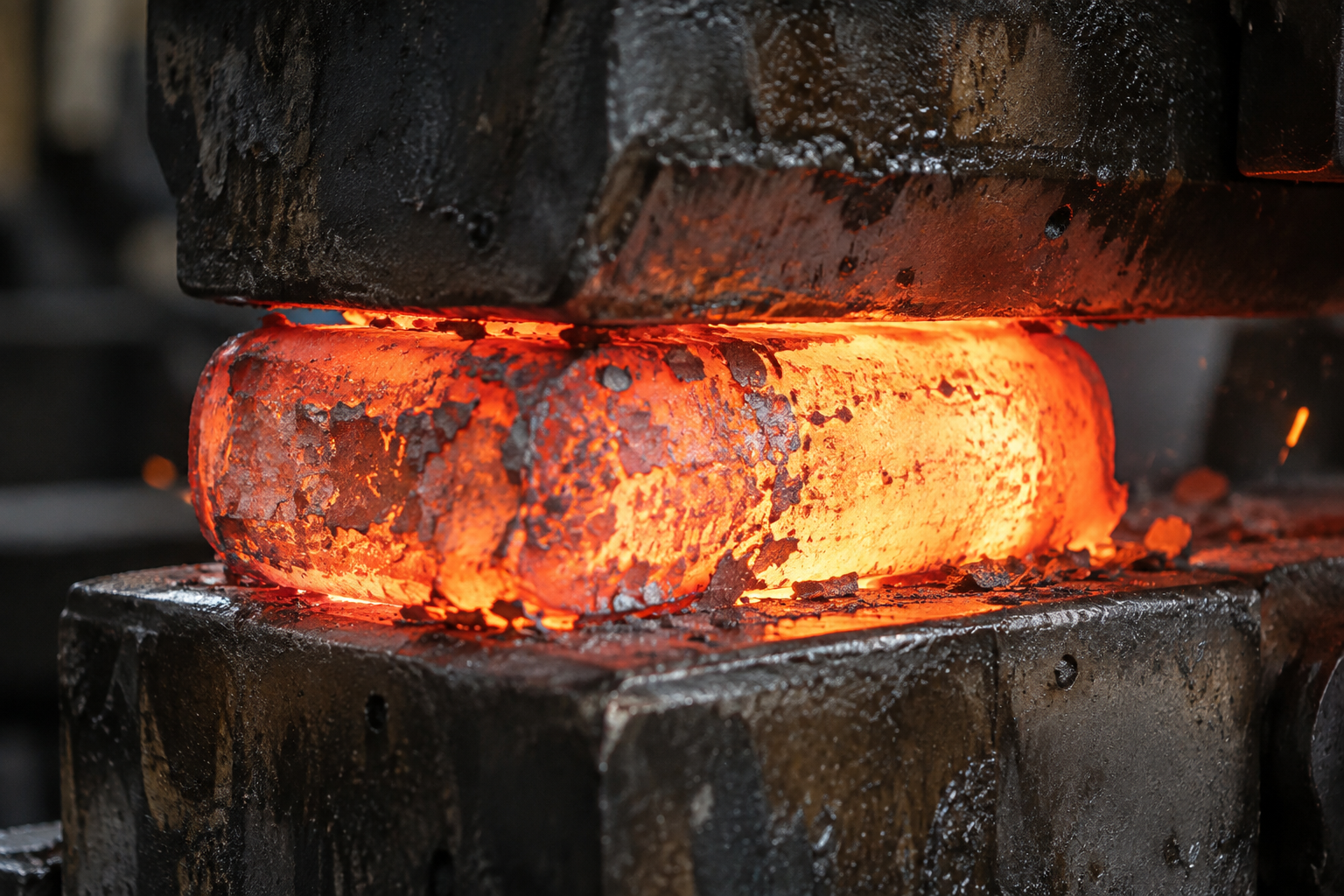
With open-die forging, internationally often called open-die forging, a heated block, rod or preform is deformed step by step between open tools. The operator or manipulator turns and moves the workpiece between strokes or pressing passes. For example, shafts, rings, discs, pulling eyes and other large or heavily loaded preforms can be made without a completely closed mold.
The temperature must remain within the correct window during the process. For large parts, reheating may be necessary. TOS therefore assesses the complete route: material, furnace, forging sequence, degree of deformation, deburring, straightening, heat treatment and any CNC machining of the forging piece.
China is particularly interesting for plannable series in which materials, tools and production runs can be efficiently bundled. For a new product, we not only compare the forging price, but also tool costs, heat treatment, finishing, inspection and transport.
Is a complete drawing missing, but is there an existing part or model? TOS can then have the product drafted or 3D scanned and record the relevant functional characteristics before the request is sent to the forging partner.

We determine which zones absorb the greatest load and which material properties are functionally required.

Material, billet size and any number of forging steps are tailored to part weight and geometry.

We choose a partner with a suitable oven range, pressing or hammer capacity and experience with comparable parts.

First forgings are reviewed for shape filling, dimensions, surface and agreed material properties.

Heat treatment, finishing, preservation, packaging and transport are planned in one production route.
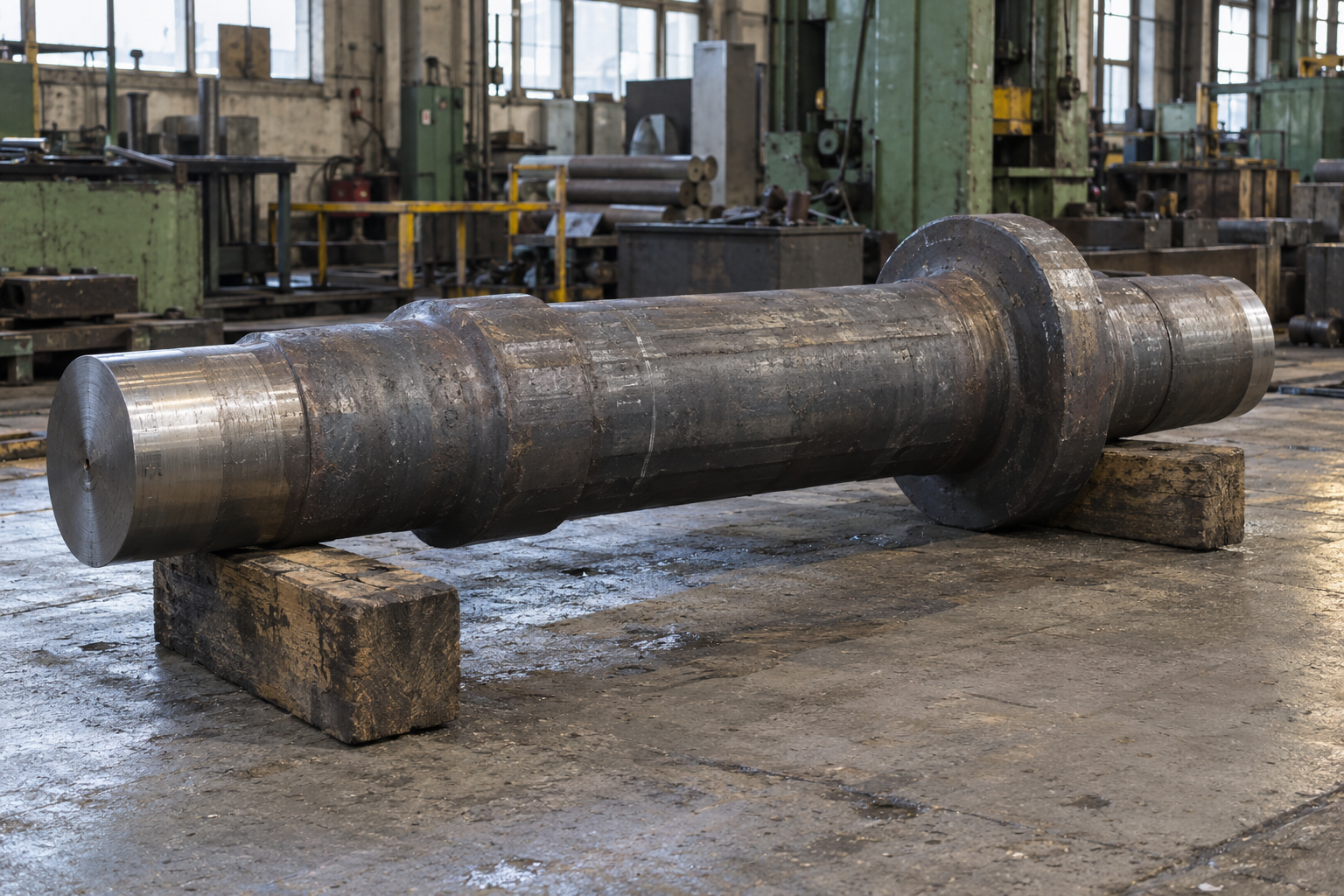
A free-form forged part does not have to have its final size or surface immediately after forging. The rough forging shape can remain in non-functional areas, while bores, fits and mounting surfaces are machined later. This maintains the material flow and only processes where necessary.
Read more about industrial forging or let TOS assess which combination of open-die forging, heat treatment and machining makes sense for your part.
We start from the customer drawing, choice of materials, quantities and functional requirements. We then link the part to a Chinese forging partner with appropriate installation capacity and organize test pieces, post-treatment, quality control and delivery.
We discuss geometry, series size, mounting points and the loading direction relevant to the part. If a drawing is missing, an existing model can be recorded or scanned.
Material standard, starting material and desired mechanical properties are stated. Certificates are included when agreed.
The amount of material and any preform are chosen in such a way that all zones are sufficiently filled during forging.
We select based on part weight, dimensions, alloy, oven range, press or hammer capacity and available experience.
Heating method, temperature window and number of forging passes are tailored to the material and shape.
The first parts show whether shape fill, burr and material flow correspond to the chosen route.
Excess material will be removed. Where necessary, parts are calibrated or aligned before the next operation begins.
Normalizing, hardening, tempering or stress-relieving annealing is only used when material and product specification require this.
Agreed dimensions, surface, hardness and any mechanical properties are inspected by appropriate means.
Forgings are protected against corrosion and transport damage. TOS organizes packaging, import and delivery as part of the supply-chain route.
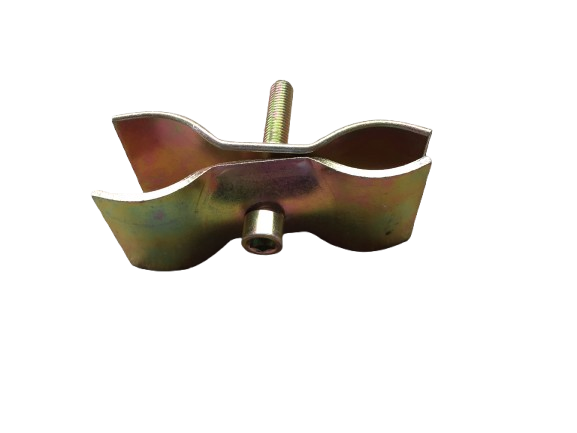
For a client who supplies construction fences, we produce a wide range of construction fence clamps in various sizes and....
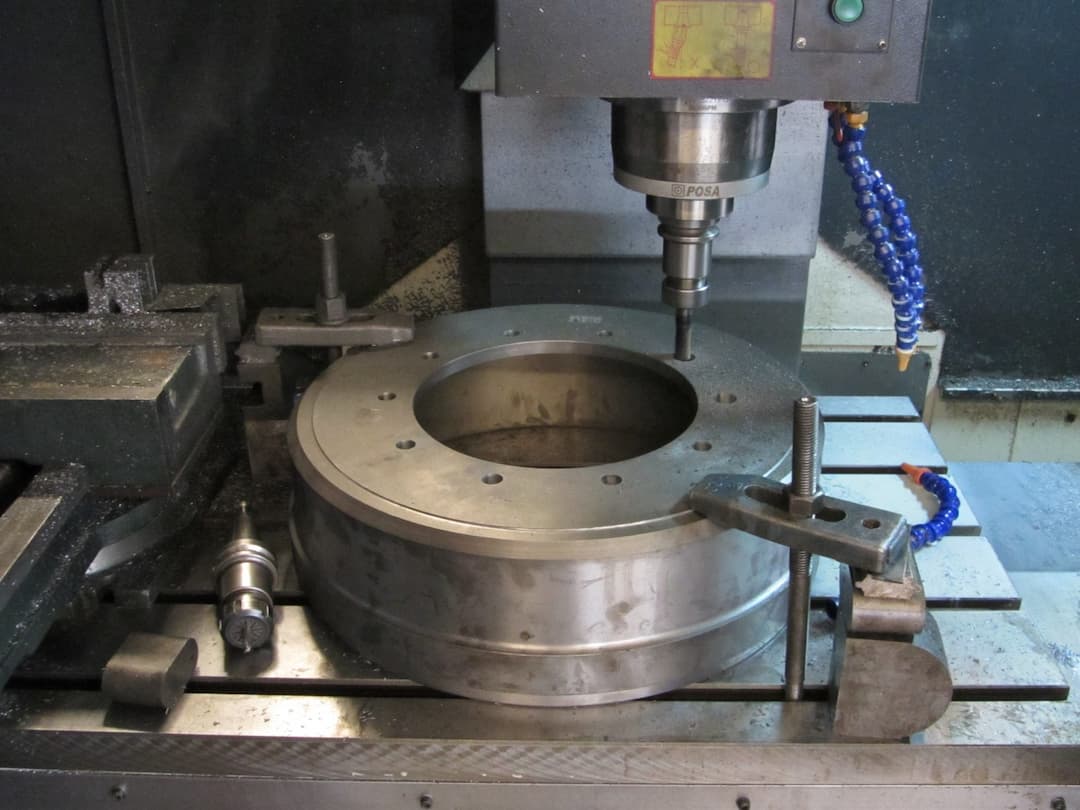
For one of our regular customers, we produced brake drums with an inner diameter of 500 mm, made entirely of....
open-die forging involves deforming heated metal between open tools. The workpiece is rotated and moved between pressing passes or hammer blows. “Warm” describes the material temperature; “free form” describes the production method.
Many carbon steels and alloy steels are suitable. The exact route depends on alloy, part size, required properties and any heat treatment.
At elevated temperatures, steel requires less deformation force and major shape changes are possible. This suits heavy parts and large cross-sections. The temperature is monitored during the process and the workpiece can be reheated between pressing passes.
No. The necessity arises from the material, forging process and required properties. When heat treatment is necessary, we determine the method and control in advance.
Send a drawing or STEP file, material, quantities and desired post-treatment. If there is no drawing, a physical example or model can serve as a starting point for engineering and 3D scanning.
Technical request
Upload a PDF, DWG or STEP/STP file and receive a detailed response about manufacturability, the production route and your request for quotation.