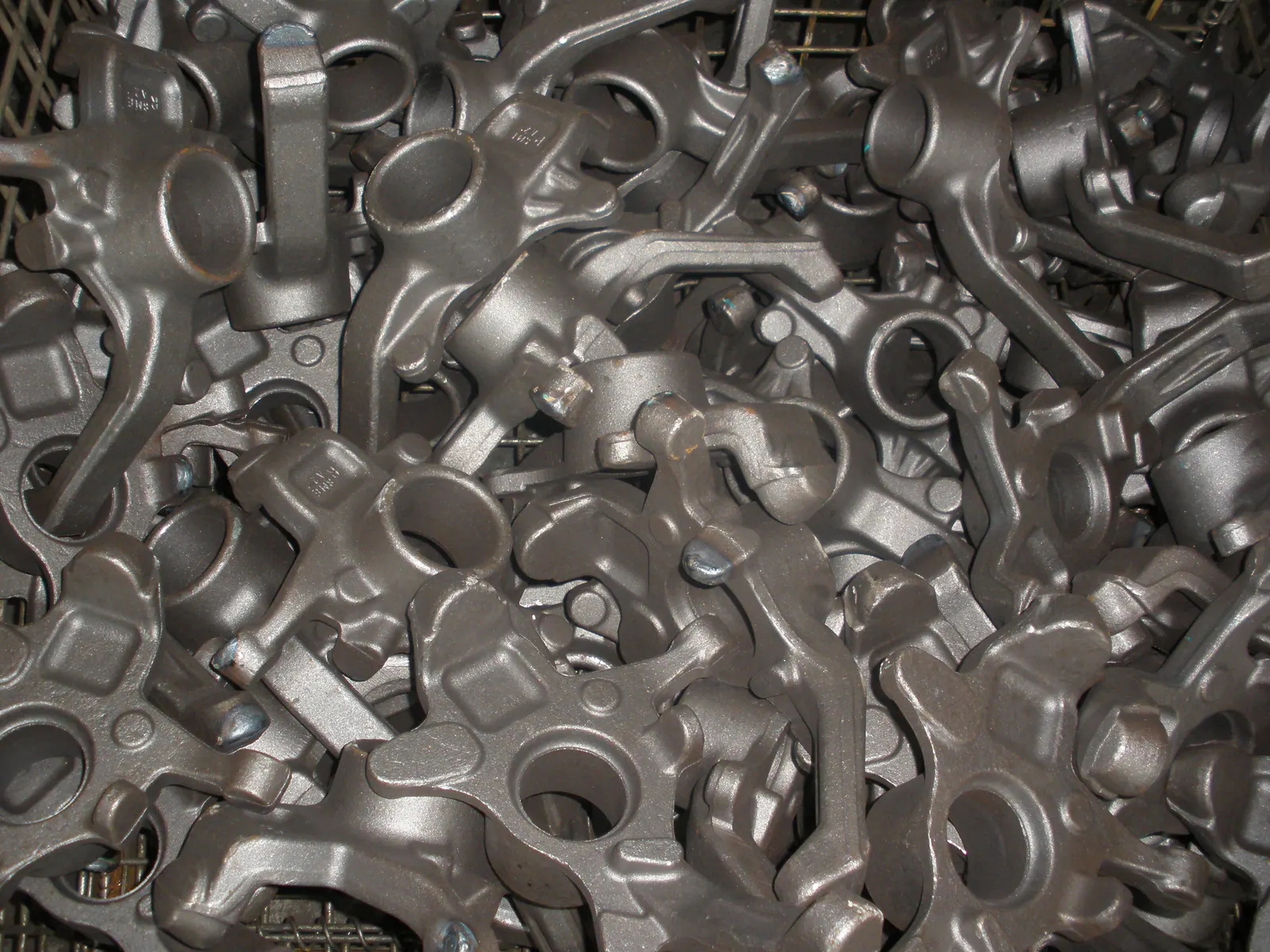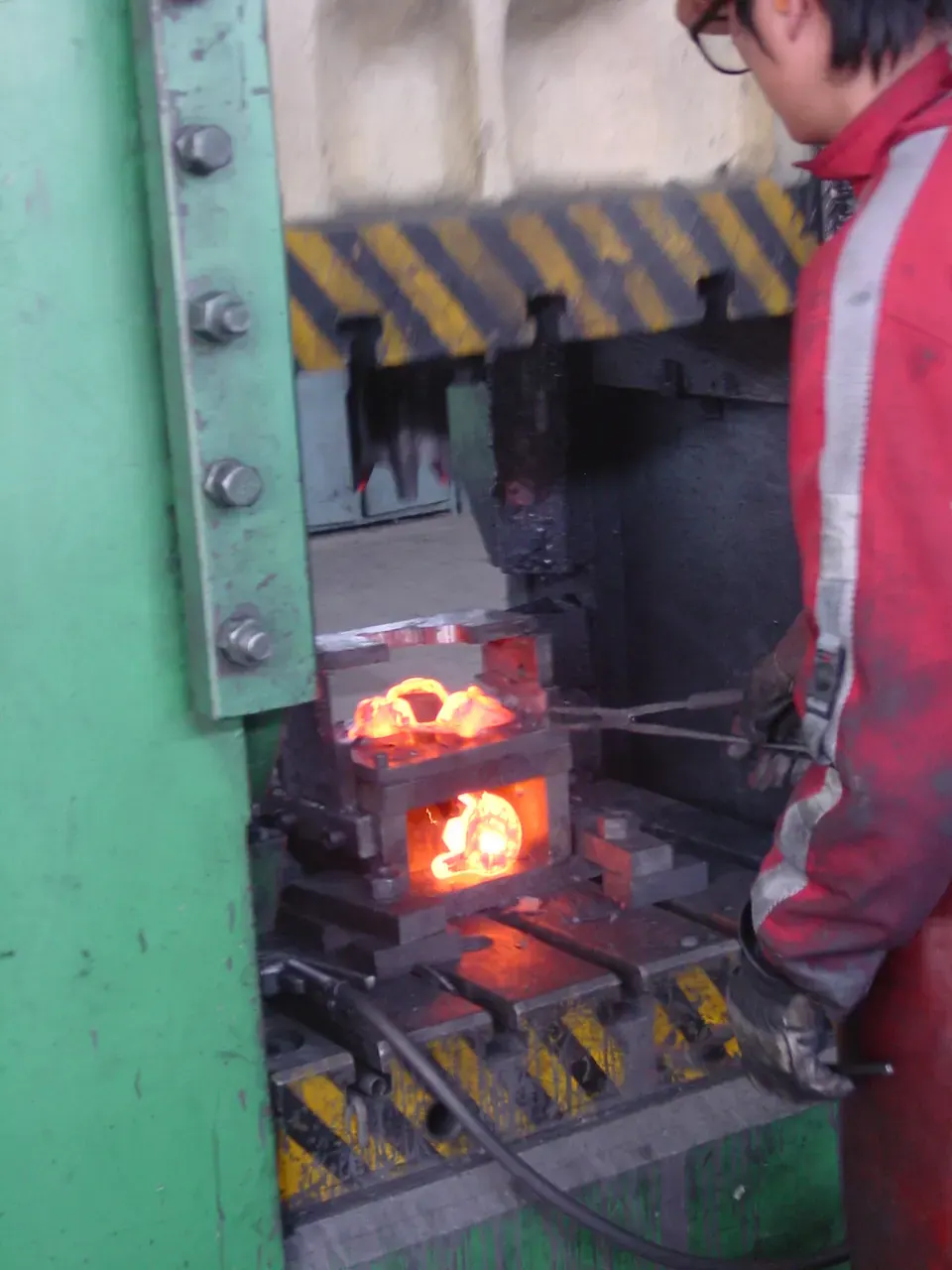

closed-die forging in China is suitable for recurring series that require strong parts with a recognizable, repeatable shape. The heated material flows through one or more die cavities to the desired preform. TOS, together with the Chinese forging partner, assesses the part surface, draft angles, material distribution and required finishing.
This creates a production route in which die, test series, series production and delivery are technically and economically connected.

The parting line is selected for die filling, release, flash formation and access for later operations.

Suitable draft angles and transitions help release the forging and reduce local tool stress.

Complex parts may need a preform or a sequence of die impressions to distribute material progressively.

The material buffer must be sufficient for complete filling without unnecessary weight or trimming losses.

Material, thermal management, wear and maintenance determine how consistently the die performs across production runs.
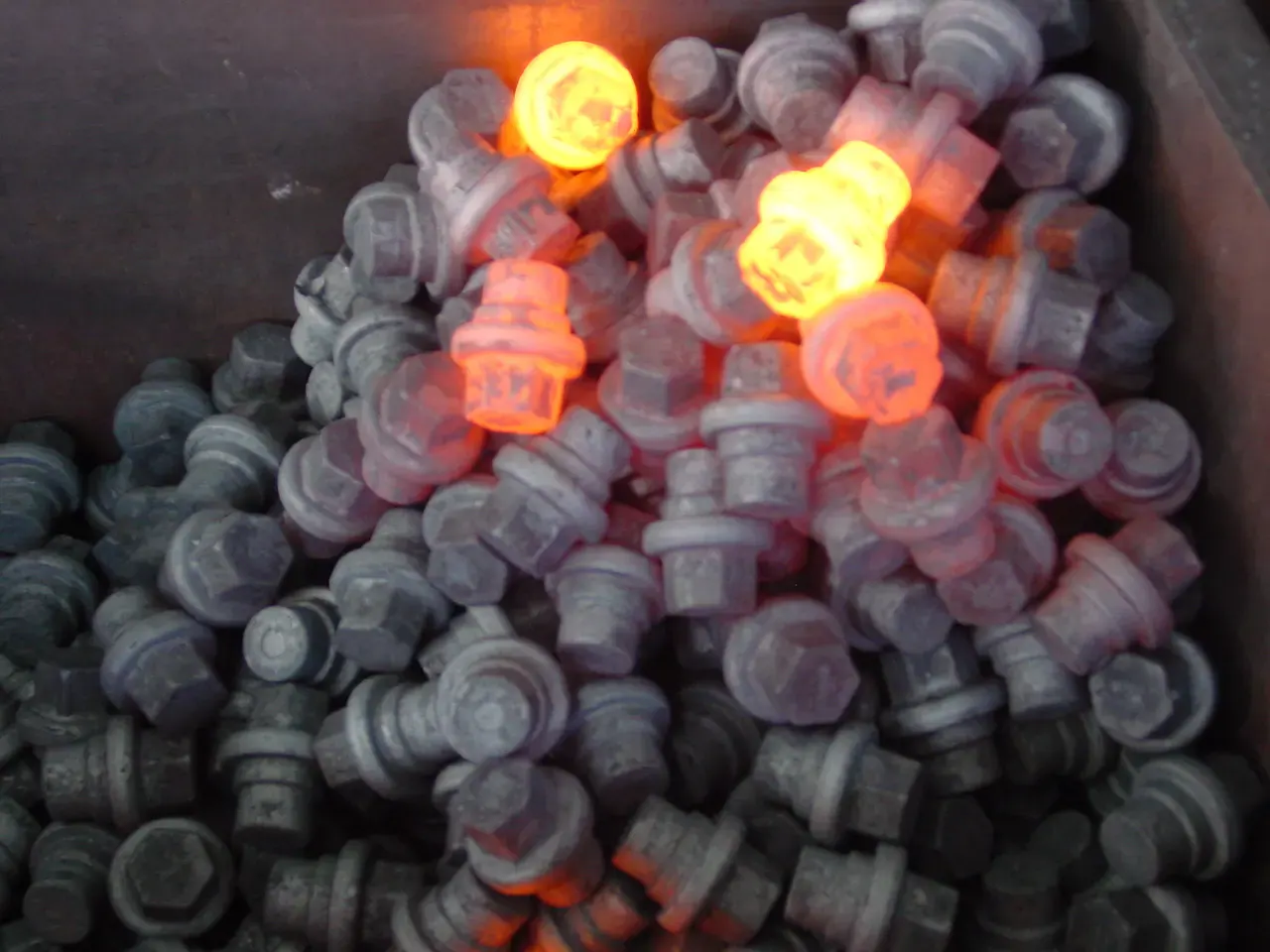
In closed-die forging, tool costs are distributed over the series. As a result, not only the price of one forging is relevant, but also the number of cavities, the expected die life, trial series and future repeat orders. A well-chosen preform can limit material loss and die wear.
TOS compares the die route with alternatives such as freeform forging, full machining or casting. Depending on geometry, material and batch size, for example, sand casting in China may be a suitable alternative. The choice is made on the basis of total delivery costs, required properties and expected purchase.
For tool design, test forging and die management, read more about forging molds in China.
China offers a lot of capacity for serial closed-die forging and associated operations. We do not select on country alone, but on experience with the alloy, part class, weight range and desired documentation. The die remains linked to the approved product route and is inspected for wear for repeat orders.
After forging, deburring, blasting, heat treatment and CNC machining can be added. TOS creates one coordinated delivery route for this.

Quantities, weight, shape, material and finishing determine whether investing in a die makes sense.

We assess discharges, radii, burrs and the material flow through the different cavities.

Partner selection is based on forging capacity, toolmaking, alloying experience and control facilities.

First parts are reviewed for form filling, dimensions, surface and machinability.

After production runs, wear is reviewed and maintenance or corrections are planned before a follow-up series starts.
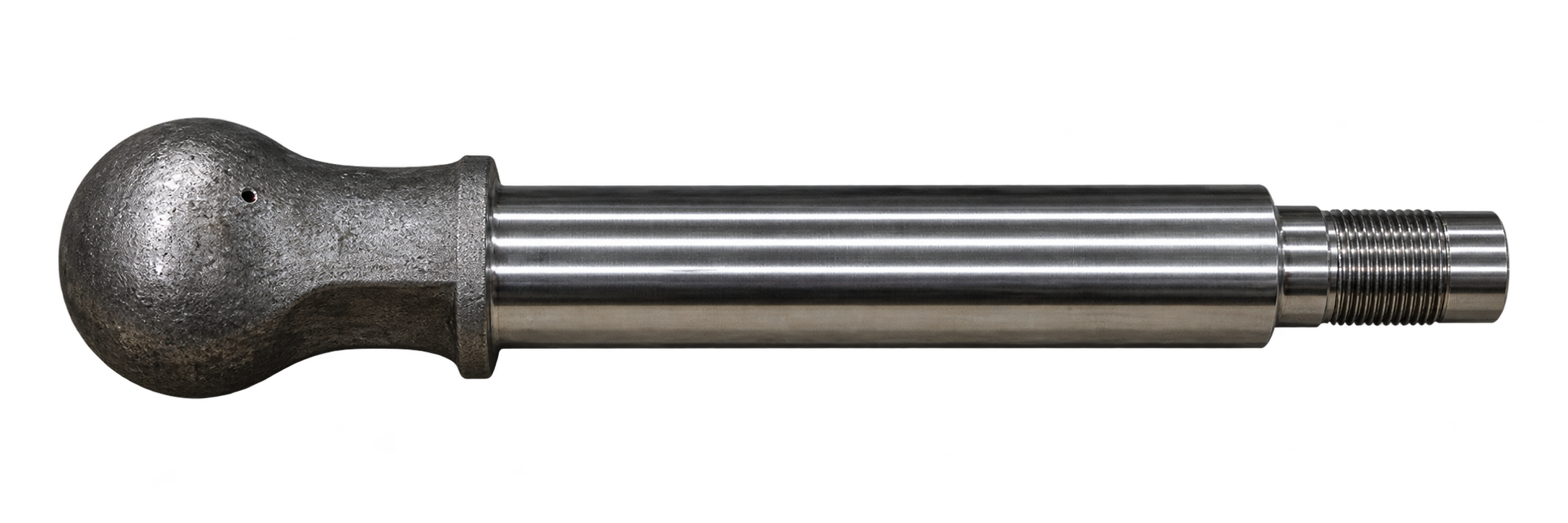
Deviations can arise not only from the material or the machine, but also from wear, temperature differences and a changing burr edge. That is why during serial closed-die forging we monitor both the part and the condition of the die.
For dimensionally critical features, we record what is acceptable in the forging state and what is machined later. More information about the general process can be found at forging as a production technique.
The customer drawing, the 3D model, the series size and choice of materials form the basis. TOS coordinates die concept, trial series, inspection, finishing and international delivery with one suitable Chinese production route.
We look at the desired shape, series size, material and functional features. An existing example can be recorded if digital product data is missing.
The alloy is reviewed for malleability, required properties and available starting sizes.
We determine how much material is needed and where there is a risk of incomplete filling, inclusions or unfavorable material flow.
Release angles, radii, burr edge and part surface are tailored to demoulding, die loading and finishing.
With complex geometry, the material is guided to the final cavity via one or more preparatory shapes.
The die is made, assembled and practically tested during a first production run.
The test parts are inspected for die filling, dimensions, surface defects and agreed material properties.
Burrs are removed and parts are straightened or heat treated where necessary before size-critical finishing takes place.
During the series, product characteristics and the condition of the tools are monitored according to the agreed control plan.
die status, quantities and delivery times are confirmed for each repeat order. TOS organizes protection, packaging and transport.
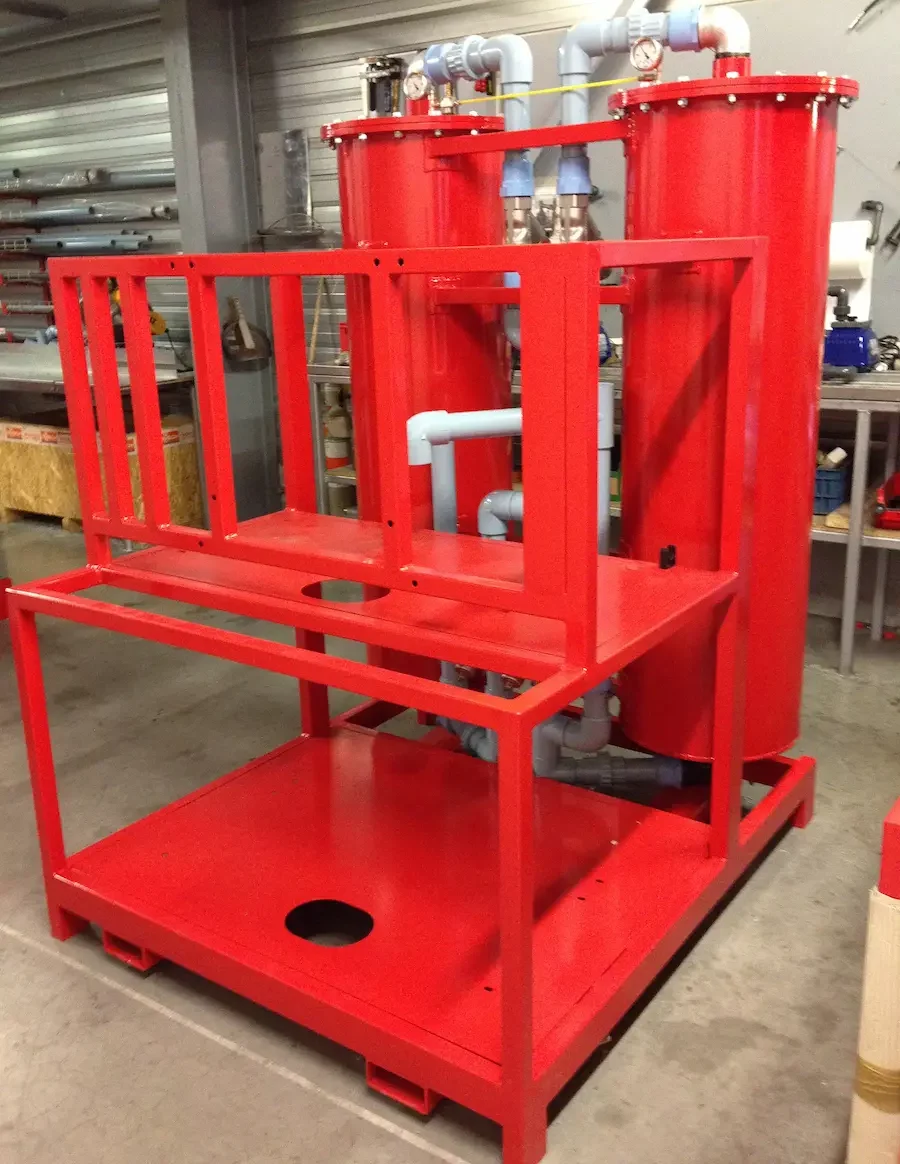
For a client in the fruit and vegetable storage industry, we manufacture a wide range of products, ranging from welded....
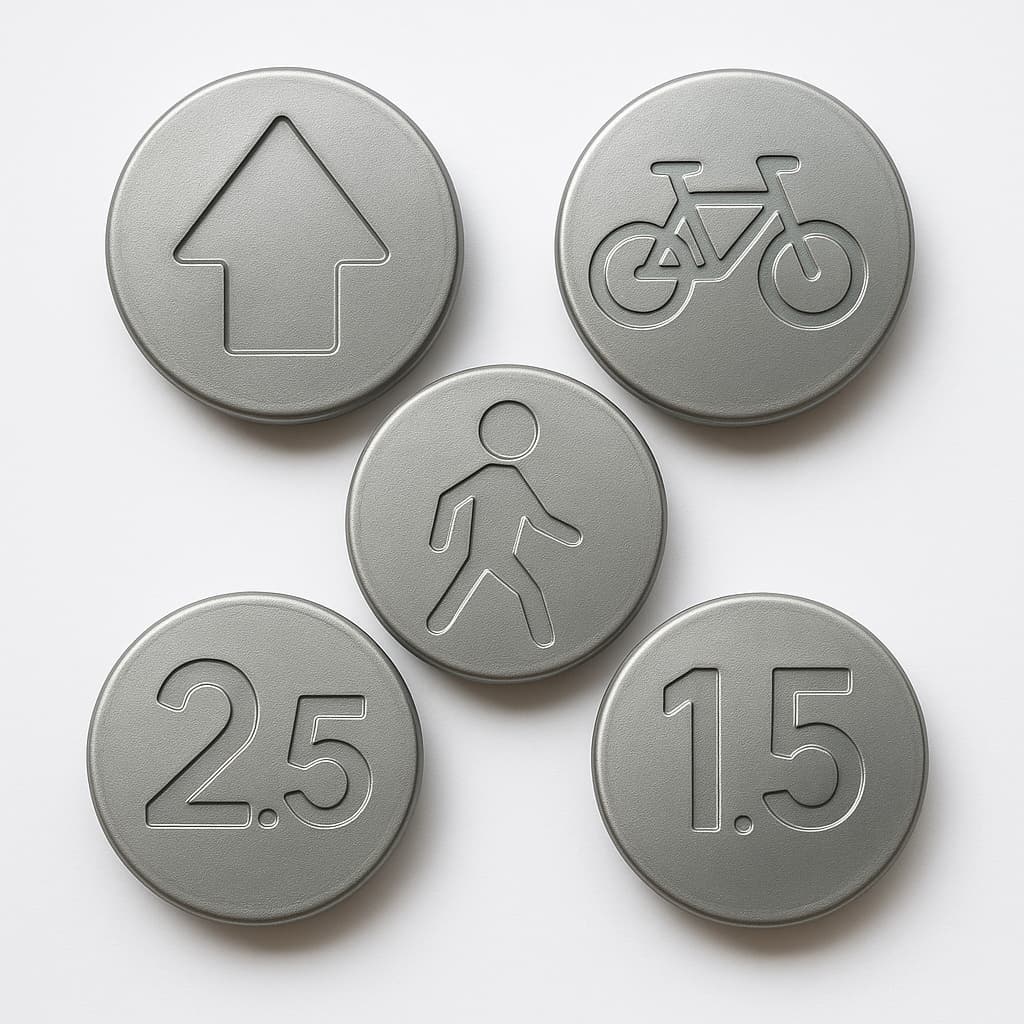
For a regular customer, we produced a series of stainless steel road nails used to mark walking and cycling routes.....
That depends on part weight, die complexity, material and alternative process. TOS compares die costs and unit price over the expected total purchase, including repeat orders.
The service life varies greatly by alloy, temperature, geometry, pressing force and maintenance. Therefore, the expected lifespan is reviewed per product route and wear is inspected for repeat orders.
Burn is excess material that flows out along the part surface during filling. It helps fill the cavity completely and is removed after forging.
The achievable forging tolerance follows from size, geometry, material and process. Functional fits, bores and mounting surfaces are usually designed with a machining allowance and later machined.
Send a drawing or 3D model, material, annual volume, series size and desired finishing. Also indicate whether die costs should be offered separately or in the product price.
Technical request
Upload a PDF, DWG or STEP/STP file and receive a detailed response about manufacturability, the production route and your request for quotation.