
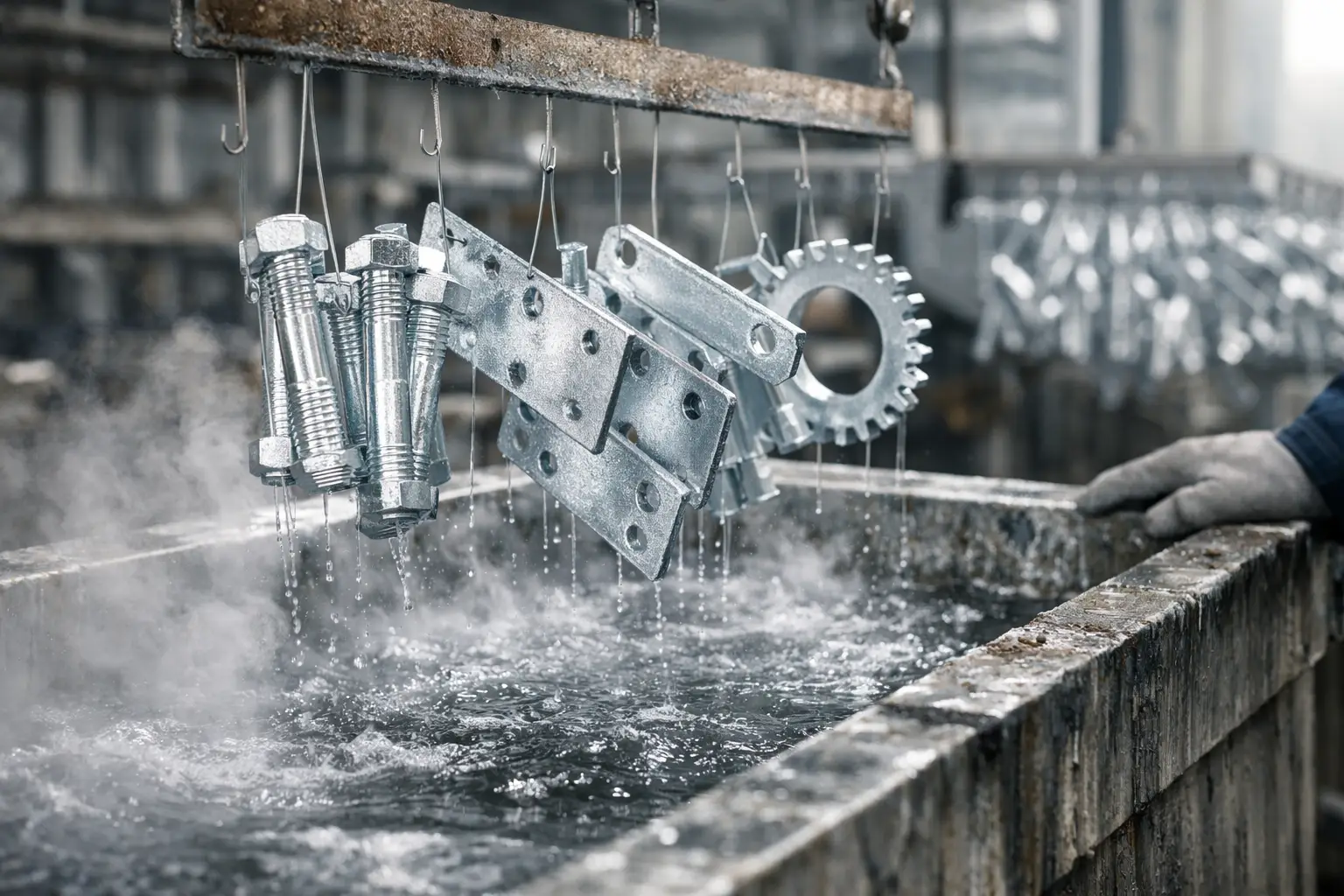
Galvanising metal parts protects steel with zinc, but the word “galvanised” does not define one universal finish. Hot-dip galvanising, electroplating and other zinc-based systems differ in coating thickness, appearance, dimensional effect and corrosion performance. The correct process must be selected from the part design, service environment and functional requirements.
A reliable outsourcing specification defines the base material, zinc process, coating or mass requirement, appearance, threads and fits, test method and packaging. Without those details, quotations and delivered parts may not be technically comparable.
How zinc protects steel
Zinc provides barrier protection by separating steel from the environment. It also offers sacrificial protection: zinc is more anodic than steel and corrodes preferentially when a small area of the steel is exposed.
In atmospheric exposure, zinc develops a protective patina over time. Service life depends on coating thickness and the environment, including moisture, chlorides, industrial pollutants and contact with dissimilar materials.
Main zinc-coating processes for metal parts
Hot-dip galvanising
Fabricated steel is cleaned, fluxed and immersed in molten zinc. The zinc reacts metallurgically with the steel and creates a series of alloy layers with an outer zinc layer. Hot-dip galvanising typically provides a relatively thick, durable coating suitable for structural, outdoor and heavy industrial applications.
The process can affect dimensions, drainage, appearance and distortion. Assemblies must be designed with suitable vent and drain holes, and threads or close fits often need special treatment.
Electrolytic zinc plating
Electroplating deposits zinc from an electrolytic solution. It generally creates a thinner, smoother and more controlled finish than batch hot-dip galvanising. It is common for fasteners, precision parts and indoor or moderately exposed components.
Post-treatments and sealers can improve corrosion performance and create different appearances. For high-strength steels, hydrogen-embrittlement risk and any required relief treatment must be assessed.
Other zinc-based systems
Mechanical plating, zinc flake coatings, sherardising, thermal spray and zinc-rich paint can suit specific geometries, temperatures or performance requirements. These processes are not interchangeable. Name the required system or define the performance and allow a qualified specialist to propose a documented alternative.
Select the process from the application
Consider:
- indoor, outdoor, marine or industrial exposure;
- required service life and maintenance access;
- part size, geometry and wall thickness;
- threads, fits and dimensional tolerances;
- appearance and surface smoothness;
- abrasion or handling damage;
- material strength and embrittlement risk;
- later painting, powder coating or assembly;
- applicable product or customer standards.
A thin decorative zinc plate and a heavy hot-dip coating may both be described as galvanised, yet serve very different needs.
Design parts for hot-dip galvanising
Hot-dip galvanising requires molten zinc and process liquids to flow freely through and out of the fabrication. Hollow sections and sealed spaces need correctly positioned vent and drain openings. Poor drainage can create uncoated areas, trapped zinc, safety hazards and excess weight.
Large differences in material thickness or asymmetrical fabrication can increase distortion risk during heating. Welding sequence, stiffening and fabrication tolerances should be reviewed before coating.
Overlapping surfaces, narrow gaps and enclosed crevices are difficult to prepare and galvanise consistently. Early design review is therefore essential. See outsourcing engineering and manufacturing for the wider DFM process.
Surface preparation is part of the process
Hot-dip galvanising lines normally remove oils, rust and mill scale through chemical cleaning and fluxing. However, paint, welding slag, heavy silicone contamination and some markings may require separate mechanical removal.
The galvaniser should receive steel that is suitable for the selected preparation route. Fabrication quality matters: weld spatter, sharp burrs and incomplete weld cleaning can remain visible or affect the final finish.
For zinc plating, cleaning and activation are equally important. Contamination can cause poor adhesion, staining, blisters or bare areas.
Steel chemistry affects coating appearance
Steel composition, particularly silicon and phosphorus levels, can influence the reaction with molten zinc. Different sections in one assembly may therefore develop coatings with different thickness, colour or texture.
A darker or rougher area does not automatically mean poor corrosion protection, but unexpected variation may be unacceptable for visible products. Where appearance matters, discuss steel selection, samples and acceptance criteria with the galvaniser before fabrication.
Specify coating requirements clearly
A purchase specification should identify:
- part drawing, revision and quantity;
- base material and material standard;
- zinc-coating process and applicable standard;
- required coating thickness, mass or performance;
- measurement locations and sampling;
- appearance and permissible repairs;
- thread, masking and dimensional requirements;
- post-treatment, passivation or sealing;
- traceability and certificate requirements;
- packaging and storage conditions.
If the product must support EU conformity requirements, link the finish specification to the technical documentation described in manufacturing to European standards.
Allow for threads, fits and coating build-up
Zinc changes dimensions. Hot-dip galvanising can significantly affect threads, holes and mating surfaces. Components may need oversize tapping, post-galvanising thread treatment or matching galvanised fasteners designed for the system.
Electroplated layers are thinner but can still affect precision fits. Drawings should state whether dimensions apply before or after coating and which surfaces require masking.
Avoid removing zinc from protected surfaces after delivery unless the corrosion consequence is understood and an approved repair method is used.
Understand appearance and permissible repairs
Fresh hot-dip galvanised steel may be bright, spangled, matt grey or locally varied. Appearance often becomes more uniform during natural weathering. Cosmetic expectations should not be confused with coating continuity and corrosion performance.
Small damaged or uncoated areas may be repaired using approved zinc-rich materials or thermal zinc spray, depending on the governing standard and project requirements. Define repair limits and inspection before production.
For products requiring a controlled colour or architectural finish, a duplex system combining galvanising with paint or powder coating can provide additional protection and appearance. Our powder-coating guide covers specification of the polymer finish.
Inspect the zinc coating and finished part
Inspection can include:
- visual coverage, drainage defects and surface condition;
- coating-thickness measurements;
- adhesion or other process-specific tests where required;
- dimensional verification of threads and interfaces;
- confirmation of repairs;
- material and batch traceability;
- certificate and documentation review.
The inspection plan should reflect the selected process and product risk. TOS can coordinate quality control at the metal supplier, coating facility and final shipment.
Prevent storage and transport damage
Newly galvanised parts need suitable ventilation and drainage during storage. Close-packed surfaces exposed to moisture can develop white corrosion products. Packaging should avoid water entrapment and incompatible contact materials.
Heavy fabrications need lifting points that prevent damage to both the coating and part geometry. Precision plated parts may need separation and clean packaging to protect appearance and threads.
Galvanising versus powder coating
Zinc protects steel through barrier and sacrificial action. Powder coating primarily provides a polymer barrier and offers broader control of colour and texture. A duplex combination can use both systems, provided the galvanised surface is prepared correctly for the topcoat.
The correct choice depends on exposure, desired appearance, maintenance, damage tolerance, dimensions and cost across the expected service life.
A practical galvanising workflow
- Define the environment, service life and functional requirements.
- Select hot-dip galvanising, zinc plating or another appropriate system.
- Review material, geometry, drainage, distortion and dimensional build-up.
- Release a controlled coating and inspection specification.
- Qualify the galvanising supplier and any subcontracted processes.
- Approve a first article where appearance or dimensions are critical.
- Inspect coating continuity, thickness, repairs and interfaces.
- Package and store the parts to prevent moisture and mechanical damage.
Common mistakes to avoid
- ordering only “galvanised” without naming the process;
- selecting coating thickness without considering environment;
- designing sealed sections without vent and drain openings;
- ignoring steel chemistry and distortion risk;
- failing to allow for coating on threads and fits;
- rejecting acceptable visual variation without defined criteria;
- using unapproved grinding or repair methods;
- packing fresh galvanised parts while moisture can remain trapped.
Specify protection, process and inspection together
Galvanising metal parts is reliable when the zinc process matches the application and the product is designed for that process. Clear requirements for coating, dimensions, repairs, inspection and packaging allow suppliers to provide comparable quotations and consistent results.
TOS can coordinate metal production, galvanising, quality control and delivery through one managed supply chain. Contact us to discuss the steel grade, exposure and zinc-coating system for your component or assembly.