
At TOS – Technical Outsource Solutions, we support companies in the production of high-quality sheet metal components through stamping and progressive stamping. These techniques enable the manufacture of precise products in high volumes at low unit costs.
We advise on material selection, tolerances, and die design, and guide clients from design through to series production. Thanks to our international network of specialized partners, we offer competitive pricing, short lead times, and flexible production volumes. With TOS, you choose a single partner that controls the entire stamping process—from engineering to finishing and assembly.
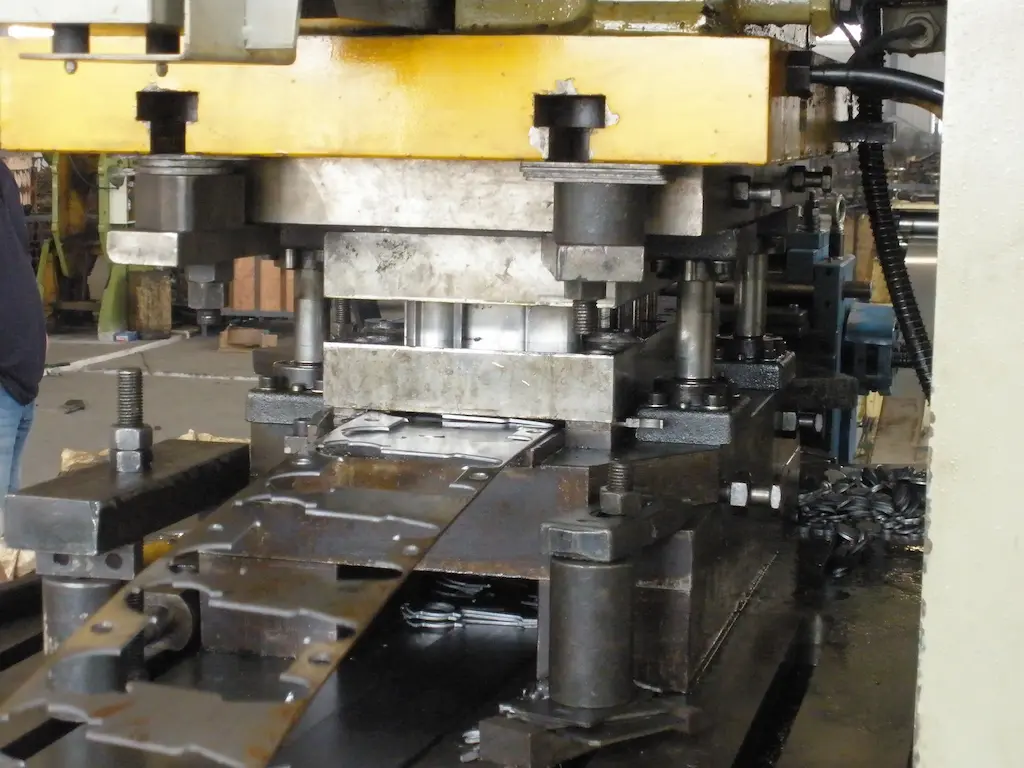





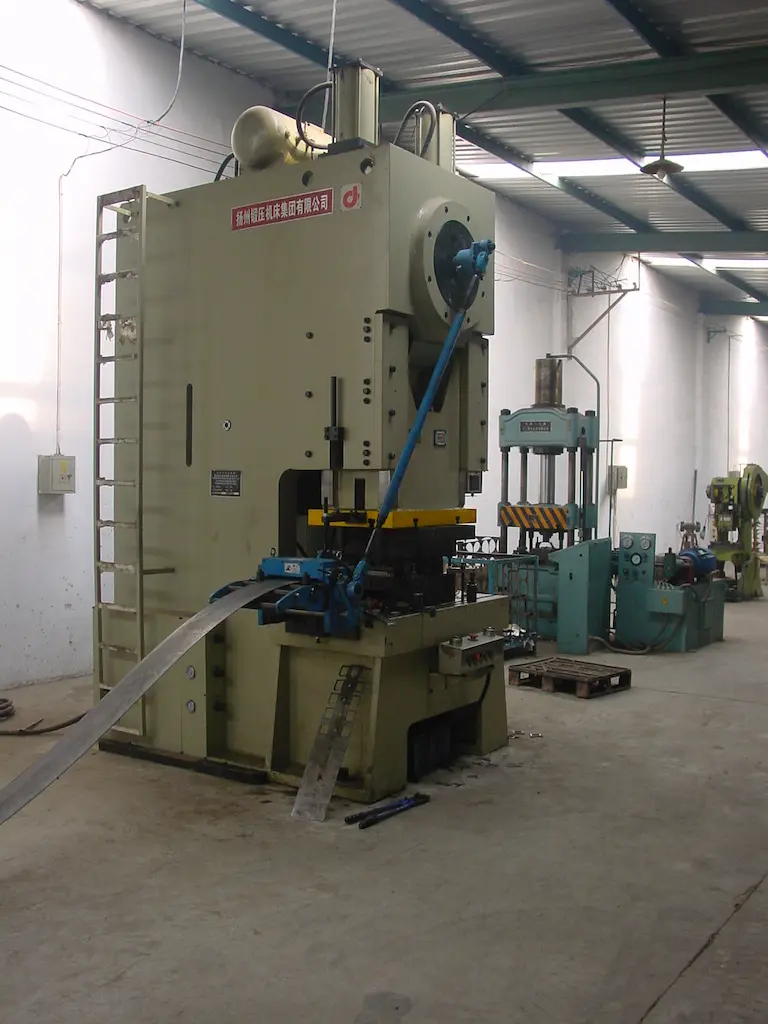
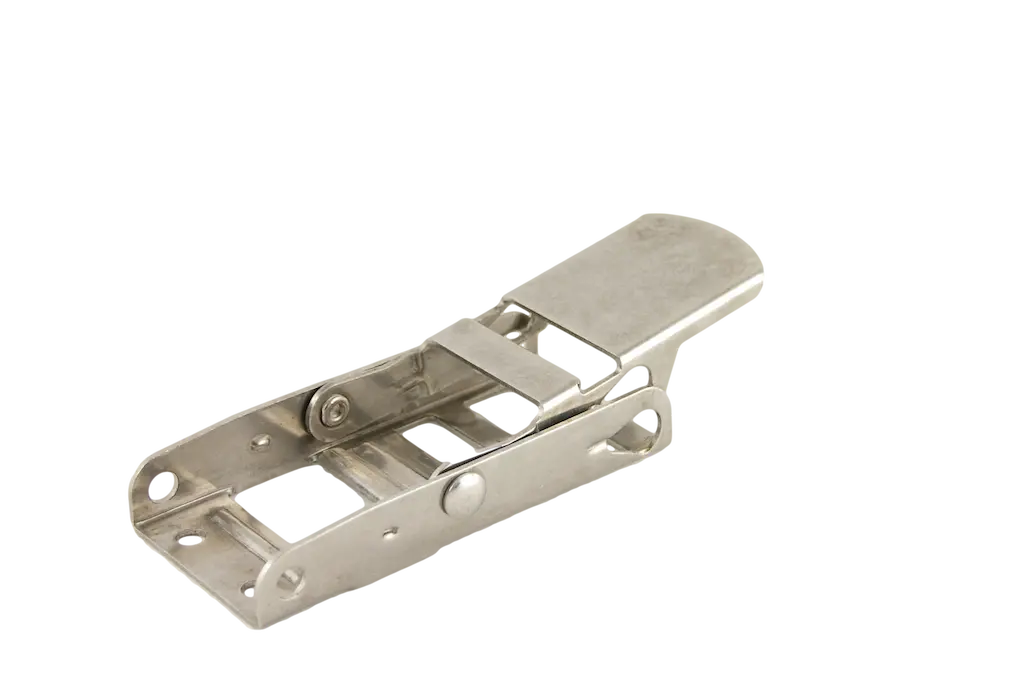
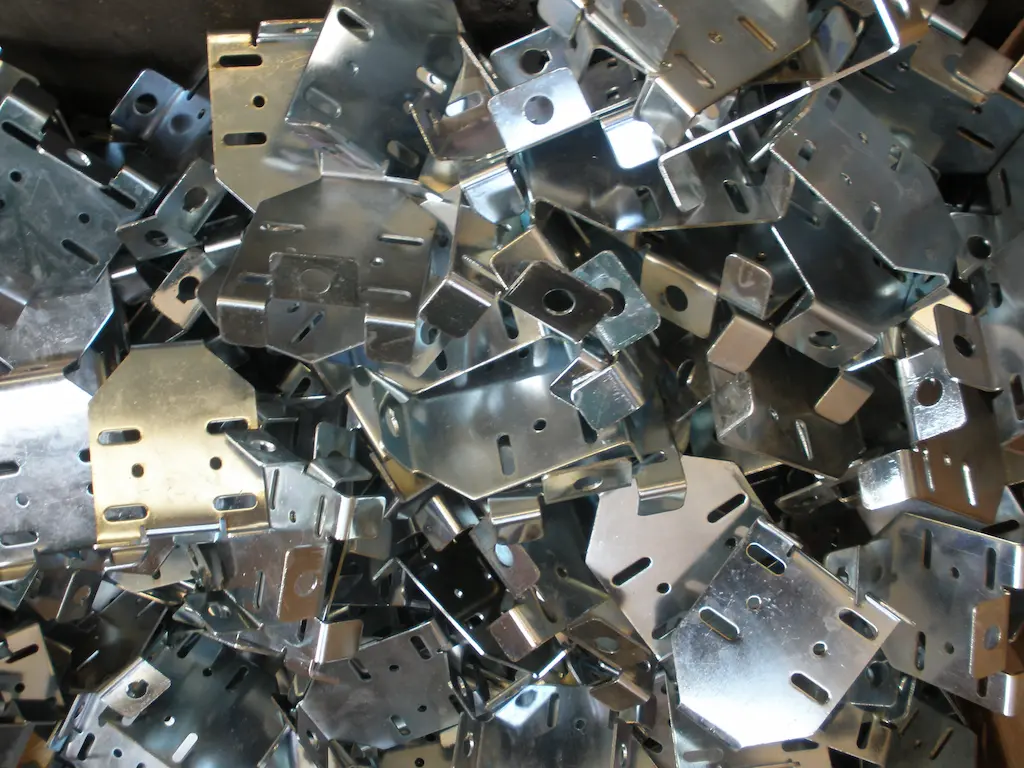
Die cutting is a production technique in which sheet metal is cut or formed to size using a die in a press. The process is ideal for producing large quantities of identical parts with tight tolerances and sharp contours. Examples include rings, plates, brackets, or housings used in various sectors, such as automotive, mechanical engineering, and electronics.
Progressive stamping takes things a step further. In this process, the sheet metal strip passes through multiple stations in a single die, with each pass performing a sub-processing operation, such as punching, bending, or cutting. Ultimately, each press stroke produces a complete part. This process is exceptionally efficient and ideal for large series where high reproducibility and consistent quality are essential.
The advantage of progressive die cutting is that it enables mass production at a low unit cost. The combination of speed, accuracy, and repeatability makes this method attractive to companies seeking scalable metal part production. This can significantly reduce lead times and keep costs under control.
At TOS, we advise you on whether conventional or progressive die cutting is best suited for your application. We also provide CNC finishing and surface treatments such as galvanenizing , anodizing , chrome plating , chemical or mechanical polishing, and powder coating . This allows us to deliver complete solutions: from small precision parts to larger sheet metal components, always with a focus on quality, cost-efficiency, and reliable delivery.

During this conversation we will briefly explain what we can do for you and answer your questions.

Based on your product and requirements, we request prices and delivery times from various suppliers.

We will then prepare a clear quote. Prices are quoted based on your terms and conditions.

Once you have approved our proposal, we will start making a prototype.

After approval of the prototype, the assignment will begin.
Stamping is applied to a wide range of sheet metals. Commonly used materials include steel (strong and versatile), stainless steel (corrosion-resistant and wear-resistant), and aluminum (lightweight and highly formable). Copper and brass are also frequently used, particularly for electrical or decorative applications.
At TOS, we advise on the most suitable material selection for each project, tailored to functionality, strength, manufacturability, and surface quality. This ensures components that are optimally aligned with your specific application.
| Material | Properties | Strength | Corrosion resistance | Applications |
|---|---|---|---|---|
|
Steel |
Strong, affordable, versatile |
High |
Moderate – depending on alloy |
Brackets, frames, constructions |
|
RVS |
Hygienic, wear-resistant |
High |
Excellent |
Food, maritime, chemistry |
|
Aluminium |
Lightweight, highly malleable |
Average |
Good |
Housings, sheet metal |
|
Copper |
Good conductivity, soft |
Average |
Reasonable |
Electronics, pipes |
|
Messing |
Decorative, wear-resistant, conductive |
Average to high |
Good |
Trim parts, connectors |
At TOS, we guide our clients from concept to finished product when it comes to stamping and progressive stamping of metal parts. These production techniques are ideal for manufacturing large series with high accuracy, tight tolerances, and consistent quality. Thanks to our expertise and collaboration with reliable production partners, we ensure an efficient approach, low production costs, and reliable delivery times. Below, you’ll find a step-by-step overview of our working method, so you’ll know exactly how we organize the stamping process.
The process begins with a comprehensive intake interview where we discuss your needs and objectives. We’ll consider the product’s application, desired volumes, available budget, and lead time. For die cutting, it’s crucial to have these details clear upfront so we can select the optimal process: conventional die cutting or progressive die cutting.
Our engineers analyze the design and provide Design for Manufacturing (DFM) advice. We investigate the most efficient way to produce parts using stamping. Consider the material selection (steel, stainless steel, aluminum, or copper alloys), sheet thickness, tolerances, and the ability to combine multiple operations. This distinguishes conventional stamping from progressive stamping: progressive stamping often requires fewer post-processing steps, saving time and money.
Before we begin serial production, we perform a First Article Inspection (FAI). This means that the first stamped parts are produced and thoroughly assessed for dimensions, finish, and material properties. In both conventional and progressive die cutting, we check that the final product fully meets specifications, ensuring error-free and reproducible subsequent production runs.
Now actual production can begin. Conventional die cutting produces parts in separate steps, ideal for medium-sized production runs or simple shapes. With progressive die cutting, the material passes through multiple stations within a single die, resulting in a complete part being produced with each pass. This method is perfect for large production runs with high reproducibility, low unit costs, and minimal error rates.
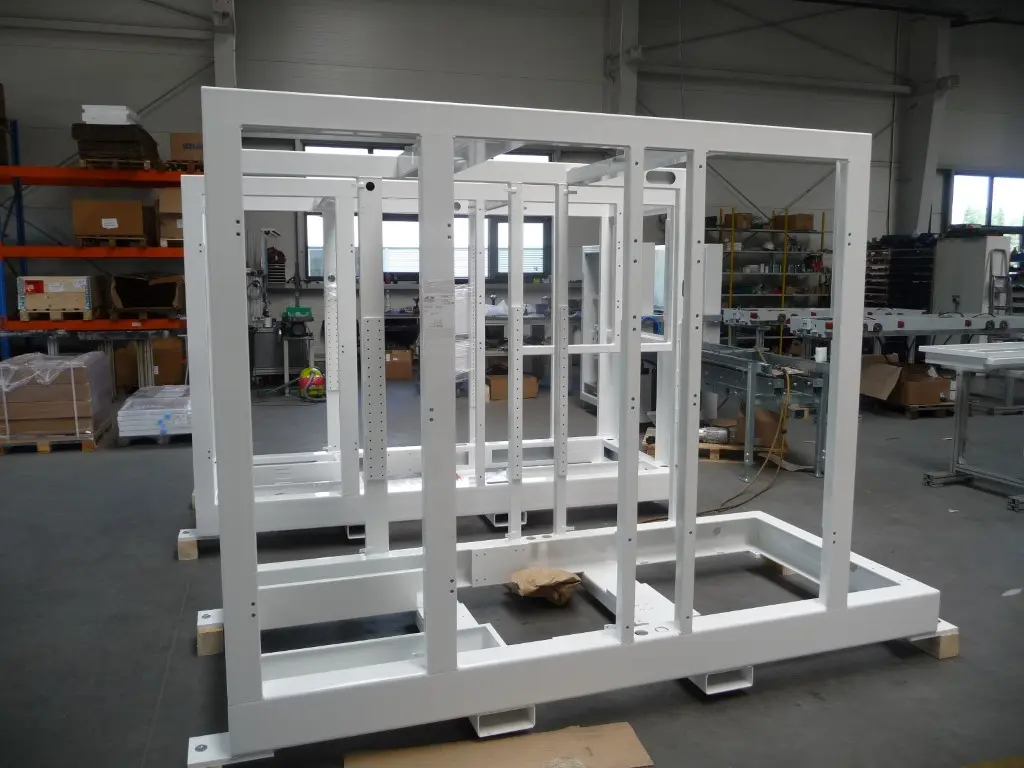
For a client in the packaging industry, we produce complete, custom-made machine frames that serve as the foundation for high-quality....
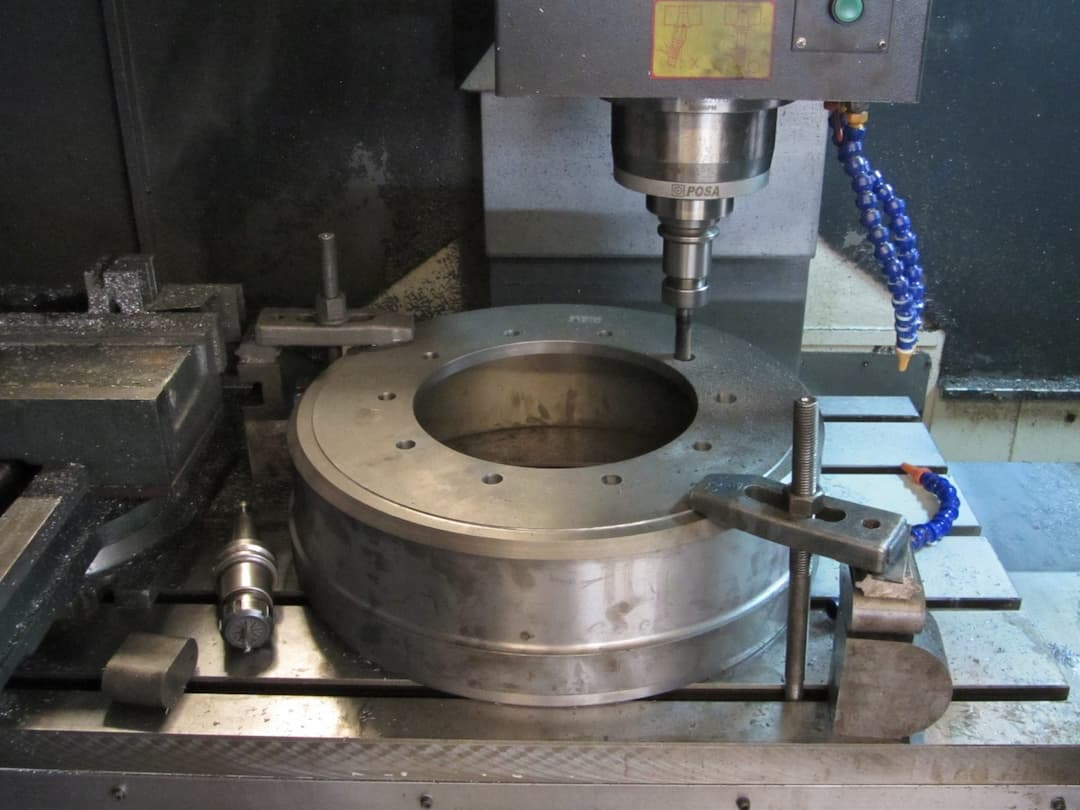
For one of our regular customers, we produced brake drums with an inner diameter of 500 mm, made entirely of....
Stamping is ideal for medium to large production runs requiring identical parts with tight tolerances. Think, for example, of brackets, plates, or housings. Progressive stamping is particularly cost-effective for high-volume production because it combines multiple operations in a single die, significantly increasing production speed. For companies requiring millions of identical parts, such as in the automotive or electronics industries, progressive stamping is often the most cost-effective solution.
At TOS, we guide our customers through the entire die-cutting and progressive die-cutting process: from initial mold design and engineering to production, post-processing, surface treatment, and logistics. You have a single point of contact and benefit from our strict quality controls and years of experience. This guarantees reliable delivery times, consistent quality, and a cost-efficient production process. TOS is your partner for high-quality die-cut parts, from small precision components to large series with complex geometries.