
Need serial sheet-metal parts, brackets or assembled products? TOS manages stamping and punching in China as part of a complete production route. We align material, tooling, forming, welding, surface treatment and assembly with your drawing and required delivery condition.

We compare the investment in stamping tools with alternatives and the expected volume over the product life.

Stamping or punching can be combined with forming, bending, welding, CNC machining and assembly.

Hole patterns, burr direction, flatness and interface dimensions are defined from the end product’s application.

We assess material, corrosion protection and visible surfaces together with fit and assembly after finishing.

TOS coordinates technical questions, first products, quality agreements and delivery with the production partner.
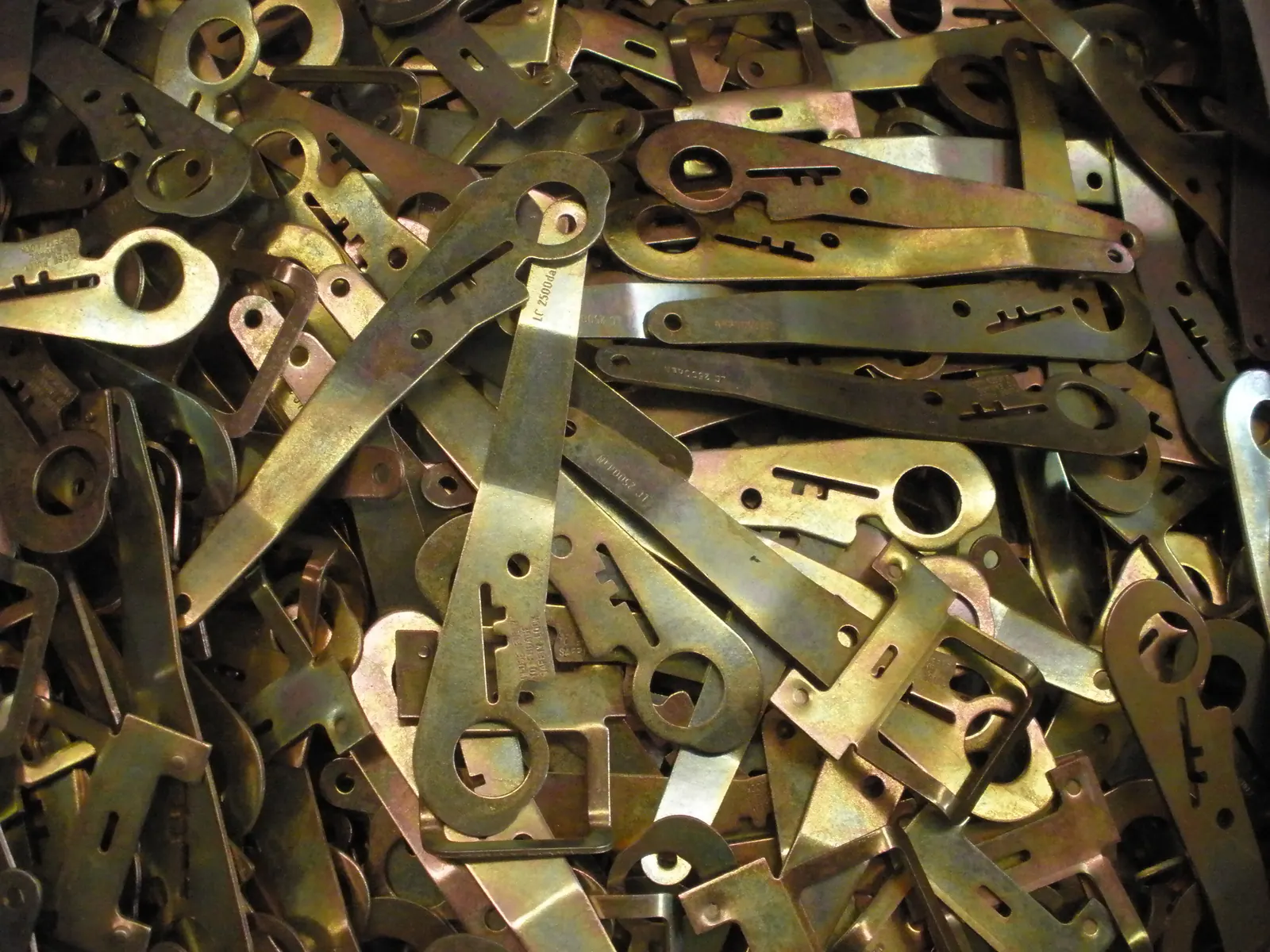
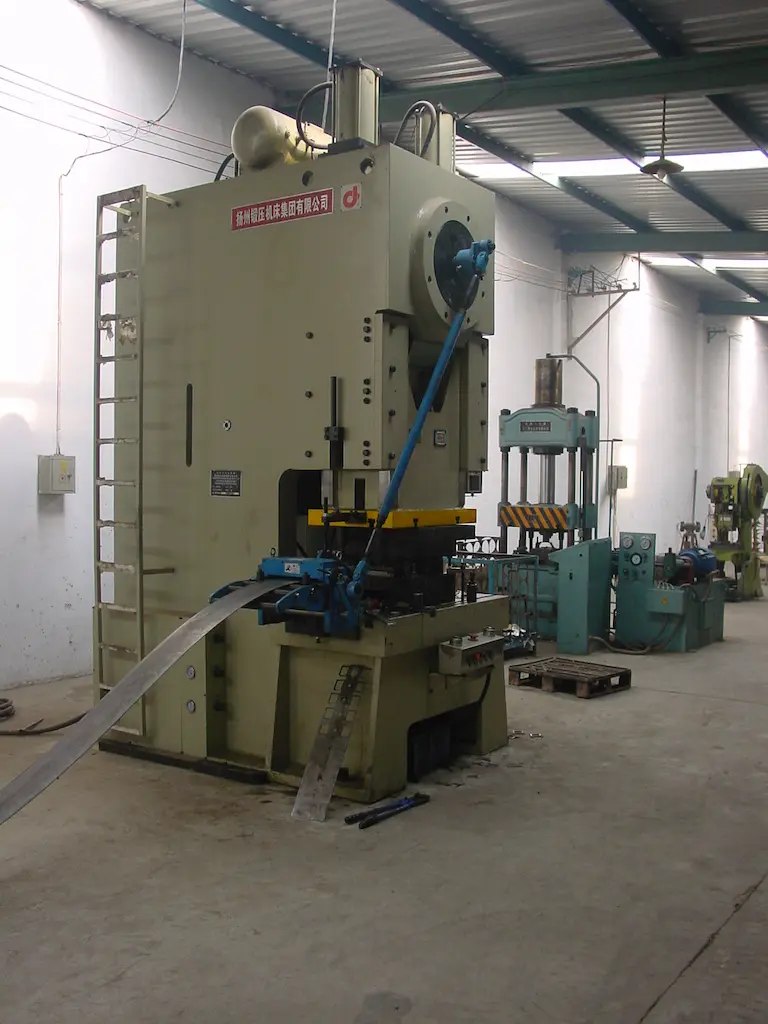
With punching and punching, a punch and die separate the sheet material into the desired contour or hole shape. In practice, these terms overlap. The suitable version depends on geometry, material, sheet thickness, accuracy and series.
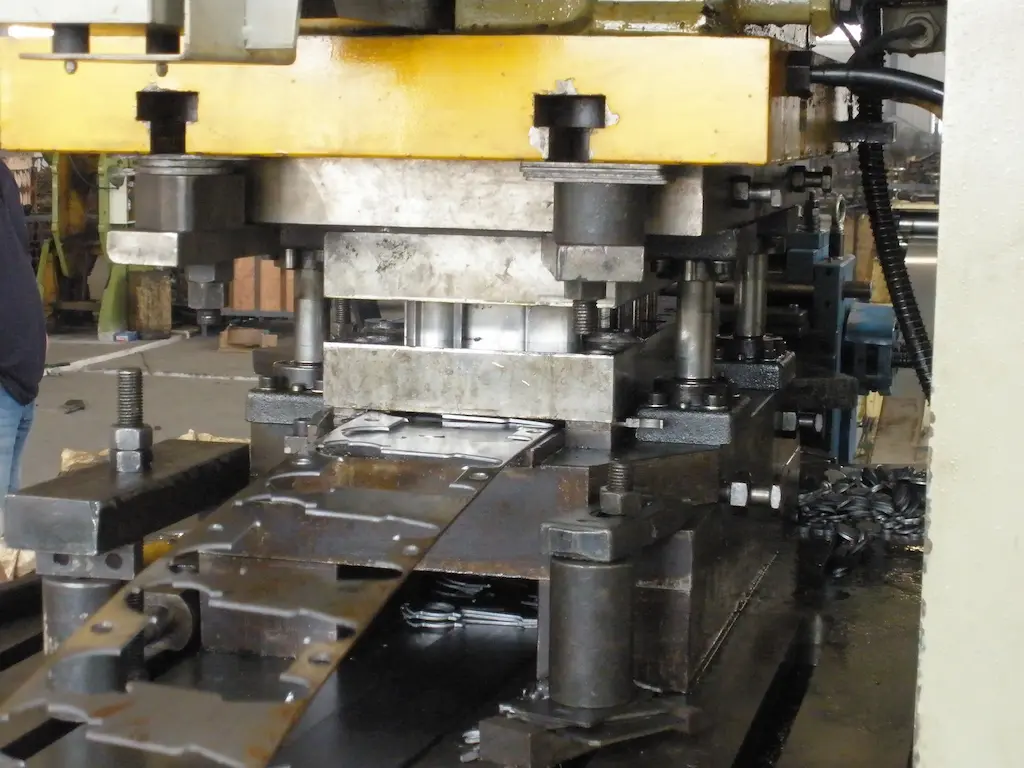
Product-related punching tools are especially interesting for recurring quantities. A progressive tool performs successive operations as the strip passes through the tool. Cutting and forming can be combined in several stations.
CNC punching uses a programmed hole and contour pattern with available punching tools. This can be an alternative if your own punching die is not yet suitable. For free contours or changes, we also compare lasercutting in China, followed by further processing.
The starting point is the deliverable product: a stamped sheet part can then be formed, set, welded or mounted. TOS assesses the combination that suits your part.
For a hollow hood, shell or housing, we also compare deep drawing in China. This technique forms the hollow basic geometry and can be combined with trimming, holes and further finishing.
For the preparation and management of product-related tools, read more about our sheet-metal molds in China, including punching, punching and progressive moulds.
When does punching become interesting in China? Compare the total costs of tooling, material utilization, production, finishing, inspection, packaging and transport. A stable drawing and recurring purchases help to distribute tooling costs across the series. A small number or a design that changes often may be better suited to a different route. There is no fixed minimum series that applies to every product.

You share the drawing, choice of material, application, expected quantities and desired delivery condition.

We assess punching, progressive punching or CNC punching and compare the complete production route.

First parts are tested against the agreed dimensions, edges, shape and function before the series is released.

The released route also includes agreed next steps, surface treatment and inspection.

We coordinate product protection, quantities per packaging, documentation and logistics.
Material and sheet thickness. Specify the material standard, quality, thickness and any requirements for mechanical properties. Steel, stainless steel and aluminium each require an appropriate assessment of cutting, shapes and tools.
Holes, edges and burrs. Record functional hole dimensions, center distances, minimum edge distances and the permitted burr. Cutting edges are not automatically identical on both sides. Deburring or additional machining is included where necessary.
Shape, flatness and fit. Springback and deformation can affect the final shape. Dimensions and measurement references must therefore match the formed and finished product. A close fit may require additional processing, for example CNC milling.
Finishing and assembly. A coating or zinc layer affects fit, screw thread and contact surfaces. Also agree on requirements for appearance, sharp edges and protection during transport.
Tool agreements. Record investment, ownership, maintenance, storage and the procedure for product changes in advance. Achievable tolerances and scope of control are confirmed per drawing and process.
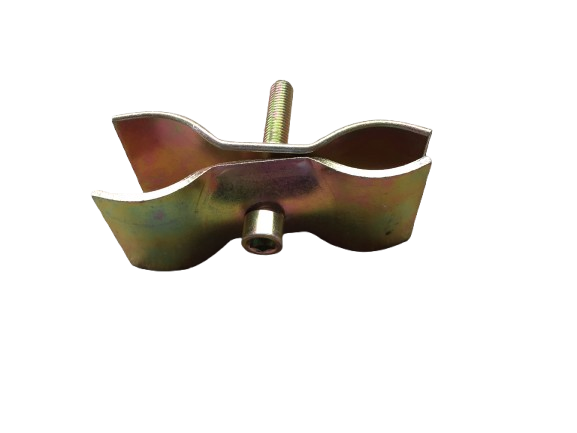
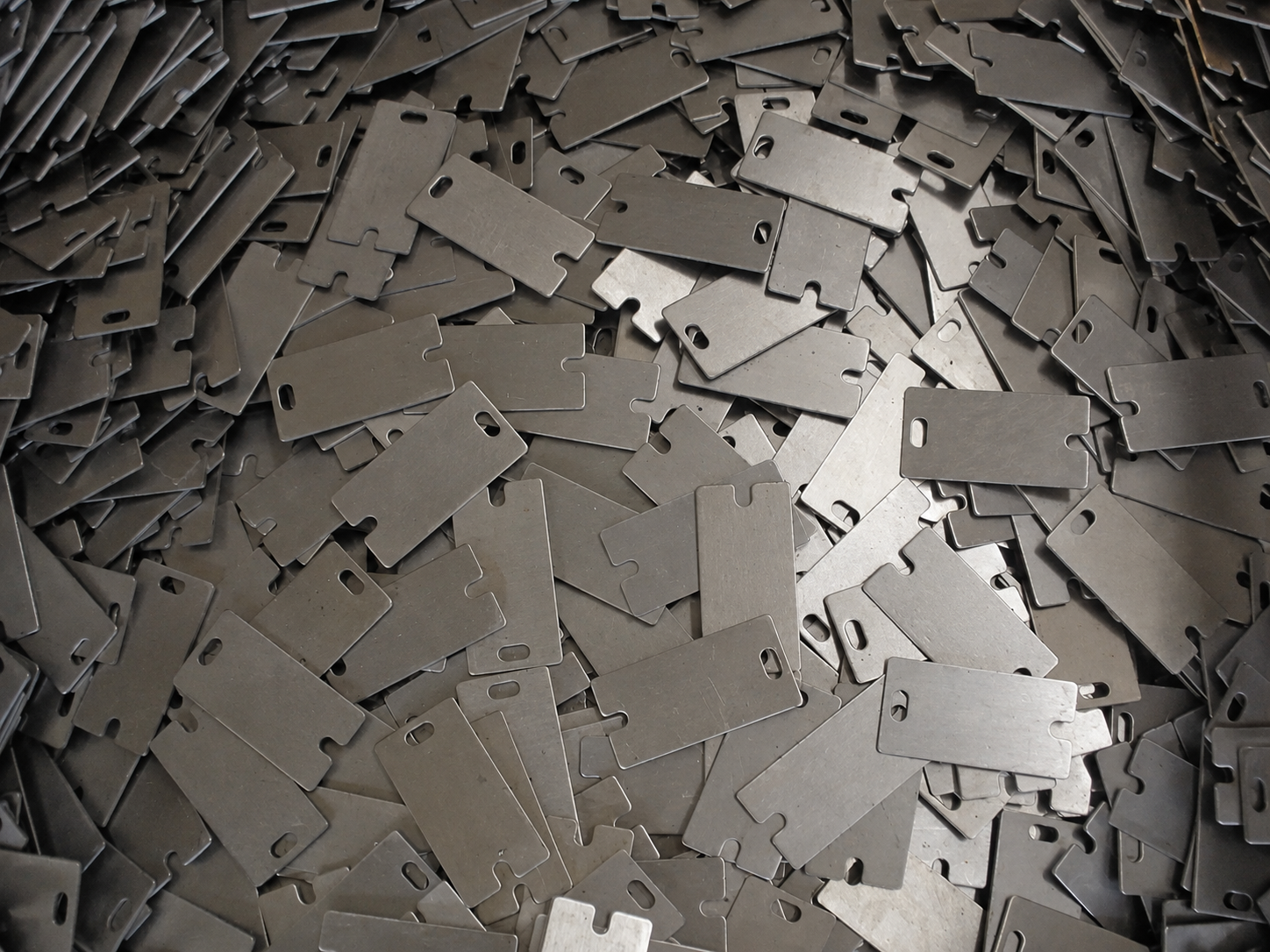
Brackets, clamps, closing parts, mounting plates and other repetitive plate parts can be a suitable application. The final route depends on the form and function. Not every clamp or every sheet part is automatically a stamping product.
TOS therefore looks beyond the first cutting operation. Think of stamping and forming, followed by welding, galvanizing and mounting with bolts or other parts. For more complex sheet metal work, a combination of laser cutting and folding may be more effective.
Also view the overview of outsource production to China and our general explanation of progressive punching.
Provide the current 2D drawing and, where available, a 3D model. Indicate revision, material, sheet thickness, quantities, application and whether you need separate parts or a finished assembly.
We assess cutting contours, holes, shape characteristics and critical dimensions. The route is compared to laser cutting and typesetting, so that tool investment and flexibility suit the series.
Material utilization, strip layout and the sequence of cutting and forming operations influence costs and manufacturability. The production partner develops the tool design for the agreed product.
Specify what is included in the tool price and agree on ownership, maintenance, storage and change management. The release of tools and first products also deserves a clear agreement.
First products are reviewed on the agreed measuring points, cutting edges and shape. Where relevant, we also check assembly or fit with connecting parts. Adjustments are fine-tuned before series release.
After release, the partner produces according to the agreed route. Check points focus on the critical product characteristics, material and relevant influence of tool wear.
Additional bending, welding, drilling, tapping or CNC machining is included when the end product requires it. Functional measures are reviewed after the operations that can affect them.
Deburring, cleaning and, for example, galvanizing or coating, are tailored to the application and drawing. Assembly parts, fit after finishing and any protected surfaces are recorded in advance.
The final inspection follows the agreed dimensions and quality criteria of the deliverable product. Required measurement reports, material data and traceability are included in the application in advance.
Packaging protects edges, shape and surface during storage and transport. TOS matches quantities per packaging, labeling and the desired delivery to your logistics process.
For a client who supplies construction fences, we produce a wide range of construction fence clamps in various sizes and....
When punching or punching, a punch and die work together to separate sheet material. CNC punching follows a programmed pattern with punching tools. Progressive stamping uses a product-related tool with successive stations for cutting and possibly forming operations. The choice depends on product and series.
There is no universal lower limit. We compare tool costs, unit price, expected repeat orders, design stability and total delivery costs with alternatives. Therefore, please state both the first order and the expected purchase over a longer period.
A current drawing with material, sheet thickness, revision, critical dimensions and finish forms the basis. Where possible, share a 3D model, application, expected quantities and requirements for burr, fit, control and packaging.
Yes, the application can be configured for a complete part or assembly. The suitable route can combine blanking or punching with forming, setting, welding, CNC machining, surface treatment and assembly. Feasibility is confirmed per product.
Ownership follows from the agreements in the quotation or agreement. Also record where the tools are stored, who takes care of maintenance and changes and what conditions apply in the event of relocation or termination of production.
Technical request
Upload a PDF, DWG or STEP/STP file and receive a detailed response about manufacturability, the production route and your request for quotation.